Renewables
Guyana’s President Calls for ‘Energy Balance’ Amid Widening Global Supply Gap
Guyana’s president urges a shift towards energy balance, warning of a widening global supply gap and calling for pragmatic approaches to energy transition and investment.
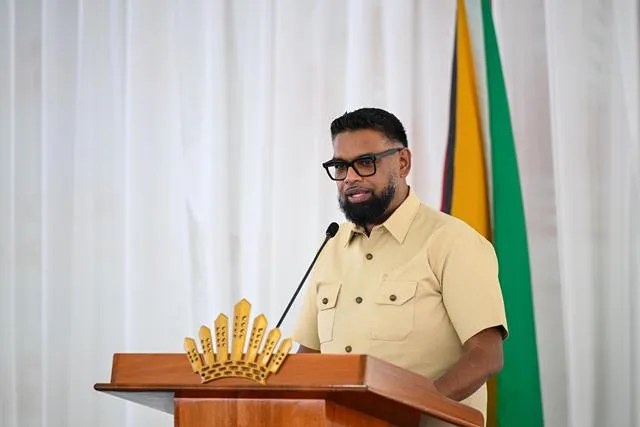
President of Guyana, Dr Mohamed Irfaan Ali, has called for a fundamental rethink of the global approach to energy transition, warning that the world is facing a widening and potentially destabilising energy gap.
Speaking at the Offshore Technology Conference 2026 in Houston, Texas, Ali urged policymakers, investors and industry leaders to adopt a more pragmatic and inclusive model centred on what he described as “energy balance”, rather than a narrow focus on transition.
He argued that the global conversation on decarbonisation, renewable energy, artificial intelligence and emerging technologies must be anchored in a more immediate concern: whether sufficient energy is being produced at a reliable and affordable cost to sustain economic activity and human development.
“It is a question grounded in the daily functioning of the global economy,” he said. “It is about whether factories can operate, whether hospitals can function, whether food can be produced and transported, and whether economies can grow.”
Ali pointed to long-term data indicating that while global energy supply has increased steadily since the 1960s, demand has accelerated significantly over the past decade, creating what he described as a structural imbalance rather than a temporary disruption.
He noted that the post-pandemic economic rebound, coupled with rapid digitalisation and the expansion of artificial intelligence, has intensified energy consumption, contributing to heightened price volatility and growing insecurity across global markets.
Although renewable energy has expanded rapidly in recent years—growing at a pace that outstrips overall demand—Ali emphasised that fossil fuels continue to dominate the global energy mix, accounting for more than 80 per cent of supply.
Coal and natural gas, he observed, remain central to electricity generation, particularly in emerging economies where affordability and reliability are critical considerations.
“Coal, despite being the most carbon-intensive fuel, has seen significant growth in electricity generation, driven largely by industrialisation in developing economies,” he said.
Natural gas, he added, continues to play a vital role in stabilising power systems by providing flexible generation to complement intermittent renewable sources such as solar and wind.
These trends, Ali argued, underscore the complexity of the energy transition, which cannot be reduced to a simple substitution of fossil fuels with renewable alternatives.
He also highlighted the scale of the financial challenge required to meet global climate targets.
While global energy investment reached a record $3.3tn in 2025, he said this level remains insufficient to align with efforts to limit global warming to 1.5°C.
He noted that major economies would need to significantly increase annual investment levels, warning that existing geopolitical and economic pressures could further constrain progress.
“Global clean energy investment is highly concentrated, and it may face new pressures,” he said.
Beyond financing, Ali raised concerns about emerging constraints in critical minerals required for the transition, describing the shift as a move from a fuel-intensive system to a mineral-intensive one.
Technologies such as electric vehicles, battery storage, offshore wind and grid infrastructure require substantial quantities of lithium, cobalt, nickel, copper and rare earth elements, resources that are finite, unevenly distributed and environmentally challenging to extract.
He cautioned that without advances in recycling, innovation and governance, the world risks replacing dependence on fossil fuels with dependence on critical minerals, potentially creating new geopolitical and environmental vulnerabilities.
Ali also pointed to the environmental costs associated with mining, including water use, deforestation, biodiversity loss and the generation of toxic waste, which could undermine sustainability goals if not properly managed.
Against this backdrop, he outlined Guyana’s approach to energy development, which he described as a dual-track strategy.
The country is expanding its oil and gas production to generate revenue for development, while simultaneously investing in renewable energy, grid modernisation, energy storage and regional integration.
“We reject the false choice between development and environmental stewardship,” he said. “Managed properly, they reinforce each other.”
Ali’s remarks reflect a growing debate among energy-producing nations over how to balance development priorities with climate commitments in an increasingly complex global energy landscape.
Related Stories


Sign up for our newsletter.
Get the latest news, expert analysis, and industry insights delivered straight to your inbox. Join thousands of professionals shaping the future of energy.
By submitting my information, I agree to the Privacy Policy and Terms of Service.