Renewables |Power
River Basin Agency Takes Charge of Sahel Power Link
The seven year programme includes a 50MW solar plant, 1,373 kilometres of transmission lines and new electricity connections for thousands of households in Mauritania and Mali.
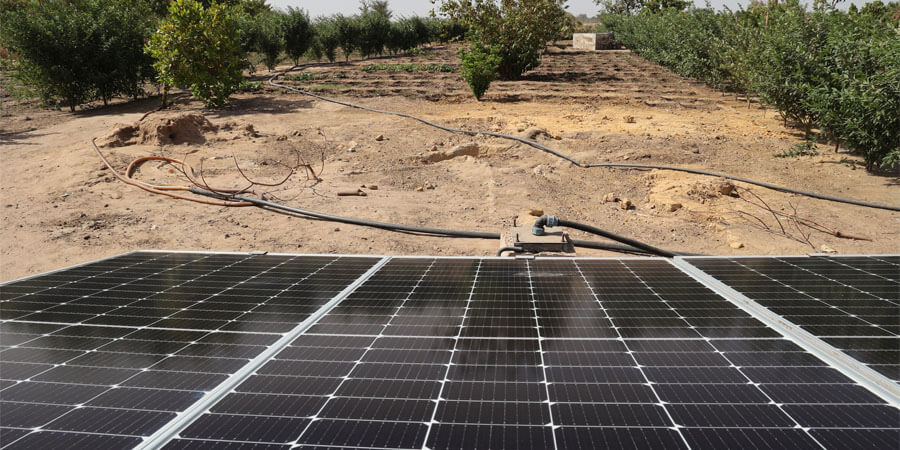
Construction has started on the first 184 kilometres of a new electricity line linking Mauritania and Mali, with the African Development Bank confirming that three implementation contracts have now been signed with the Manantali Energy Management Company, SOGEM.
The project is important because it puts a regional river basin agency, not a national power company, in charge of building part of a major cross border electricity network.
The contracts were signed in April by SOGEM chief executive Julien Charles Bernard Sagna and the contracting companies. The ceremony was attended by Mauritania's Minister of Energy and Petroleum, Mohamed Ould Khaled, Minister of Economic Affairs and Development, Abdallah Ould Souleymane Cheikh Sidiya, and the African Development Bank's Country Manager for Mauritania, Malinne Blomberg.
The contracts clear the way for work to begin on the 225kV electricity interconnection between Mauritania and Mali. They cover only the first section inside Mauritania, but they form part of a much larger project planned to run until 2030.
A regional body leads construction
Instead of leaving the work to either country's electricity company, the project is being delivered through SOGEM. The organisation was created by member states of the Senegal River Basin Development Organization to manage the Manantali hydropower scheme.
Over the years, SOGEM has also carried out rural electrification projects in Mali, Senegal and Mauritania. It is now leading the construction of a cross border electricity corridor linking Mauritania and Mali.
The three contracts cover different parts of the first construction phase. One covers a 114 kilometre 225kV double circuit transmission line between Kiffa and Tintane.
Another covers a 70 kilometre extension from Tintane to Aioun. That section is expected to strengthen Mauritania's national electricity grid and extend power supply to areas that have received little service. The third contract covers supervision and monitoring of the works.
Together, these agreements cover 184 kilometres of transmission line inside Mauritania. They are the first construction stage under the larger PIEMM programme.
First step in a bigger electricity plan
The full PIEMM scheme will stretch for 1,373 kilometres between Mauritania and Mali. It is designed with a transfer capacity of 600 megawatts and also includes a 50 megawatt solar power plant at Kiffa that will be directly connected to the transmission line.
Implementation is scheduled to run over seven years, from January 2024 to December 2030.
The African Development Bank said the programme is expected to benefit about 2.2 million people in Mauritania, with women making up 52 per cent of those expected to benefit.
It is also expected to connect 100,000 new households along the route. Of these, 80,000 households will be in Mauritania across 150 agro pastoral communities, while another 20,000 households will be connected in Mali.
The total cost of the project is estimated at 888 million dollars.
The African Development Fund, the concessional financing arm of the African Development Bank, has approved 302.9 million dollars in loan co financing.
Of that amount, 269.6 million dollars is for Mauritania, while 33.3 million dollars is for Mali. Climate funds and other development partners are expected to provide the remaining financing.
The interconnection also forms part of the Desert to Power programme, launched in 2019 to develop 10 gigawatts of solar generation across eleven Sahel countries from Senegal to Djibouti.
It also contributes to Mission 300, under which the electricity corridor and solar project are expected to expand access to power across the region.
Related Stories

Sign up for our newsletter.
Get the latest news, expert analysis, and industry insights delivered straight to your inbox. Join thousands of professionals shaping the future of energy.
By submitting my information, I agree to the Privacy Policy and Terms of Service.