Renewables
Zambia Signs MoU to Deliver 3 Solar Energy Projects
A new agreement between Kiyona Energy and the Zambia Army unlocks land and strategic backing for multiple solar plants, supporting the country’s wider clean-energy transition.
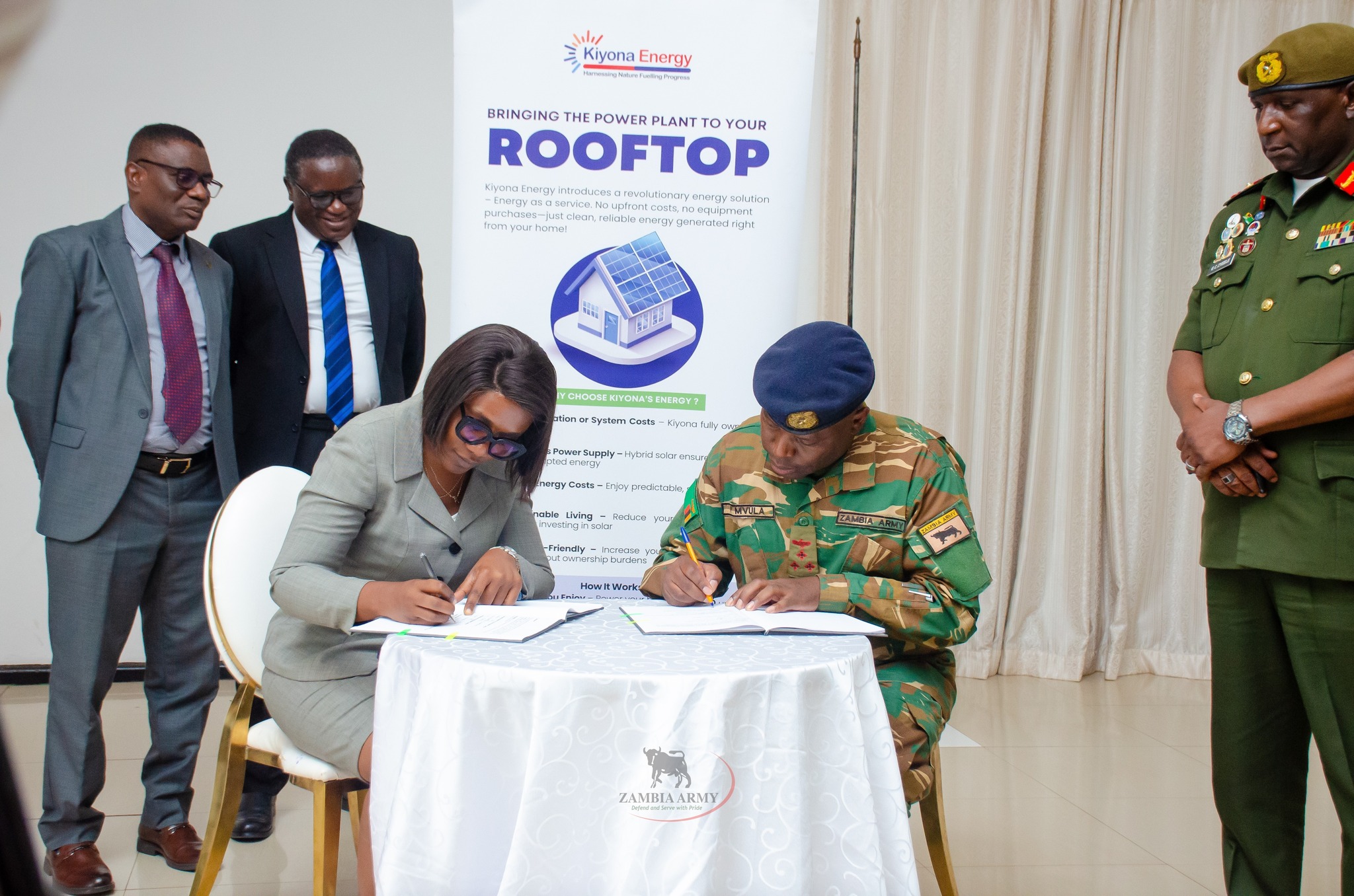
Zambia’s drive to install 1,000 MW of solar capacity and narrow the national power shortfall has gained fresh momentum following the signing of a Memorandum of Understanding (MoU) between Kiyona Energy Limited and the Zambia Army.
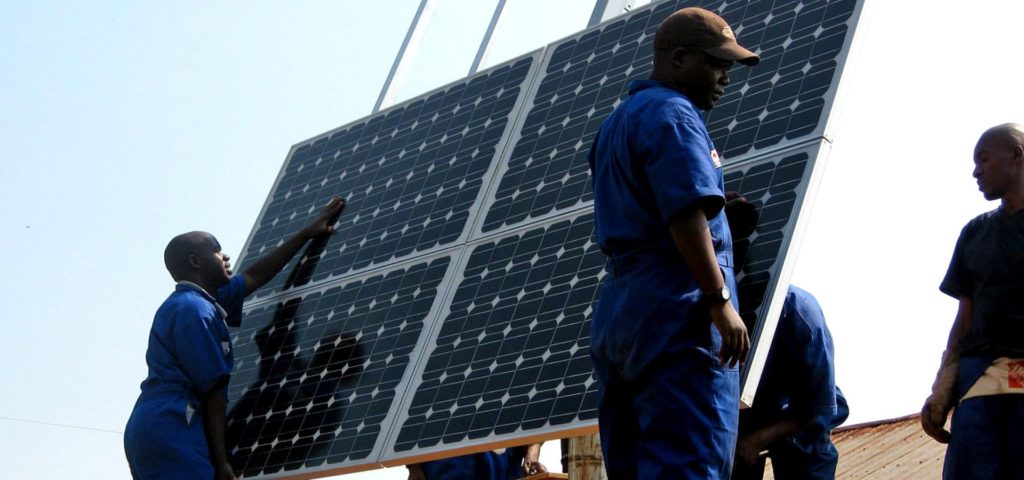
The agreement, signed at Army Headquarters in Lusaka, enables the development of three solar projects across Army-owned land: a 30 MW Solar PV plant, a 4 MW Solar PV system dedicated to water pumping, and a 5 MW Solar PV plant under the Green Cities Initiative.
Zambia Army Commander, Lieutenant General Geoffrey Choongo Zyeele, reaffirmed the military’s commitment to supporting national stability through energy resilience. He stressed that the country’s security relies on dependable and sustainable power supply.
“We are availing 30 hectares at L85 for the development of a 30 MW Solar PV plant. We are also supporting an additional 4 MW Solar PV project for water pumping and internal residential supply, while 7.5 hectares in Kaoma have been set aside for a 5 MW plant under the Green Cities Initiative. We are opening pathways for similar developments across all our cantonments,” Lt Gen. Zyeele said.
ZESCO Managing Director, Eng. Justin Loongo, described the collaboration as a strategic convergence of national interests, spanning energy security, climate resilience, and the modernisation of key government infrastructure.
“Through this partnership, the Army will benefit from reliable green energy solutions that reduce dependence on the grid at critical facilities and enhance energy planning for mission-critical operations,” he said.
Eng. Loongo also commended the Zambia Army for its proactive approach in adopting sustainable energy systems, noting that the move positions the defence forces as leaders in Zambia’s climate commitments and long-term operational energy security.
The agreement comes as Zambia intensifies efforts to close its electricity deficit through accelerated deployment of utility-scale solar.
Related Stories
Sign up for our news letter.
Get the latest news, expert analysis, and industry insights delivered straight to your inbox. Join thousands of professionals shaping the future of energy.
By submitting my information, I agree to the Privacy Policy and Terms of Service.