Climate & Sustainablity
AfDB Facility Launches Clean Cooking Push for Africa
AfDB-backed clean cooking funding marks a broader push to expand energy access, improve public health and advance sustainable development across Africa.
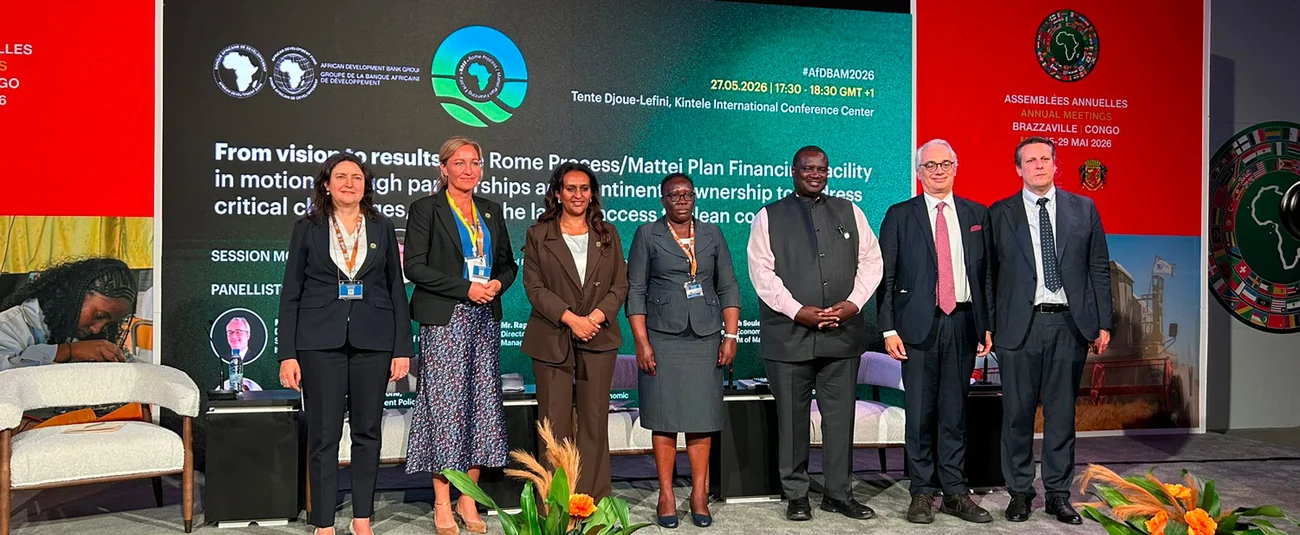
The African Development Bank’s Rome Process/Mattei Plan Financing Facility has launched a clean cooking programme aimed at expanding access to safer and more modern cooking solutions across Africa.
The announcement was made at the bank’s 2026 Annual Meetings in Brazzaville during a special session hosted by the Government of Italy in partnership with the African Development Bank. The new programme, known as the RPFF Clean Cooking Programme, starts with an initial EUR 25 million envelope and is expected to support access for about one million households.
The programme is also projected to cut around five million tonnes of carbon dioxide emissions. It comes at a time when clean cooking remains one of Africa’s most pressing development challenges, with nearly one billion people still without access to clean cooking solutions.
The African Development Bank said the initiative is in line with the clean cooking goals set out in Mission 300 national energy compacts and will work alongside partners such as the International Energy Agency. Bank officials said the effort is intended to bring together financing, policy support and implementation in a way that can deliver practical results quickly.
The Rome Process/Mattei Plan Financing Facility, established in February 2025, was designed as a catalytic funding mechanism for rapid deployment of grant and concessional finance in the energy, transport and water sectors. It also aims to support countries facing fragility, climate vulnerability and irregular migration pressures.
At the Brazzaville session, Italian and African officials discussed the importance of increasing investment in clean cooking across the continent. Lorenzo Ortona, Deputy Coordinator of the Mission Structure for the Mattei Plan at the Office of the Italian Prime Minister, described clean cooking as one of the most urgent development issues facing Africa, noting its links to health, gender equality and economic progress.
He said the programme is meant to mobilise concessional finance and draw in additional investment to scale up access to modern, safe and affordable cooking options. He added that the effort is about more than energy access, pointing to its importance for dignity and day-to-day living conditions.
The panel also included representatives from Denmark, Ethiopia, Kenya and Zambia, who discussed how the facility can support national priorities. Denmark reaffirmed its interest in the clean cooking agenda after joining the RPFF in December 2025, while Kenya highlighted work on an e-cooking market development programme with RPFF support.
Ethiopia, which already benefits from RPFF-backed investment in the water sector, is also building clean cooking into its broader climate agenda ahead of hosting COP32 in 2027. Zambia, meanwhile, is using the facility alongside its Mission 300 National Energy Compact ambitions and support for the Lobito Corridor.
So far, about EUR 168 million has been committed to the RPFF by Italy, the United Arab Emirates and Denmark. The facility’s active portfolio includes four projects: solar-powered water systems in Ethiopia, green mini-grids in Mauritania, and road infrastructure along the Lobito Corridor in Angola and Zambia.
The programme has already helped unlock around EUR 389 million in co-financing from the African Development Bank Group and EUR 148 million from other partners and governments.
The Africa Clean Cooking Summit is scheduled to take place in Nairobi, Kenya, from 9 to 10 July 2026.
Related Stories


Sign up for our newsletter.
Get the latest news, expert analysis, and industry insights delivered straight to your inbox. Join thousands of professionals shaping the future of energy.
By submitting my information, I agree to the Privacy Policy and Terms of Service.
