Renewables
Mission 300: AfDB, Gabon Chart Path to Universal Energy Access
AfDB and Gabon’s AEMP outcomes highlight a coordinated push to expand energy access, drive reforms, and mobilise investment, advancing Africa’s Mission 300 electrification target and regional power integration.
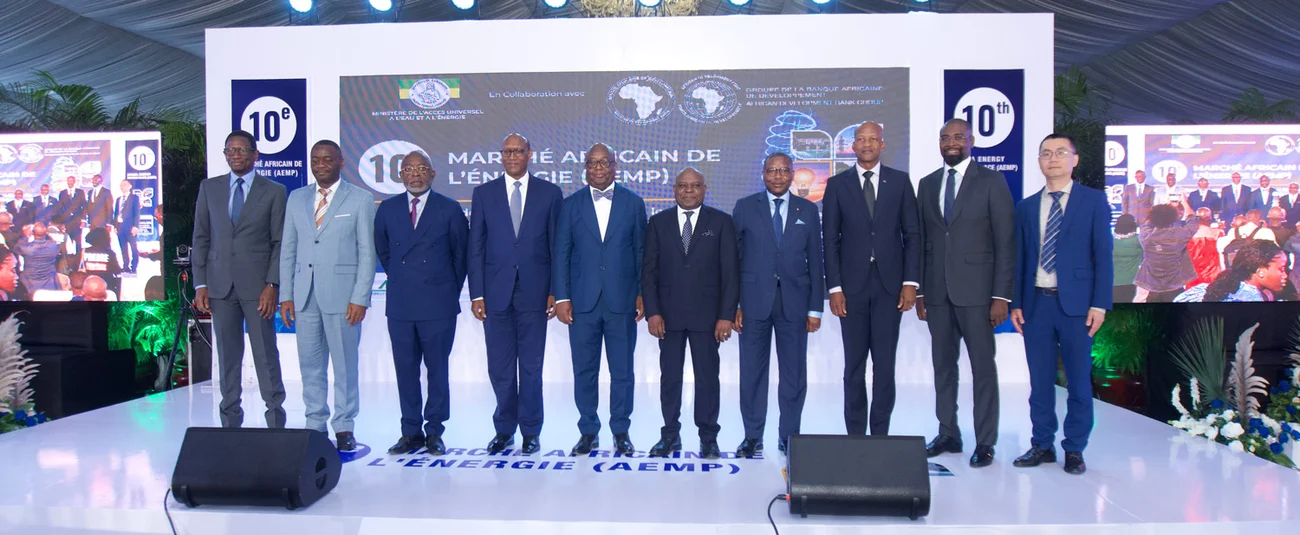
Gabon and the African Development Bank Group have reinforced their partnership to accelerate energy access and investment following the conclusion of the 10th Africa Energy Market Place (AEMP) in Libreville.
The two-day forum, held from April 8 to 9 in Libreville, brought together policymakers, development partners and private sector players to advance reforms aimed at unlocking Gabon’s energy potential and aligning with the continent-wide Mission 300 initiative.
Mission 300, a joint programme of the African Development Bank and the World Bank Group, targets electricity access for 300 million Africans by 2030, with the Bank committing to connect 50 million people.
Speaking at the event, AfDB Vice President Kevin Kariuki emphasised that sustained reforms and private sector participation remain critical to building resilient and investable power systems.
The AEMP, launched in 2018 under the Africa Energy Technical Assistance Programme, serves as the Bank’s flagship policy dialogue platform. With Gabon joining as the 25th participating country, the forum enabled stakeholders to align national priorities with the Mission 300 roadmap and develop a National Energy Compact.
Focus on Deforms, Investment and Regional Integration
Discussions at the forum centred on five key pillars: expanding generation capacity, modernising grid infrastructure, scaling renewable energy and clean cooking solutions, unlocking private investment through innovative financing, and strengthening governance of the national utility, Société d'Energie et d'Eau du Gabon.
Participants also highlighted the importance of regional integration through bodies such as the Economic Community of Central African States, the Central African Economic and Monetary Community and the Central African Power Pool to enhance energy security and efficiency.
AfDB Director for Energy Financial Solutions, Wale Shonibare, described the engagement as instrumental in strengthening the country’s policy framework and setting the stage for rapid implementation of reforms.
High Access Levels but Dural Gaps Persist
Gabon enters the transition with relatively strong energy access indicators, with about 94 per cent of its population connected to electricity and roughly 90 per cent having access to clean cooking solutions.
However, officials noted that access remains uneven, with rural areas lagging significantly behind urban centres.
The forum also addressed structural inefficiencies in the country’s power system, where isolated grids create a paradox of surplus generation in some areas and shortages in others.
Stakeholders identified grid interconnection and integration into regional markets, including opportunities under the African Continental Free Trade Area, as critical to long-term energy security and economic growth.
Key Outcomes and next Steps
Key outcomes from the forum include the development of a Gabon Energy Access Investment Brief aligned with Mission 300, agreement on priority renewable and grid expansion projects, and draft regulatory reforms with implementation timelines.
Participants also established a Compact Delivery and Monitoring Unit to oversee execution and ensure accountability.
The AEMP-Gabon was jointly organised by the African Development Bank and the government, with support from partners including the World Bank, SEEG, ECCAS, the Central African Power Pool, UN Sustainable Energy for All, and other industry groups.
Related Stories


Sign up for our newsletter.
Get the latest news, expert analysis, and industry insights delivered straight to your inbox. Join thousands of professionals shaping the future of energy.
By submitting my information, I agree to the Privacy Policy and Terms of Service.