Renewables |Finance
AfDB Picks Four African Hydrogen Projects for $20m Funding
The proposed grants will support projects in Egypt, Morocco, Namibia and South Africa with a combined investment value of $23 billion.
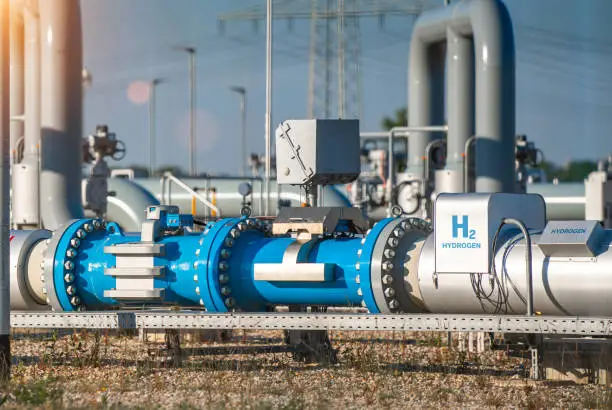
Four green hydrogen projects in Egypt, Morocco, Namibia and South Africa have been selected for $20 million in proposed funding from the African Development Bank Group.
The projects represent an estimated $23 billion in investment and include plans for 20GW of solar and wind power, 7GW of electrolyser capacity and 2,950MWh of battery storage.
The funding will come through the Sustainable Energy Fund for Africa, known as SEFA, subject to approval by the Bank's Board of Directors.
The grants are designed to help the projects prepare for investment and attract private sector funding into green hydrogen infrastructure.
The African Development Bank announced the results of its Africa Green Hydrogen Programme call for proposals at the Africa Green Hydrogen Summit 2026 in Cape Town on Tuesday.
The application window ran from 10 April to 11 May 2026, attracting 81 proposals from projects in 18 African countries.
Four projects share $20m
Egypt's Project Ra, sponsored by DAI Infrastruktur GmbH, will receive $3.55 million.
Morocco's Guelmim Green Hydrogen Valley, sponsored by Nareva Holding, has been allocated $5.28 million.
Namibia's Hyphen project, sponsored by Hyphen Hydrogen Energy (Pty) Ltd, will receive $5.93 million.
South Africa's Saldanha Hydrogen DRI project, sponsored by Enertrag SE with ArcelorMittal South Africa, has secured $5.24 million.
The projects cover two main areas. Egypt, Morocco and Namibia will develop sustainable marine and aviation fuels, while South Africa's project will produce low-carbon iron.
The proposed support is intended to take the projects closer to investment readiness.
Daniel Schroth, African Development Bank Group Director for Renewable and Energy Efficiency, said Africa's renewable resources give the continent an opportunity in the global green hydrogen market.
“Africa's exceptional renewable energy resources give the continent a unique opportunity to become a competitive player in the emerging global green hydrogen and derivatives market,” Schroth said.
He said the Africa Green Hydrogen Programme was helping projects with high potential prepare for investment.
Green hydrogen is produced using renewable electricity to split water into hydrogen and oxygen. Its derivatives can then be used in areas such as fuel production and industrial manufacturing.
Hydrogen projects tied to industry
The selected projects are also expected to support industrial activities in the four countries.
In Egypt, Project Ra is expected to produce green ammonia for European and global markets from the Suez Canal corridor.
Ioannis Papassavvas, CEO of DAI Infrastruktur, said the grant recognised work carried out by the company and its partners on the project.
In South Africa, the Saldanha Hydrogen DRI project will use renewable energy and green hydrogen to produce low-carbon iron.
Aldrich Louis, Senior Manager at ArcelorMittal South Africa, said the project would use existing industrial infrastructure and iron ore resources.
He said it could support domestic processing of minerals and industrial decarbonisation.
Enertrag South Africa CEO Enos Banda said the project could combine renewable energy with existing industrial infrastructure to produce low-carbon iron for international markets.
Namibia's Hyphen project also secured funding under the programme. Hyphen Hydrogen Energy CEO Marco Raffinetti said the company's selection came through a competitive process.
The Africa Green Hydrogen Programme is designed to attract private investment into hydrogen infrastructure by helping projects become suitable for financing.
The programme also aims to use green hydrogen and related products to store renewable power from solar and wind sources.
The African Development Bank said the programme could support access to desalinated drinking water and electricity from surplus power generation.
It also expects the projects to contribute to industrial development, export earnings, knowledge and technology transfer, skills development and job creation.
The $20 million support is now subject to approval by the African Development Bank's Board of Directors before the proposed grants can be provided.
Related Stories
Sign up for our newsletter.
Get the latest news, expert analysis, and industry insights delivered straight to your inbox. Join thousands of professionals shaping the future of energy.
By submitting my information, I agree to the Privacy Policy and Terms of Service.