Oil & Gas
Nigeria Misses OPEC Output Quota Despite Gains
Data earlier obtained from the Nigerian Upstream Petroleum Regulatory Commission had also shown that crude oil production weakened at the end of 2025. Production declined from 1.436 mbpd in November 2025 to 1.422 mbpd in December, before recovering slightly in January.
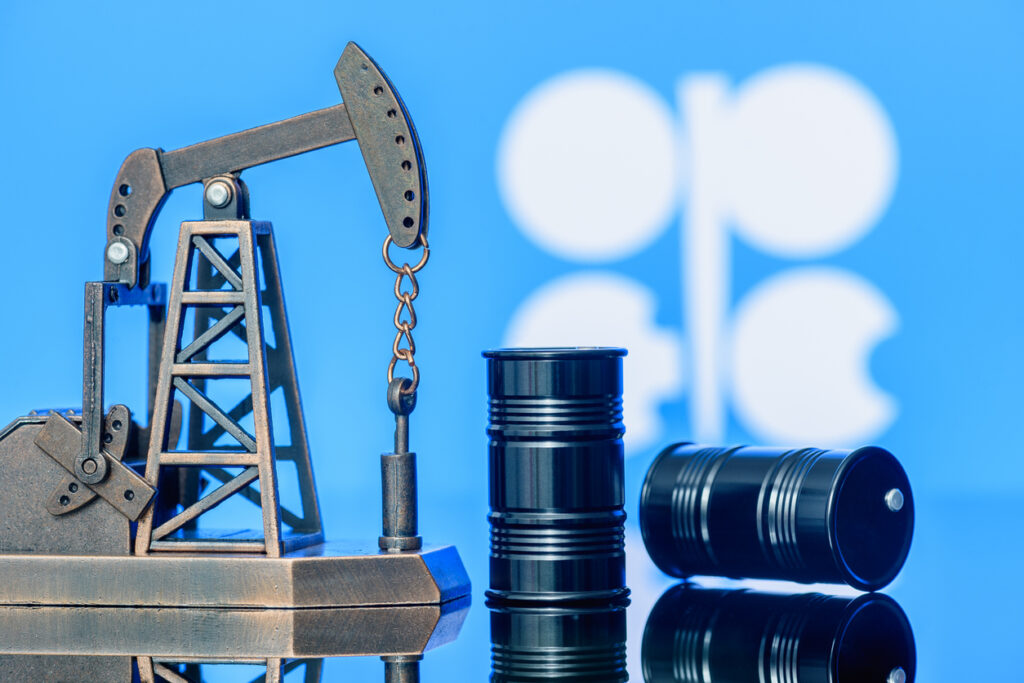
Amidst strides in the energy sector, the average daily crude production is still below the 1.5-million-barrel quota set for Nigeria by the Organisation of the Petroleum Exporting Countries.
This is contained in the OPEC monthly oil market report released in April.
In the report, crude production in Nigeria in March stood at 1.38 mbpd. Although there was a 69,000 bpd rise from the 1.31 mbpd recorded in February, the figure is still 117,000 bpd below the OPEC quota.
The figures for February show a month-on-month decline of 146,000 barrels per day, widening the nation’s shortfall from its OPEC production allocation.
This is the eighth consecutive month the country has failed to meet the OPEC quota since July 2025.
Recall that although Nigeria recorded a marginal increase in January, when production rose from 1.422 mbpd in December 2025 to 1.459 mbpd, the rebound was short-lived as output fell significantly in February.
Data earlier obtained from the Nigerian Upstream Petroleum Regulatory Commission had also shown that crude oil production weakened at the end of 2025. Production declined from 1.436 mbpd in November 2025 to 1.422 mbpd in December, before recovering slightly in January.
In 2025, Nigeria’s crude oil production fell below its OPEC quota in nine months of the year, meeting or slightly exceeding the target only in January, June, and July. Nigeria opened 2025 strongly, producing 1.54 mbpd in January, about 38,700 barrels per day above its OPEC allocation.
Meanwhile, production slipped below the quota in February at 1.47 mbpd and weakened further in March to 1.40 mbpd, marking one of the widest shortfalls during the year.
The report showed that several heavyweight OPEC producers implemented sharp cuts. Saudi Arabia’s output plunged by 2.35 mbpd to 7.76 mbpd, while Iraq slashed production by 2.23 mbpd to 1.9 mbpd.
In a similar vein, the United Arab Emirates and Kuwait also posted steep declines of 1.48 mbpd and 1.380 mbpd, respectively.
Venezuela increased production by 75,000 bpd to 1.1 mbpd, Congo added 16,000 bpd to reach 307,000 bpd, and Libya gained 15,000 bpd to 1.3 mbpd. Algeria recorded a marginal drop of 2,000 bpd.
Related Stories



Sign up for our newsletter.
Get the latest news, expert analysis, and industry insights delivered straight to your inbox. Join thousands of professionals shaping the future of energy.
By submitting my information, I agree to the Privacy Policy and Terms of Service.