Renewables
Egypt Invests Billions in New Renewable Energy Deal
Spanning approximately 50,000 square meters, the facility is anticipated to be the first of its kind in the Middle East and Africa, boasting an annual production capacity of 10 GWh upon full operationalization.
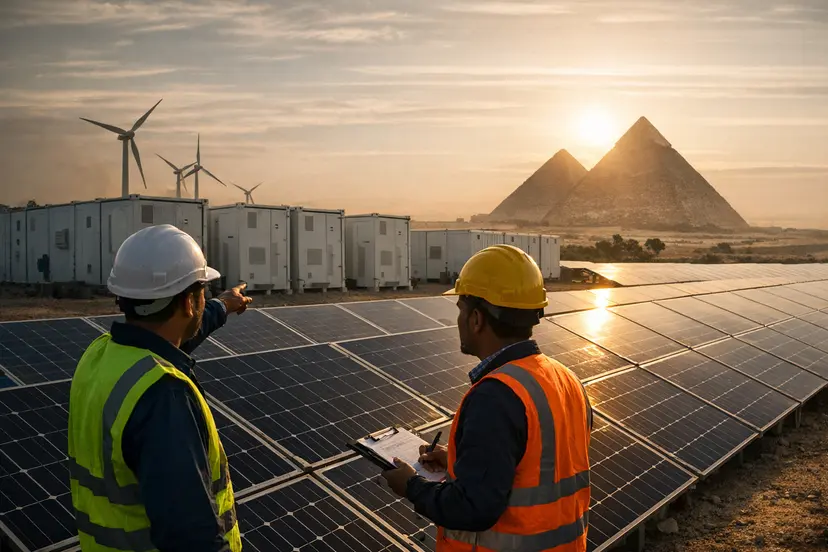
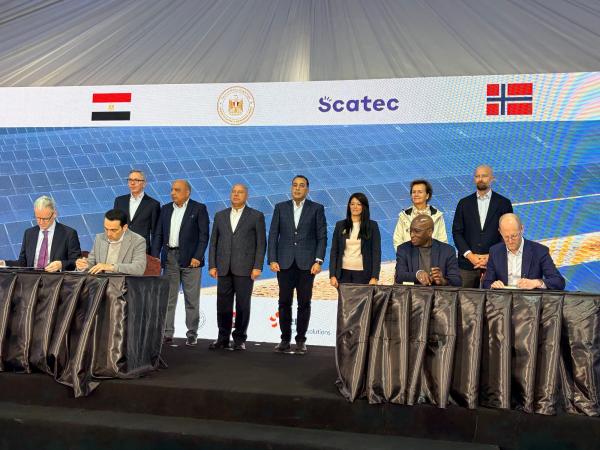
In a bid to accelerate efforts on solar power generation and battery storage capacity, Egypt has signed renewable energy agreements worth a combined $1.8 billion with two international companies.
Details circulating across news wires indicate that the agreements include the development of a large-scale solar and battery storage project by Scatec, along with plans by Sungrow to establish a battery energy storage manufacturing facility in the Suez Canal Economic Zone.
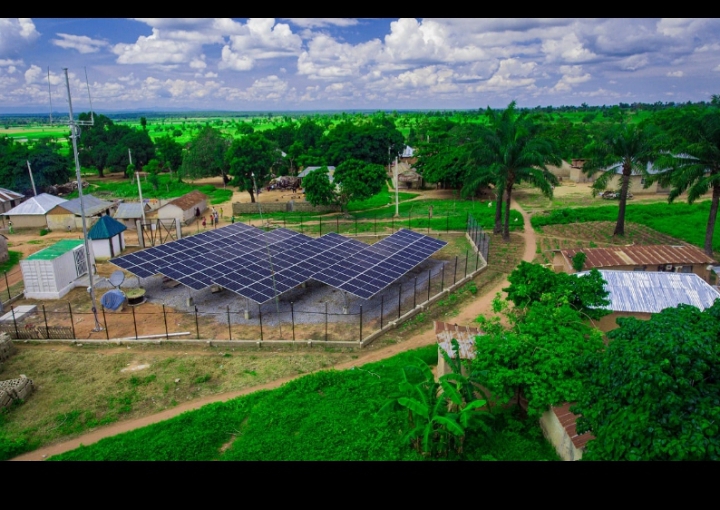
Scatec will work on the “Energy Valley” project in Minya Governorate, which will comprise a 1.7 gigawatt (GW) solar photovoltaic plant supported by 4 gigawatt-hours (GWh) of battery energy storage systems distributed across Minya, Qena, and Alexandria.
It also features the construction of new substations and transmission lines to supply electricity to industrial areas in Upper Egypt.
Additionally, Scatec has signed a power purchase agreement with the Egyptian Electricity Transmission Company to deliver a total of 1.95 GW of solar power and 3.9 GWh of battery storage capacity. In a related development, Sungrow will establish a battery energy storage system (BESS) manufacturing plant in the TEDA Egypt zone in Ain Sokhna, within the Suez Canal Economic Zone.
Spanning approximately 50,000 square meters, the facility is anticipated to be the first of its kind in the Middle East and Africa, boasting an annual production capacity of 10 GWh upon full operationalization.
Information reaching the media explained that the production is billed to kick off by April 2027, with a portion of the output intended to supply the Energy Valley project.
The projects are being implemented in coordination with the Ministry of Electricity and Renewable Energy and the General Authority for the Suez Canal Economic Zone. They are part of Egypt’s plans to raise the share of renewable energy in its power mix to more than 42 percent by 2030, with longer-term targets of 60 to 65 percent by 2040 with sources close to the deal saying achieving these targets will depend on sustained international investment.
Related Stories
Sign up for our newsletter.
Get the latest news, expert analysis, and industry insights delivered straight to your inbox. Join thousands of professionals shaping the future of energy.
By submitting my information, I agree to the Privacy Policy and Terms of Service.