Power
Gambia: Barrow Vows Power Supply Fix by End of October
Gambia's electricity crisis is testing how far political goodwill can stretch when new generation capacity still lags months behind public frustration.
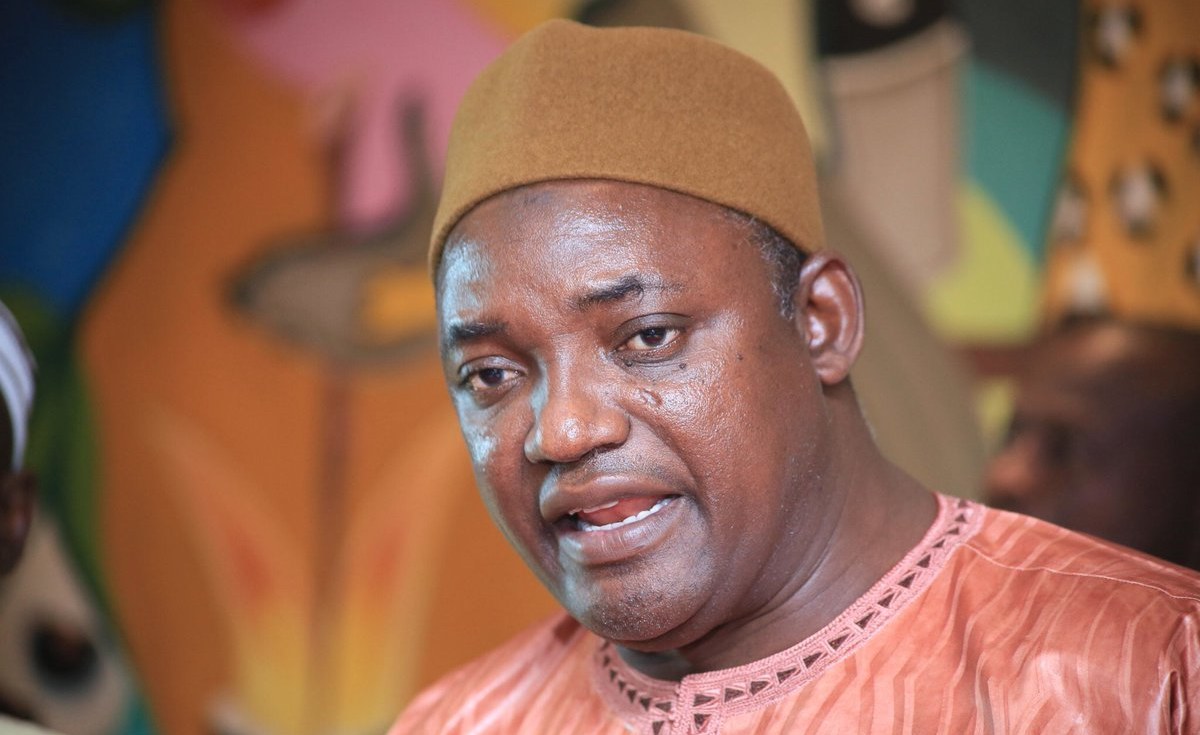
Gambia's President Adama Barrow has pledged that the country's electricity supply will improve by the end of October, after protests broke out in Banjul over persistent power outages that have disrupted households and businesses.
Protesters carried candles through parts of the capital on Monday night, chanting for the restoration of electricity, according to local reports.
The demonstrations prompted Barrow to visit the National Water and Electricity Company (NAWEC) on Tuesday, before addressing the nation from State House later that evening.
"I must admit, however, the shortcomings in our planning, power generation, and maintenance systems to take corrective measures," Barrow said.
He acknowledged the hardship caused by the outages, saying families were enduring extreme heat, children were studying in darkness and households were losing food due to inadequate refrigeration. "I am aware of your discomfort and frustrations wherever you may be," he said.
New generation capacity due by October
Barrow said an additional 24 megawatts of generation capacity at the Brikama Power Station is in the final stages of installation and is expected to be commissioned by the end of October.
He also said a contract had been awarded for a 50-megawatt solar power plant in Soma, with the contractor now mobilising resources to begin construction.
According to Barrow, solar generation would help meet daytime electricity demand, freeing up conventional generators to be reserved for the country's higher evening demand.
Barrow attributed part of the crisis to wider regional shortages, saying countries connected through the West African Power Pool, a network that allows member states to share electricity across borders, were facing similar challenges.
He pointed to record electricity demand, failures at major generating units, and seasonal conditions affecting hydropower output through the Organisation for the Development of the Gambia River (OMVG), while also acknowledging that domestic weaknesses had contributed to the situation.
To oversee the response, Barrow announced a Presidential Task Force on Electricity Supply, chaired by Vice President Muhammed B.S. Jallow, which will report directly to the president and provide public updates every two weeks.
Access has grown, but supply has not kept pace
Barrow defended his administration's record on expanding electricity access, saying it had risen from 36% of the population in 2017 to about 90% currently.
He said that expansion had brought power to communities that previously had none, but acknowledged the government must now ensure generation capacity keeps pace with the resulting rise in demand. "What we have achieved in increasing access to electricity is what we are determined to do for power generation," he said.
Barrow also appealed for restraint following the protests, warning against damage to transformers, power lines and other electricity infrastructure. .
"You have the right to express your views honestly, but let us not, in our frustration, tear down what we built with our own hands through public funds," he said, adding that damage to infrastructure would further disrupt supply and divert government resources toward repairs.
Barrow stopped short of promising an immediate end to the outages. "I will not promise you what the Government cannot deliver, but we commit that the electricity supply situation in the country will improve by the end of October 2026," he said, urging Gambians to remain patient while engineers and officials work to stabilise the system.
Related Stories
Sign up for our newsletter.
Get the latest news, expert analysis, and industry insights delivered straight to your inbox. Join thousands of professionals shaping the future of energy.
By submitting my information, I agree to the Privacy Policy and Terms of Service.