Renewables
Gambia Launches Hybrid Solar-Powered Ferry, Trains Personnel
The new vessel signals shift toward cleaner maritime transport while improving passenger capacity and reliability on key crossing route.
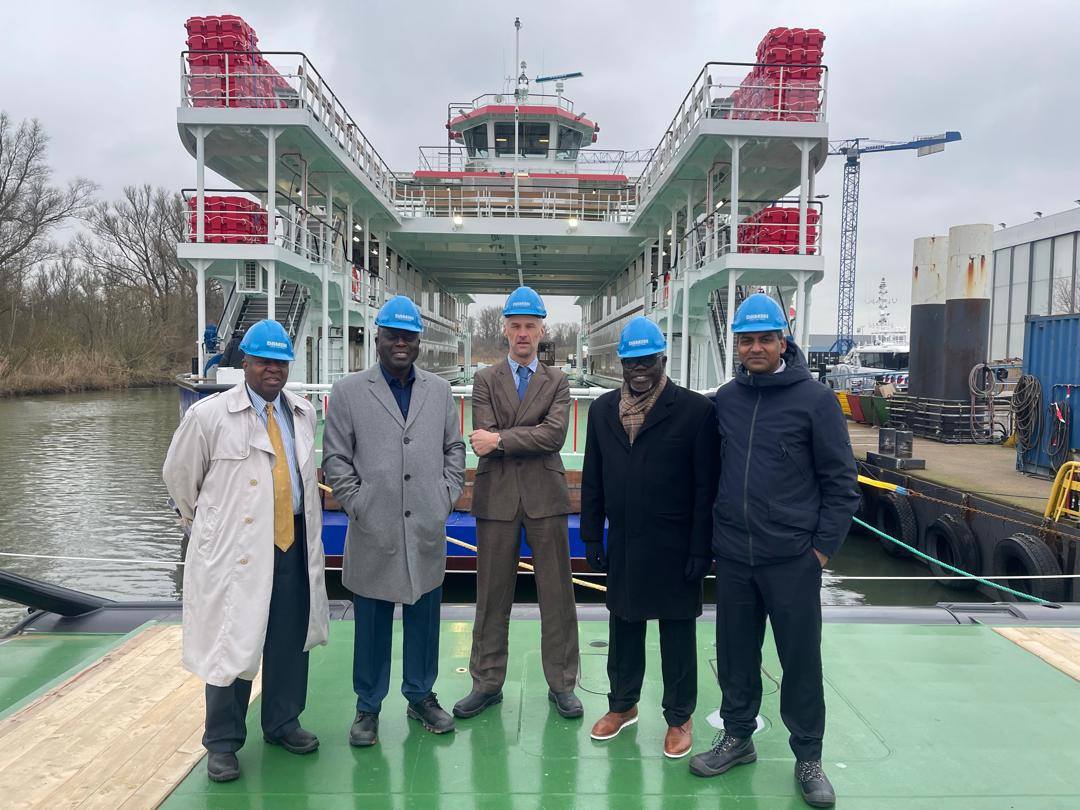
The Gambia has introduced a hybrid green ferry powered partly by solar energy to strengthen transport operations between Banjul and Barra.
The vessel, named Barra, recently arrived from the Netherlands and is set to join the fleet operating along the busy route linking the capital to the coastal town. It is the first ferry of its kind in the country, combining fuel-powered generators with battery-assisted solar technology to reduce emissions.
Existing ferries in the fleet rely solely on fuel engines, marking a shift toward cleaner maritime transport with the addition of the new vessel.
The Gambia Ferry Services described the development as a major step for the transport system and communities that depend on the crossing. The ferry can carry up to 1,000 passengers and more than 50 vehicles per trip.
The government has also engaged engineers from Damen Shipyards Group to provide long-term technical training for staff of Gambia Ferry Services following the ferry’s arrival.
Transport Minister Ebrima Sillah said the Dutch shipbuilding firm’s engineers would remain in the country for between one and two years to support training and capacity building for ferry personnel. He noted that the hybrid design of the Barra distinguishes it from older vessels in the national fleet.
“This ferry is different from others because it does not only depend on fuel; it also uses solar energy and battery systems that help power the engine,” Sillah said.
According to the minister, the vessel can carry up to 2,000 passengers and 27 vehicles. However, when vehicle numbers are high, passenger capacity will be reduced to about 1,200. The ferry is also equipped with four to five restroom facilities, he added.
The arrival comes as parts of the ageing fleet undergo routine maintenance, including the Kunta Kinteh ferry commissioned in 2017. Officials said the new vessel would improve efficiency, reliability, and safety on the route.
The crossing spans about five kilometres across the estuary between Banjul and Barra and is used daily by thousands of commuters and travellers, including those heading to neighbouring countries.
Authorities have yet to announce a date for the ferry’s first official operation.
Related Stories





Sign up for our newsletter.
Get the latest news, expert analysis, and industry insights delivered straight to your inbox. Join thousands of professionals shaping the future of energy.
By submitting my information, I agree to the Privacy Policy and Terms of Service.