Renewables
Global Renewable Energy Jobs Surge as Africa Risks Being Left Behind
IRENA-ILO's new reports shows that global renewable energy employment reached 16.6 million jobs in 2024,
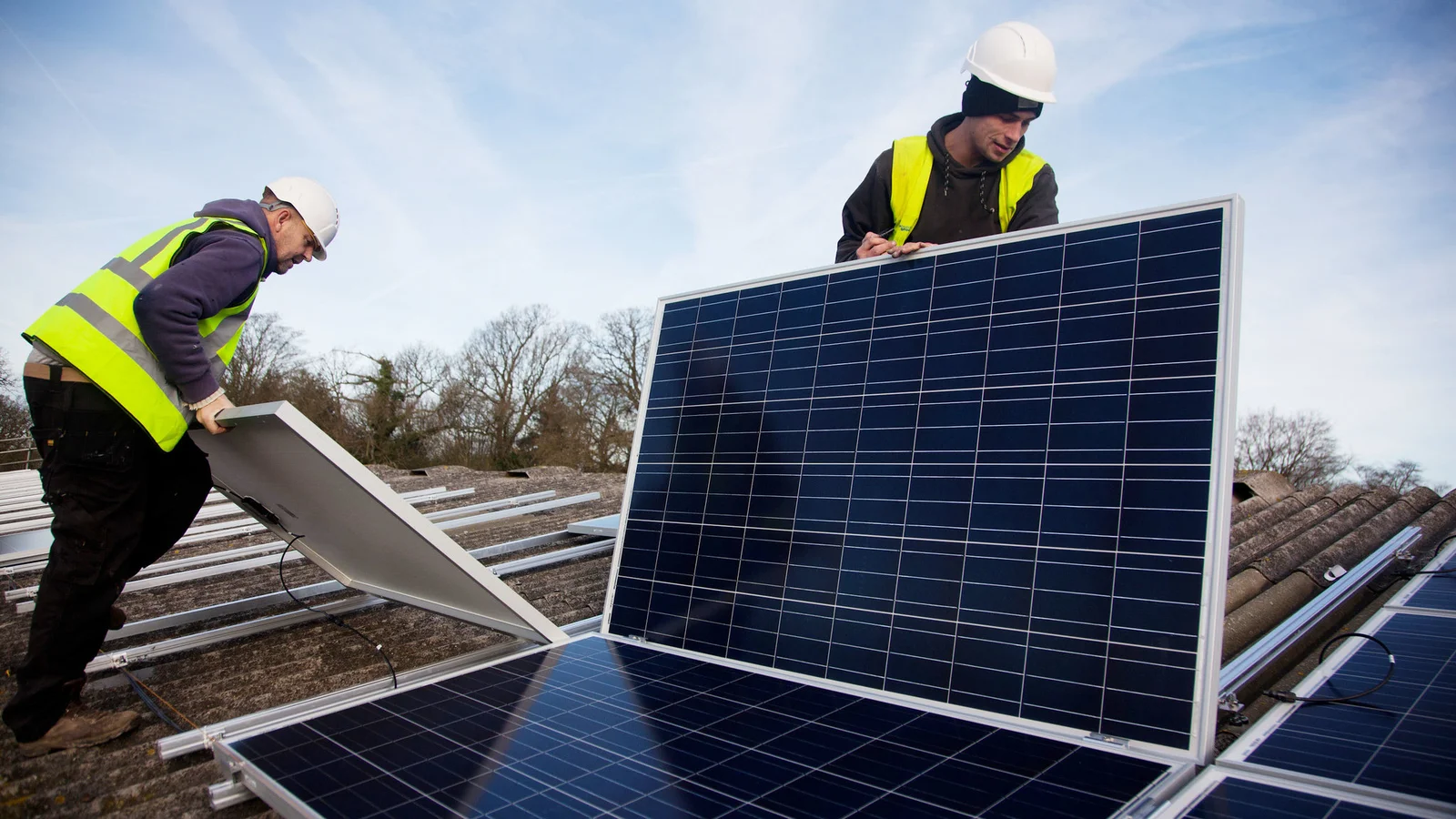
Global employment in renewable energy reached an estimated 16.6 million jobs in 2024, indicating continued expansion across solar, wind, hydropower, and bioenergy,according to the International Renewable Energy Agency (IRENA) and the International Labour Organisation (ILO) report, Renewable Energy and Jobs: Annual Review 2025. Governments across major markets accelerated deployment to meet climate targets, strengthen energy security, and reduce generation costs.
Despite this expansion, employment growth slowed compared with previous years. The report attributes this trend to rising labour productivity, automation, and manufacturing efficiency, which have reduced job intensity across several segments of the sector. At the same time, grid bottlenecks and system constraints have delayed project timelines in multiple regions. Together, these dynamics favour countries with established industrial bases and integrated power systems, reinforcing uneven global job distribution.
Global Concentration of Renewable Energy Jobs
Renewable energy employment remains highly concentrated geographically. Manufacturing-led job growth particularly in solar photovoltaic (PV), wind, battery storage, and advanced grid technologies is clustered in regions with mature industrial ecosystems, skilled labour pools, and long-term policy certainty. China alone accounts for roughly 44 per cent of global renewable energy employment, driven largely by its dominance in solar PV and wind manufacturing.
Africa’s position within this landscape differs markedly. While the continent is an expanding market for renewable energy deployment including utility-scale solar, distributed generation, mini-grids, and off-grid systems, most core equipment such as panels, turbines, inverters, and batteries is imported. As a result, renewable energy employment in Africa is concentrated in project development, construction, installation, and basic operations and maintenance.
The IRENA–ILO report notes that Africa’s participation in solar manufacturing remains largely confined to downstream activities such as module assembly, with limited involvement in higher-value segments of the supply chain. Emerging PV assembly capacity is identified in South Africa, Egypt, Morocco, Tunisia, Kenya, and Nigeria, though production volumes remain modest and largely oriented toward domestic or regional markets.
This structure limits the scale and durability of employment gains. Manufacturing and component production typically generate stronger employment multipliers and longer value chains. Where these activities are absent, renewable energy expansion delivers fewer sustained labour benefits.
Structural Constraints Shaping Employment Outcomes
Several factors continue to shape Africa’s renewable energy employment outcomes. Local manufacturing capacity remains limited in scale and competitiveness. While assembly initiatives exist, they face cost pressures from global suppliers, fragmented markets, and inconsistent industrial policy support, constraining their ability to scale or integrate into regional value chains.
Skills availability also plays a critical role. The demand for specialised expertise in grid integration, digital monitoring, system optimisation, and power electronics. In many African countries, training and workforce development systems have not expanded at the same pace as deployment, limiting local participation in higher-value technical and managerial roles.
Policy alignment remains uneven. Renewable energy targets are often developed separately from labour, education, and industrial strategies. Local content measures, where applied, are not always aligned with market realities, reducing their effectiveness in building durable supply chains or supporting workforce development.
Implications for Africa’s Energy Transition
Africa faces rising energy demand, persistent electricity access gaps, and a rapidly growing workforce. Renewable energy deployment is central to addressing these challenges, but the report underscores that deployment alone does not guarantee broad employment gains.
Power-sector constraints further limit job creation. Grid instability, limited transmission capacity, and weak system planning restrict productive electricity use, reducing the indirect employment benefits that typically accompany reliable power supply. Where electricity cannot support industry, agro-processing, or digital services, renewable investment delivers fewer economy-wide labour effects.
As global supply chains consolidate and renewable technologies mature, entry barriers continue to rise. The IRENA–ILO analysis suggests that countries combining deployment with industrial development, skills investment, and power-system planning are better positioned to capture employment benefits. Where these elements remain fragmented, renewable capacity expands without a corresponding increase in jobs.
Related Stories

Sign up for our newsletter.
Get the latest news, expert analysis, and industry insights delivered straight to your inbox. Join thousands of professionals shaping the future of energy.
By submitting my information, I agree to the Privacy Policy and Terms of Service.