Finance
Osinbajo, González Lead New Global Coalition to Redesign Development Finance
The coalition will rethink development cooperation at a time of shrinking aid budgets, mounting global crises and growing doubts about the effectiveness of existing systems.
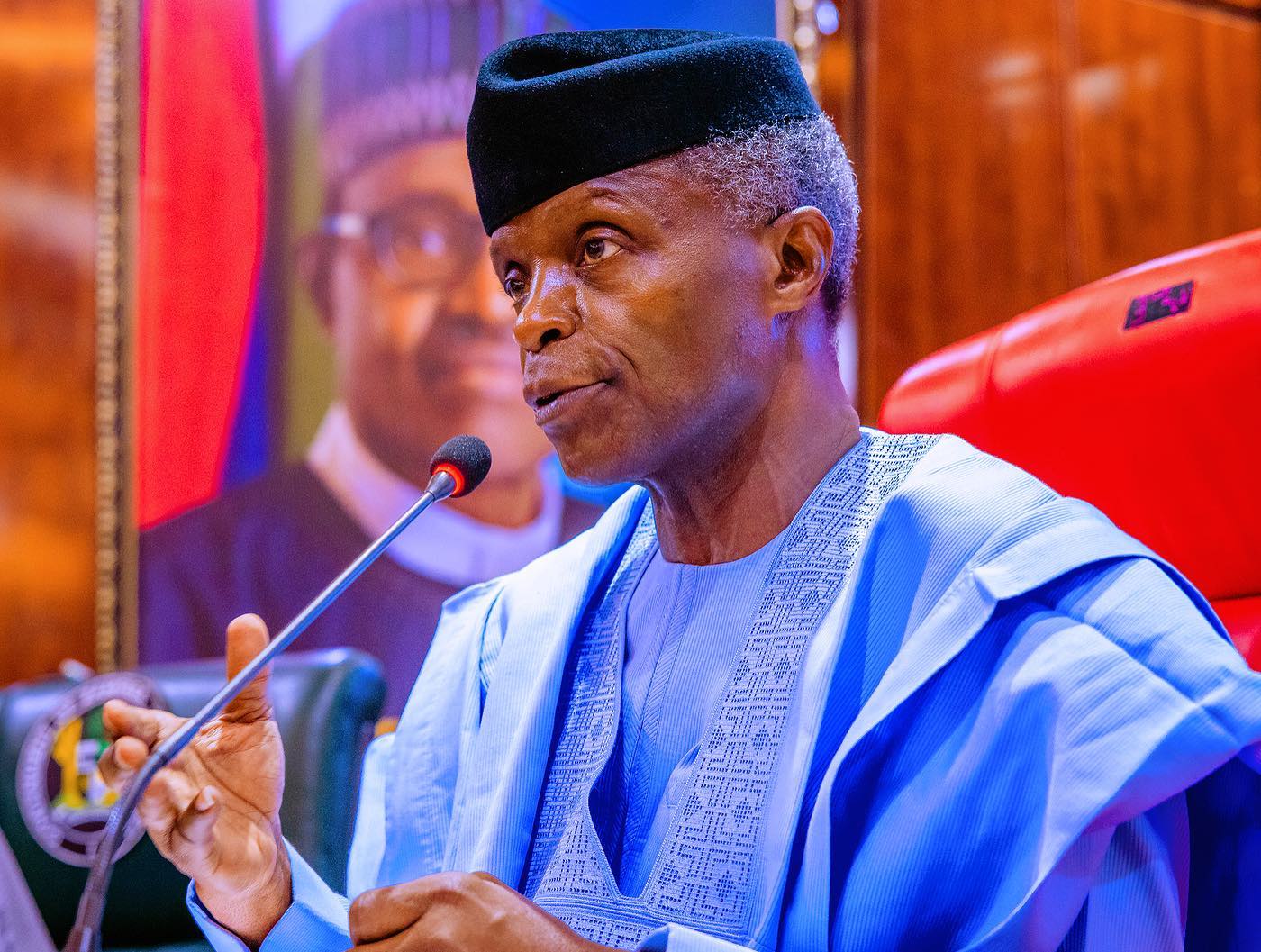
A new international coalition has been launched to reimagine how countries cooperate to finance and deliver sustainable development, with former Nigerian Vice President Yemi Osinbajo and former Spanish Foreign Minister Arancha González Laya appointed as co-chairs.
The initiative, known as the Future of Development Cooperation Coalition, was announced on Wednesday during the World Economic Forum (WEF) in Davos, Switzerland. It is described as an independent, time-bound effort to rethink development cooperation at a time of shrinking aid budgets, mounting global crises and growing doubts about the effectiveness of existing systems.
Speaking at the event, González Laya said the effort comes at a moment when traditional models of development cooperation are under strain and require a more ambitious rethink.
She said that although 2025 was defined by shrinking aid budgets and tough fiscal decisions, 2026 must focus on developing a credible vision for how cooperation can work more effectively across governments, the private sector and civil society.
According to her, the coalition would examine whether current systems truly place countries’ priorities at the centre and enable transformation at scale, adding that inconsistent outcomes make reform unavoidable.
Osinbajo said development cooperation directly affects the daily realities of people in many countries, influencing job creation, education and recovery from crises. He stressed the need to move beyond a narrow assistance mindset and instead harness broader partnerships spanning investment, trade and economic transformation.
“For many countries, development cooperation isn’t a theoretical debate—it’s about daily realities,” said Coalition Co-Chair Yemi Osinbajo.
Supported by a group of commissioners drawn from public, private and civil society leadership, the coalition will operate over the next 12 months. Its mandate is to step back from incremental reforms and ask fundamental questions about the purpose and structure of development cooperation in the 21st century.
This confronts the reality that development cooperation now goes far beyond traditional aid. Although Official Development Assistance exceeds 200 billion dollars annually, it accounts for less than 10 per cent of total financial flows to developing countries.
Many countries now act simultaneously as recipients, providers, investors and innovators, creating a more complex ecosystem shaped by public policy, private capital, civil society action and global public goods.
The coalition plans to explore how these different elements can work together more effectively to support sustainable development.
Its launch comes amid growing global pressures, including rising debt burdens in more than 50 countries, intensifying climate shocks, increasing fragility and conflict, and geopolitical fragmentation that is complicating multilateral cooperation.
Over the coming year, the coalition will engage governments, international institutions, private sector leaders, technology actors, civil society organisations and youth groups across regions.
The consultations will assess existing development cooperation flows and practices, identify gaps and misalignments, and produce actionable recommendations for reform.
Initial engagements are expected to begin in early 2026.
Related Stories



Sign up for our newsletter.
Get the latest news, expert analysis, and industry insights delivered straight to your inbox. Join thousands of professionals shaping the future of energy.
By submitting my information, I agree to the Privacy Policy and Terms of Service.