Finance
African Leaders Push for Energy and Green Financing at AfDB Meeting
African leaders have used the AfDB Annual Meetings to push for stronger financing of energy, infrastructure and climate-linked growth as Africa seeks to fund its own development agenda.
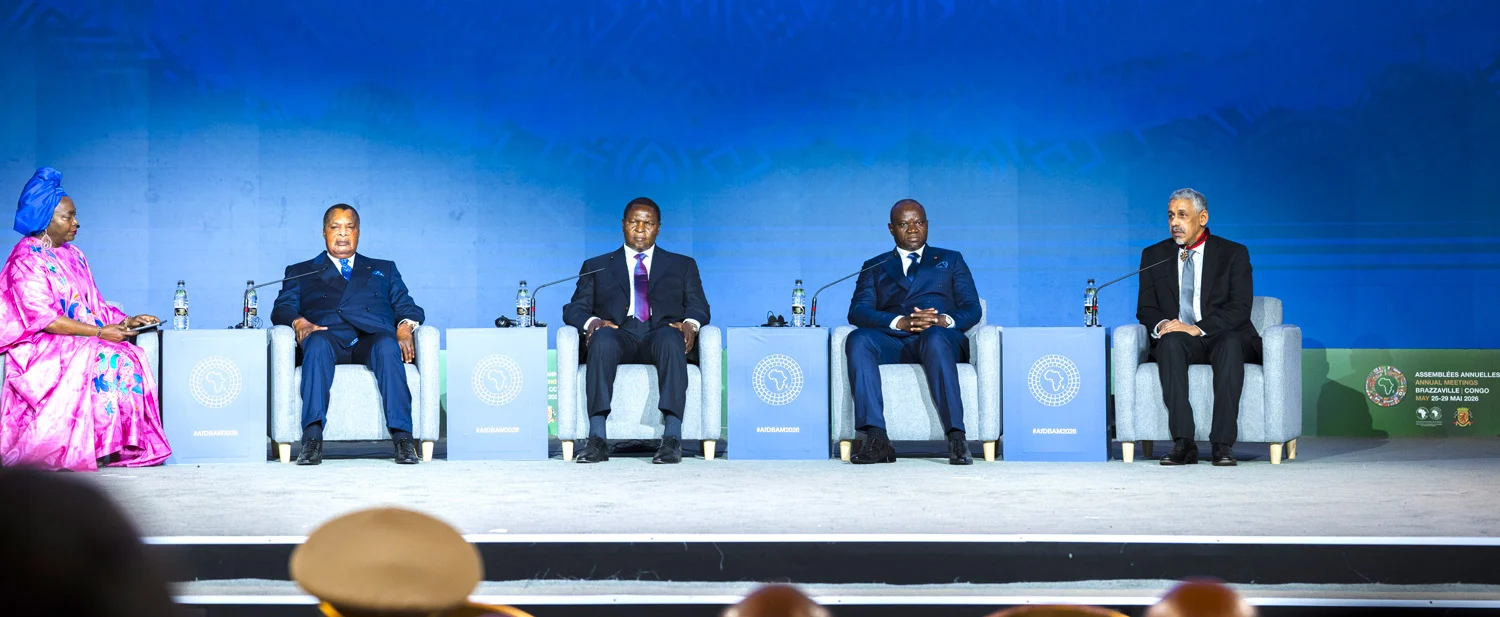
African leaders have used the opening day of the 2026 Annual Meetings of the African Development Bank Group to press the case for more energy investment, stronger industrial planning and greater climate finance, while also urging the continent to mobilise more private capital for its development needs.
The presidential dialogue, held on Tuesday at the Kintele Conference Centre in Brazzaville, Republic of Congo, brought together the presidents of Gabon, the Central African Republic and the host nation, Republic of Congo, alongside Dr Sidi Ould Tah, President of the African Development Bank Group.
The discussion took place after the opening ceremony and before an audience made up of senior government officials, African Development Bank governors, finance leaders, development partners, private sector representatives and civil society actors.
This year’s Annual Meetings are being held under the theme, “Mobilising Africa’s Development Financing at Scale in a Fragmented World,” a fitting backdrop for a discussion focused on how the continent can fund its own development ambitions at a time of global uncertainty.
Rather than presenting energy as a narrow sectoral issue, the leaders framed it as the foundation for almost every other development priority. From power generation to industrial expansion, climate resilience, conservation finance and youth employment, the message was that Africa’s future growth depends on the ability to turn local resources into productive, bankable investments.
President Brice Oligui Nguema of Gabon said his government is looking to convert the country’s natural wealth and environmental assets into sustainable growth through biodiversity finance and eco-tourism.
He explained that Gabon is working to monetise its forest conservation efforts and biodiversity value through a national carbon-credit system and a specialised agency responsible for managing and marketing environmental credits abroad.
“We would like to develop our forests while preserving nature,” he said, adding that ecological tourism could create value without damaging the country’s natural heritage. His remarks reflected a broader push by Congo Basin countries to argue that those protecting global forests should receive stronger international compensation for doing so.
President Denis Sassou Nguesso of the Republic of Congo widened the debate by stressing the need for African economies to move beyond hydrocarbons, even as oil and gas continue to play a central role in state revenues.
He pointed to plans to develop fertiliser production from the country’s potash, phosphate and natural gas reserves, describing this as a way to position Congo as a future supplier to African and global agricultural markets.
At the same time, he placed energy at the centre of industrial development, highlighting the hydropower potential of the Congo River basin and the government’s cooperation with the African Development Bank Group on regional electricity projects. “It is not possible to achieve development without energy,” he said, underlining the view that power supply remains the starting point for industrial transformation.
He also linked conservation to rural livelihoods, saying environmental protection must be tied to practical opportunities for local communities. Without that, he warned, people could be pushed towards hunting wildlife simply to survive.
President Faustin-Archange Touadéra of the Central African Republic focused on the needs of landlocked economies, calling for more support from the Bank Group to unlock opportunities through roads, electricity generation and regional connectivity. He said his country has huge potential and now enjoys peace, creating conditions that could attract investors into multiple sectors.
Touadéra said his government supports Mission 300, the joint African Development Bank and World Bank initiative aimed at giving electricity access to 300 million Africans by 2030. His intervention tied directly into the wider theme of how infrastructure and power access can become catalysts for private investment and broader economic inclusion.
Dr Ould Tah responded by stressing that Africa already has significant resources that could be channelled into development if the right structures are in place. He said the continent holds an estimated four trillion dollars in African-owned financial assets that could be better mobilised for bankable projects.
“It is our role at the bank to work with states and financial institutions to design bankable projects and mobilise the necessary financing,” he said. He added that the Bank will also focus on improving the investment environment, protecting investors and building partnerships capable of narrowing Africa’s financing gap.
He argued that better conditions for investors are essential if more foreign direct investment is to be drawn into African economies. In his view, financing is not just about access to capital, but also about creating the confidence needed for long-term commitments.
One of the strongest themes to emerge from the dialogue was the role of Africa’s young population. President Nguema said the continent’s greatest asset is not its minerals but its people, especially its youth and human capital. He called for greater investment in education, engineering and technical training, saying Africa must believe in its young people and equip them to shape the continent’s future.
Taken together, the remarks in Brazzaville painted a picture of a continent seeking to move from aspiration to execution. Energy was presented not as an isolated policy debate, but as the backbone of Africa’s industrialisation, climate strategy and financing agenda. The dialogue suggested that for Africa, the real challenge is not the absence of opportunity, but the ability to structure it into projects that can attract capital, create jobs and deliver lasting development.
Related Stories
Sign up for our newsletter.
Get the latest news, expert analysis, and industry insights delivered straight to your inbox. Join thousands of professionals shaping the future of energy.
By submitting my information, I agree to the Privacy Policy and Terms of Service.
