Policy & Governance |Finance |Climate & Sustainablity
AU Summit 2026: Security, Climate Crises Dominate Agenda in Addis Ababa
African leaders meeting at the AU Summit in Addis Ababa are placing climate risk, energy transition, and economic financing at the centre of discussions, as conflicts, floods and drought intensify pressure for faster policy action across the continent.
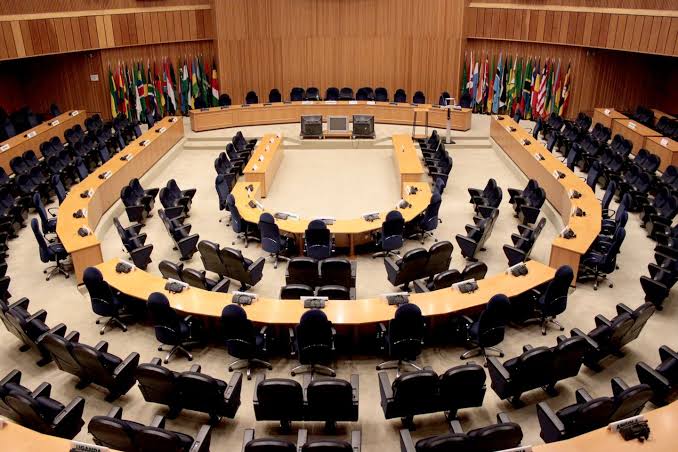
African leaders have convened in Addis Ababa for the 39th African Union (AU) Summit amid escalating security crises, intensifying climate shocks and growing pressure to accelerate economic reforms across the continent.
The meeting comes as conflicts persist in Sudan and eastern Democratic Republic of the Congo, floods affect more than 1.3 million people across Southern Africa, and prolonged drought grips parts of East Africa; reinforcing the urgency of climate adaptation, food security and resilient infrastructure.
Discussions at the summit are also focusing on how Africa finances development, builds industrial capacity and positions its energy and mineral resources within a rapidly shifting global transition.
Across policy sessions and side engagements, stakeholders are urging leaders to move beyond declarations toward implementation, particularly around climate finance, green industrialisation, domestic resource mobilisation and stronger continental production systems under Agenda 2063.
Louis Cheick Sissoko of the African Union’s Economic, Social and Cultural Council (ECOSOCC) said that global energy and climate shifts are already reshaping Africa’s development landscape.
“Global dynamics around energy security, fossil fuel phase-out, critical minerals, industrialisation and climate finance are actively redefining Africa’s development agenda,” he said.
Energy access, infrastructure and industrial policy have emerged as key themes, as governments confront declining external funding and increasing pressure to finance development internally.
Kenyan President William Ruto linked climate priorities with economic planning and investment decisions, pointing to continental initiatives supporting delivery.
“Africa cannot afford to wait. Climate priorities must sit at the centre of economic planning and investment,” Ruto said, noting that the Africa Green Industrialisation Initiative secured about $100bn in commitments from African financial institutions at the last Africa Climate Summit.
Mahmoud Ali Youssouf, Chairperson of the African Union Commission, emphasised the role of domestic financing and infrastructure in supporting industrialisation.
“Mobilising domestic resources is now essential. Industrialisation will depend on developing Africa’s energy potential and high-performing infrastructure,” he said.
The summit is taking place amid mounting climate risks, with leaders stressing the continent’s vulnerability despite its limited contribution to global emissions.
UN Secretary-General, António Guterres, called for stronger global support for adaptation and a more equitable energy transition.
“Africa faces faster-than-average warming despite contributing almost nothing to the crisis. Adaptation must be a priority,” he said.
He also called for expanded climate finance, stronger early-warning systems and fair participation in critical-mineral value chains linked to the global energy transition.
Ethiopian Prime Minister Abiy Ahmed underscored the need for equity in global climate cooperation.
“Climate action must be anchored in justice, with finance, technology and partnerships aligned to support Africa’s development,” he said.
Dr Antwi-Boasiako Amoah, Chair of the African Group of Climate Negotiators, said recent floods and droughts highlight the urgency of linking climate policy with energy security, industrial development and financing frameworks.
“Africa’s transition must be equitable and properly financed, while strengthening resilience and economic opportunities,” he said.
Leaders and policy experts say decisions emerging from the summit will shape Africa’s approach to energy, climate resilience and economic transformation under Agenda 2063.
Related Stories
Sign up for our newsletter.
Get the latest news, expert analysis, and industry insights delivered straight to your inbox. Join thousands of professionals shaping the future of energy.
By submitting my information, I agree to the Privacy Policy and Terms of Service.