Power |Oil & Gas
BHEL Wins Biggest-Ever Turbine Deal from Dangote Refinery in Nigeria
The recent contract focuses on expanding the refinery's captive power infrastructure, a critical system that provides reliable electricity for continuous refining and petrochemical production.
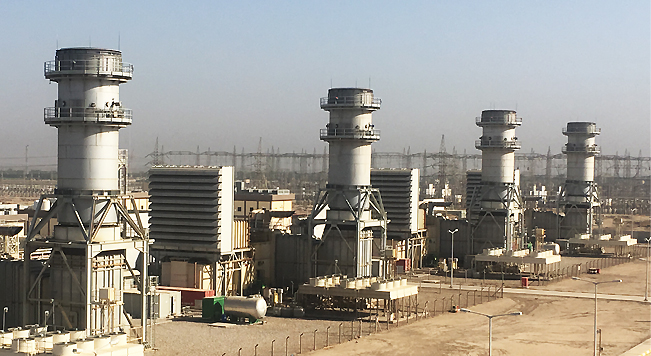
India's state-owned Bharat Heavy Electricals Ltd (BHEL) has signed a contract to supply eight gas turbine generator packages to Dangote Petroleum Refinery and Petrochemicals Free Zone Enterprise in Nigeria, part of the Dangote Group, one of Africa's largest and most diversified conglomerates.
BHEL calls it the company's largest single order for gas turbine generator packages on a supply-and-supervision basis, by both quantity and value.
BHEL will design, manufacture, and supply the equipment, and supervise its erection, commissioning, and performance testing at the project site in Nigeria's Dangote Industries Free Zone. Civil works are excluded from the scope.
The equipment will be built at BHEL's facilities in Hyderabad and Bengaluru, then shipped to Mumbai Port for onward transport to Nigeria. The project is due for completion within 26 months.
The turbines will power both Dangote's petroleum refinery and its polypropylene plant, which sit inside the world's largest single-train refining complex. BHEL says it won the order through an international tender, competing against established global turbine manufacturers.
The gas turbine generators will supply captive power across the refinery's core operations, including crude oil processing and petrochemical production units, utility plants, and process heating systems. The power will also run water treatment, instrument air, and hydrogen production units, alongside control and automation systems and emergency and auxiliary power needs.
Captive power push, Scale of the order
Nigeria's national grid has long struggled to deliver reliable supply, and the order continues Dangote Refinery's build-out of captive power generation rather than dependence on it. Refineries at this scale typically run their own gas turbine plants because outages on a petrochemical processing line can cost millions of dollars in lost output per day.
Other African refiners and heavy industry operators watching Dangote's playbook are likely drawing the same conclusion: self-generation, not grid connection, is increasingly the default for projects at this scale.
The commissioning supervision built into the contract keeps BHEL's engineers on site through installation and startup, not just as equipment suppliers.
BHEL's only prior turbine supply in Nigeria was one 26 MW package delivered to the Cross River State government, far smaller than an eight-unit order for a refinery of Dangote's size.
The company has also carried out power sector projects elsewhere on the continent, including in Egypt, Ethiopia, Libya, Rwanda, Senegal, and Sudan, mostly at smaller scale. Set against that footprint, this order is a sharp jump rather than a continuation of business as usual.
Winning this contract gives BHEL a stronger case when bidding for future refinery, cement, or fertiliser projects on the continent, sectors where reliable power generation is a basic requirement and where Dangote Group itself has heavy interests
Related Stories
Sign up for our newsletter.
Get the latest news, expert analysis, and industry insights delivered straight to your inbox. Join thousands of professionals shaping the future of energy.
By submitting my information, I agree to the Privacy Policy and Terms of Service.