Power |Finance
World Bank Funding Shift Opens Door for Africa's Small Nuclear Plants
After 60 years of saying no to nuclear, the World Bank changes course; see which African countries are first in line for small reactors.
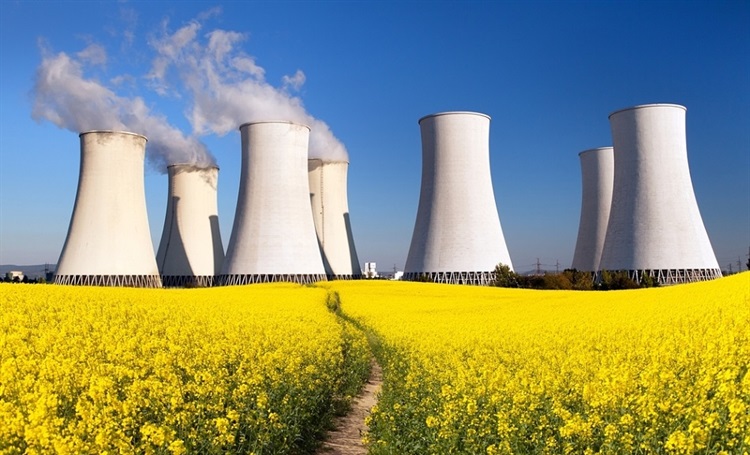
The World Bank has ended a six-decade refusal to fund nuclear power, a change agreed with the International Atomic Energy Agency (IAEA) in June last year that now gives countries such as Rwanda, Ghana, and Kenya a path to pay for small modular reactors (SMRs) they could not previously afford.
The shift, together with a cooperation deal signed in February between the OECD Nuclear Energy Agency, the African Union, and the African Commission on Nuclear Energy, comes as at least ten African countries study the technology, drawn by reactor units small enough to fit their power grids.
Financing has been the missing piece
Lassina Zerbo, who chairs the Rwanda Atomic Energy Board, at last year's World Nuclear Exhibition in Paris, said no African country today is ready financially to implement a nuclear power plant immediately.
His words explain why the World Bank's policy change carries weight beyond South Africa's Koeberg station, which has run since 1984 and still supplies only about 5 per cent of the country's electricity, and beyond Egypt's El Dabaa plant, where four reactors totalling 4.8GW are under construction with Rosatom under a 2017 deal and the first unit due in 2028.
Small reactors have made the sums easier to imagine. A conventional 1GW station needs a grid large enough to absorb its power and to cope if it shuts down without warning, a size most African networks do not have.
SMRs are built in factory-made modules of around 50MW each, a scale that fits smaller, weaker grids. This is the technical reason financing gaps now matter less than before: smaller projects need smaller loans.
What countries plan and what leaders are saying
Rwanda has moved furthest. The IAEA completed a Phase 1 infrastructure review there in March, and in May the Rwanda Atomic Energy Board signed with Holtec for SMR-300 units, pointing to a possible 5GWe fleet with first operation in the early 2030s.
President Paul Kagame told this year's Nuclear Energy Summit in Paris that the technology is evolving in ways that suit countries with small grids, and that Africa can be among the early adopters.
Ghana has agreed with Regnum Technology Group, through Nuclear Power Ghana, to deploy a NuScale VOYGR-12 unit, targeting commissioning in the early 2030s.
Kenya is still choosing a vendor; its Nuclear Power and Energy Agency chief executive, Justus Wabuyabo, said the process is receiving responses while public confidence is built.
The International Energy Agency lists Ethiopia, Ghana, Kenya, Niger, Nigeria, Rwanda, Tanzania, and Uganda among countries with new plant plans, adding up to a continental ambition of roughly 15GW by the mid-2030s.
The World Nuclear Association's reference forecast is more cautious, putting Ghana and Nigeria at 1GW each only by 2038, and Kenya at a single SMR by 2040.
That gap between stated ambition and forecast reality is exactly what the World Bank's new financing stance and the February cooperation memorandum are meant to close.
Whichever lender agrees to back a first-of-its-kind reactor in a market that has never built one before will decide how much of Africa's SMR pipeline moves from paper to power.
Related Stories

Sign up for our newsletter.
Get the latest news, expert analysis, and industry insights delivered straight to your inbox. Join thousands of professionals shaping the future of energy.
By submitting my information, I agree to the Privacy Policy and Terms of Service.