Climate & Sustainablity
Cookstoves to Cut 25% of Rwanda's Energy Emissions
Rwanda's climate strategy is betting heavily on cookstoves, showing how a low-cost household technology can rival major infrastructure in cutting emissions.
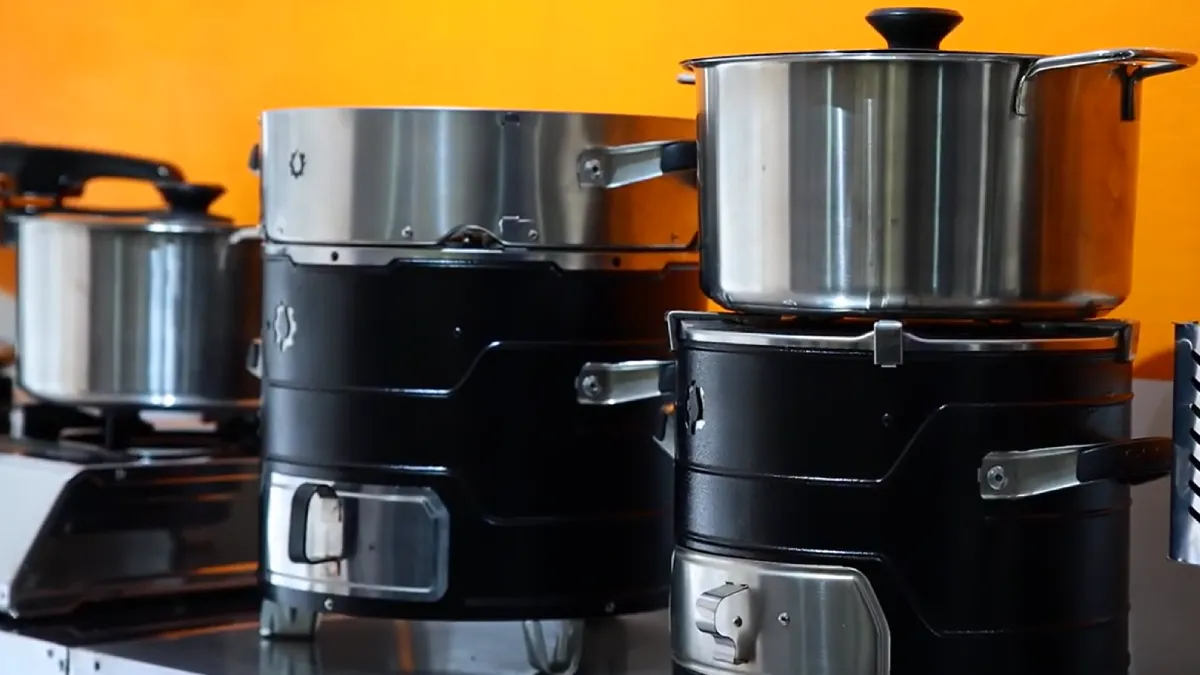
Efficient cookstoves are projected to cut about 1.56 million metric tonnes of emissions, roughly 25 per cent of Rwanda's targeted 6.24 million tonnes in energy-sector emissions reductions, according to Jean-Pierre Nizeyimana, a green economy specialist at Rwanda's Ministry of Environment.
Nizeyimana presented the figures while outlining Rwanda's Mitigation Contribution plan at a national dialogue organised by Transparency International Rwanda on integrating the third version of the country's Nationally Determined Contribution, Rwanda's formal climate commitment under the Paris Agreement, into district development strategies.
He said cookstoves, electric vehicles and emissions standards together account for close to 70 per cent of the energy sector's total mitigation potential, underscoring the role cleaner household energy and transport are expected to play in Rwanda's climate targets.
Clean stove use set to triple by 2029
The push comes as Rwanda works to expand access to efficient and clean cooking technologies that burn less firewood, charcoal and other biomass fuel. Improved cookstoves are expected to increase their share of national cooking methods from 9 per cent to 22 per cent by 2029, with the number of households using clean and efficient stoves projected to rise from just over one million to about three million over the same period.
Progress has already been made. Firewood use has declined from 83 per cent to 76 per cent of households, helped by the distribution of 1.4 million improved cookstoves, and by 2022 about 34 per cent of households were using improved stoves. The shift is intended to ease pressure on forests while cutting household air pollution and greenhouse gas emissions.
New stove models improve on open fires
At the sixth Renewable Energy for Sustainable Growth (RE4SG) 2026 event, hosted by Energy Private Developers in partnership with the Ministry of Infrastructure, ten innovations aimed at cutting energy-sector emissions were exhibited, including improved cookstoves developed by Ecogreen Solutions Ltd, a company that designs and distributes efficient stoves and biomass pellets made from wood waste and rice husks.
Jean-Damascène Murwanashyaka, the company's production manager, said Ecogreen produces two main stove types: one that burns firewood and another that uses pellets in what is known as a forced-air stove, which uses a small battery- or solar-powered fan to push air into the combustion chamber and improve how completely the fuel burns.
He said the pellet stove reaches about 41 per cent thermal efficiency, a measure of how much of a fuel's energy is converted into usable cooking heat, compared with just 10% to 20% for traditional three-stone fires and basic charcoal stoves. "We have various cookstoves. The first uses pellets and is highly efficient, converting about 41 per cent of the fuel's energy into usable heat. The second uses ordinary firewood but is still far better than traditional stoves, reaching an efficiency of 41 to 43.2 per cent," Murwanashyaka said.
The pellet stove is rated Tier 4 under international cookstove efficiency standards and uses roughly a third to a half of the fuel a traditional stove would require for the same task, meaning less smoke and lower emissions per meal cooked. "The stove can be connected to solar power or electricity to improve its efficiency. The package includes a radio, torch and lamp, all charged using the same solar kit as the stove," Murwanashyaka said.
Under Rwanda's climate 2035 action plan, the government is targeting 2,449,000 rural households using improved wood or biomass stoves that meet Tier 3 and Tier 4 standards, while 1,209,000 urban households are expected to move away from biomass entirely in favour of clean, non-wood technologies such as electricity, LPG and ethanol stoves.
Speaking at Rwanda's national celebration of the International Day of Clean Air for Blue Skies on Friday, Permanent Secretary in the Ministry of Environment Fidèle Bingwa said achieving cleaner air will require collective action. "Having clean air is a shared goal. The conversation should now be about how we achieve it, through collective action, stronger partnerships and practical solutions that improve air quality and protect people's health," he said. .
Related Stories

Sign up for our newsletter.
Get the latest news, expert analysis, and industry insights delivered straight to your inbox. Join thousands of professionals shaping the future of energy.
By submitting my information, I agree to the Privacy Policy and Terms of Service.