Climate & Sustainablity
COP17: Zambezi Basin Partners Call for Integrated Investment
Climate finance experts are betting that bundling land restoration with jobs and agriculture, rather than standalone conservation projects, will unlock investment in Africa's Zambezi Basin.
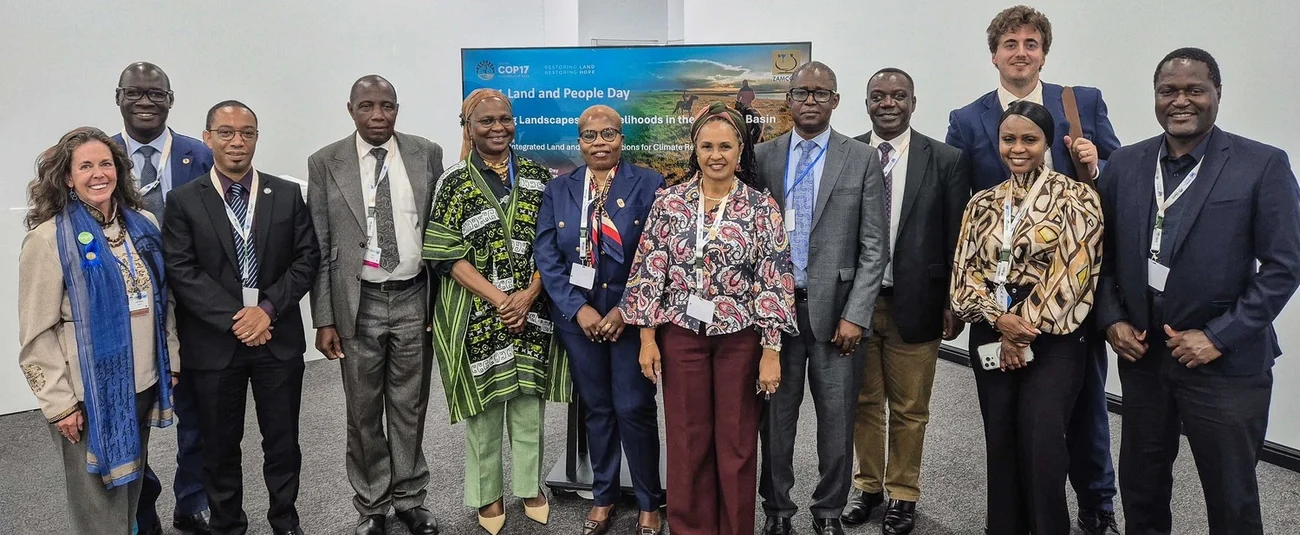
Government officials, development finance institutions and civil society groups called for integrated investment in the Zambezi River Basin to restore degraded land, strengthen livelihoods and build climate resilience, at a side event during the UN Convention to Combat Desertification's COP17 in Ulaanbaatar, Mongolia, on August 26.
The Zambezi River Basin spans eight countries and covers about 1.37 million square kilometres, making it the basin of Africa's fourth-largest river. Around 44% of the 51 million people living there fall below the poverty line, and the basin's economies remain vulnerable to flooding, drought, gaps in infrastructure and environmental degradation, with 51% of its land moderately degraded, according to figures presented at the event.
The session, titled "Restoring Landscapes and Livelihoods in the Zambezi Basin: Scaling Up Integrated Land and Water Solutions for Climate Resilience," brought together representatives of the Zambezi Watercourse Commission (ZAMCOM), the African Development Bank, the World Bank, United Nations agencies, governments, civil society and development partners to discuss how to expand climate solutions across the basin.
Bundled projects seen as more attractive to investors
Laouali Garba, the African Development Bank's division manager for agricultural research, production and sustainability, said mobilising finance for the basin would require projects that address several development priorities at once.
According to Garba, integrated projects covering land restoration, agricultural production, community resilience, ecotourism and job creation are more attractive to public and private investors than standalone nature-based initiatives.
Garba pointed to PIDACC Zambezi, an African Development Bank-supported initiative that also involves ZAMCOM and other partners, as an example of this approach in practice.
The programme combines public resources with grants, concessional finance and support from development partners and climate funds to draw in private-sector investment for land and water management, ecosystem restoration and climate-resilient livelihoods.
Those efforts are being scaled up through the Climate Investment Funds-supported Zambezi Region Nature, People and Climate (NPC) Investment Plan.
Laurent Frapaise, a natural resources management consultant with the World Bank, said the Zambezi Basin should be treated as an integrated development challenge spanning multiple government sectors and economies, calling for investments that are both bankable and sustainable, along with stronger coordination across ministries.
The event also featured the "Strengthening Zambezi River Basin Management towards Climate Resilience and Ecosystem Health" project, for which the African Development Bank has secured financing from the Global Environment Facility.
That project aims to strengthen integrated water, energy, food and environment planning, ecosystem resilience and cross-border basin management, and feeds into the wider Southern African Great Green Wall Initiative.
Panellists also discussed how public funding could be used to reduce risk and attract private capital, through mechanisms such as public-private partnerships, guarantees, risk-sharing instruments and concessional credit aimed at small and medium-sized enterprises working in land restoration, agroforestry and sustainable value chains.
Speakers stress role of women in restoration efforts
Prof. Hesphina Rukato of the Centre for African Development Solutions said gender-responsive investment requires recognising that women are not a homogeneous group. "Whether women benefit from investments depends on what access and control they have over the resources," she said, calling for targeted approaches that allow women to take part effectively in planning and implementation and to benefit equitably from restoration investment.
Participants urged closer collaboration between governments, development finance institutions, climate funds, the private sector, civil society and river basin organisations to drive a shift toward integrated, bankable investment at scale across the basin. How quickly that collaboration translates into new funding commitments is likely to determine the pace of restoration work in the basin over the coming years.
Related Stories


Sign up for our newsletter.
Get the latest news, expert analysis, and industry insights delivered straight to your inbox. Join thousands of professionals shaping the future of energy.
By submitting my information, I agree to the Privacy Policy and Terms of Service.