Renewables |Power
Credit Rating Rules Keep 600 Million Africans Waiting for Electricity
Africa's push to expand electricity access faces setbacks as renewable energy projects struggle to secure affordable financing.
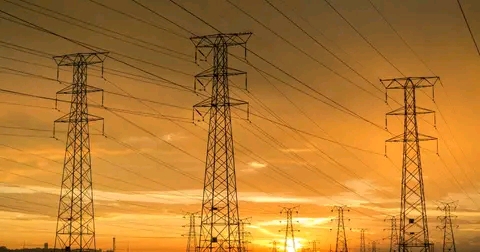
Reports have indicated that close to 600 million people across Africa still live without electricity. Experts maintained that an international financial rule is making it harder for countries to fund the clean energy projects needed to close that gap.
For millions of Africans living without reliable electricity, the biggest obstacle is believed to be a global financing system which makes it difficult for those projects to attract affordable funding.
Across the continent, governments are investing in solar, wind and geothermal projects to expand electricity access and support economic growth. However, many of these projects struggle to secure funding because of a financial rule known as the “sovereign ceiling”.
The rule links the credit rating of a project to the credit rating of the country where it is located. As a result, renewable energy projects are often viewed as risky investments, even when they have strong business plans and guaranteed revenue streams.
Experts noted that this is slowing efforts to connect homes, schools, hospitals and businesses to electricity.
According to the International Energy Agency, almost 600 million people in Africa still lack access to power. Many countries see renewable energy as the fastest way to improve electricity supply, especially in rural and underserved communities.
Dr John Asafu-Adjaye, Senior Fellow at the African Center for Economic Transformation, said many projects are unfairly judged because of their location.
He explained that projects with predictable income and long-term power purchase agreements are often treated as high-risk investments simply because they operate in countries with lower sovereign ratings.
Only Botswana and Mauritius, reports said, currently have investment-grade sovereign ratings among Africa’s 54 countries. This means projects in most African countries face higher borrowing costs from the start.
Several major projects have felt the impact. Kenya’s Menengai Geothermal project, Zambia’s Solar Scaling programme and Nigeria’s Solar Independent Power Producer pipeline all faced funding challenges linked to concerns about sovereign risk.
The United Nations Development Programme estimates that African countries lose up to $74.5 billion every year through higher borrowing costs and missed investment opportunities linked to credit rating assessments.
Experts maintained that the result is fewer energy projects, slower expansion of electricity networks and delayed connections for millions of people.
Dr Sibusisi Nkomo of the University of Cambridge Institute for Sustainability Leadership said international credit rating systems often exaggerate the risks associated with African investments.
This leads investors to demand higher returns, making energy projects more expensive to finance.
Analysts also point to other barriers like complex approval processes, fragmented funding arrangements and weak institutional capacity in some countries.
It is believed that reforms such as lower-cost financing, more local-currency lending and stronger guarantees from regional financial institutions could help unlock investment.
Africa, experts claimed, has many viable clean energy projects. The challenge is ensuring they can access funding on fair terms so that more people can finally gain access to electricity.
Related Stories

Sign up for our newsletter.
Get the latest news, expert analysis, and industry insights delivered straight to your inbox. Join thousands of professionals shaping the future of energy.
By submitting my information, I agree to the Privacy Policy and Terms of Service.