Oil & Gas
Dangote, Ruto Break Ground on $16bn Kenya Refinery
Dangote's Lamu refinery launch doubles as a test of whether Africa's biggest industrial bets can proceed smoothly alongside unresolved local land disputes.
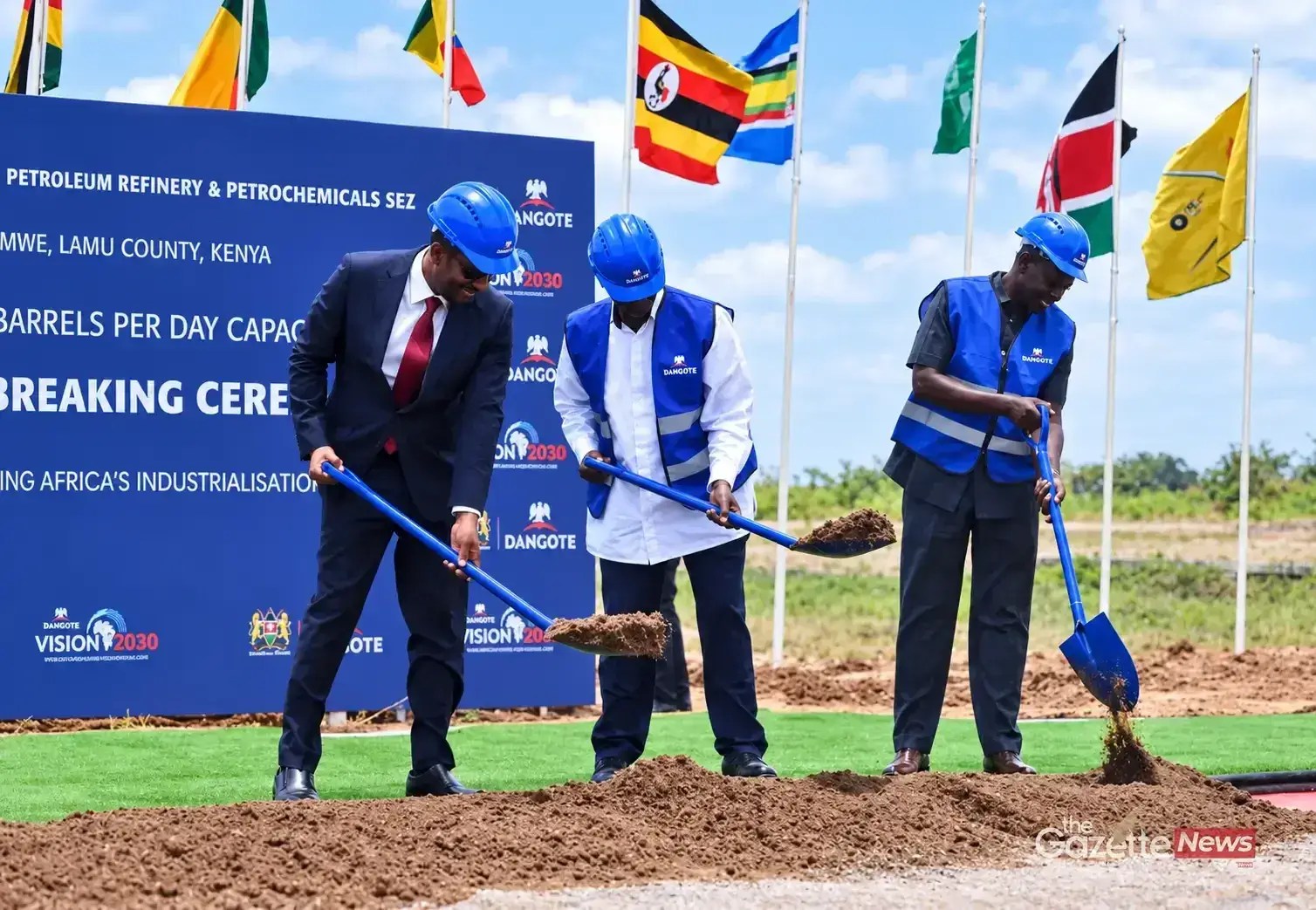
Nigerian billionaire Aliko Dangote and Kenyan President William Ruto broke ground on Wednesday on a $16 billion oil refinery in Lamu, on Kenya's northern coast, a facility expected to process 700,000 barrels of crude oil a day and become East Africa's largest industrial project by capacity.
The ceremony was attended by the leaders of Uganda, Ethiopia, Togo and Benin.
Dangote, Africa's richest man, said the refinery would go ahead on schedule and be completed by 2030, dismissing protests from some local residents as games played by marketers and international players with commercial interests in the status quo.
"This is Africa coming together to build Africa. Today we are not simply breaking ground for a refinery, we're breaking ground for a new chapter in Africa's industrial journey to a brighter future," Dangote said.
"Lekki proved that it can be done, Lamu must prove that it can be repeated," he added, referring to his existing refinery near Lagos, Nigeria.
Regional leaders frame project as an investment milestone
Ruto described the refinery as a marker of a wider shift in how Africa funds and builds its own infrastructure.
"It is a declaration that Africa has entered a new age in which we will increasingly finance, build, process and add value here at home," he said.
Dangote has offered regional governments a combined 30% stake in the refinery, according to Reuters.
The project is set to become the only refinery in East Africa and ranks as Kenya's largest infrastructure undertaking since independence, surpassing the $5.1 billion Standard Gauge Railway.
Land compensation dispute runs alongside the launch
Ahead of the ceremony, some local residents protested to demand greater compensation for land used in the project.
Speaking to the BBC's Focus on Africa programme, Dangote disputed the compensation claims, saying the company had taken only the portion of land it needed from what the government had made available.
"To come and say some people are demonstrating, demonstrating about what? Have you ever seen people demonstrating against themselves in terms of development?" he said.
Walid Ali, co-founder of the Save Lamu campaign group, told the BBC the group is concerned about the project's potential environmental impact.
"We are asking for the findings from the environmental impact assessment so that we can see what mitigation measures are being proposed," Ali said, adding, "This is not the first project where we have seen environmental concerns being overlooked."
A group of 133 Lamu residents has separately approached Kenya's High Court seeking to halt construction work.
Whether the court challenge and the compensation dispute are resolved before construction advances significantly is likely to determine how smoothly the refinery's build-out proceeds toward its 2030 target.
Related Stories


Sign up for our newsletter.
Get the latest news, expert analysis, and industry insights delivered straight to your inbox. Join thousands of professionals shaping the future of energy.
By submitting my information, I agree to the Privacy Policy and Terms of Service.