Renewables
Ethiopia’s EV Policy Offers African Model as BRICS Backs Industrial Growth
South Africa presents electric vehicle manufacturing and battery production as opportunities for investment and regional trade at the New Delhi summit.

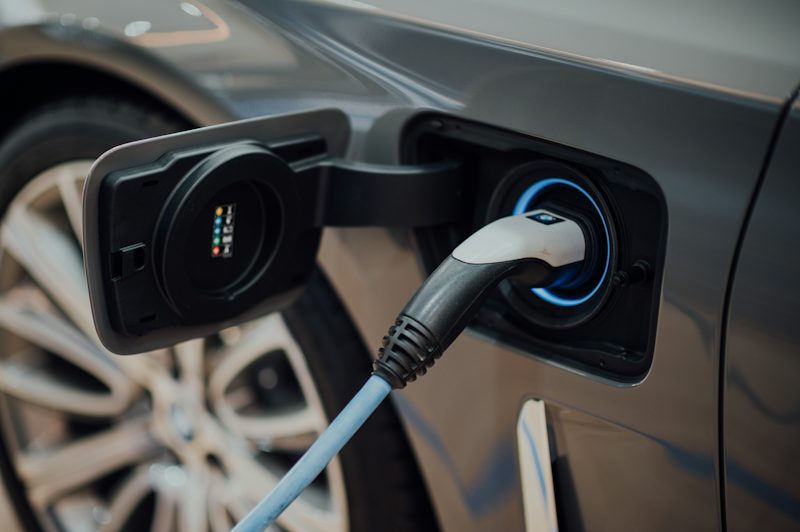
Ethiopia's decision to restrict imports of new petrol and diesel passenger vehicles has provided a major example of how African countries can use electric vehicles to build local industries.
The policy, introduced in 2024, has helped electric vehicle registrations in Ethiopia exceed 110,000, accounting for more than 60 per cent of all new vehicle registrations, the chair of the Ethiopian Chapter of the BRICS Business Council told the council.
The development featured in discussions at the 18th BRICS Summit in New Delhi, India, where South Africa promoted industrial development, vehicle manufacturing and investment in clean transport.
The summit brought together Brazil, China, Egypt, Ethiopia, India, Indonesia, Iran, Russia, South Africa and the United Arab Emirates.
South Africa's interest in electric vehicles is tied to its plans to attract investment, build manufacturing capacity and expand trade among developing economies.
President Cyril Ramaphosa used the summit to promote industrialisation, value addition and infrastructure funding connected to the African Continental Free Trade Area (AfCFTA), a continental arrangement designed to increase trade among African countries.
Ethiopia puts EV policy into practice
Ethiopia's electric vehicle policy has placed the country among the examples being discussed in BRICS industrial development conversations.
The Ethiopian Chapter's chair told the BRICS Business Council that the country had become the first in the world to impose an Electric Vehicle Import Mandate in 2024.
The policy ended imports of new passenger vehicles powered by internal-combustion engines, which use petrol or diesel.
Electric vehicle registrations have since exceeded 110,000, with such vehicles accounting for more than 60 per cent of new vehicle registrations.
The Ethiopian representative identified electric vehicle manufacturing, energy and agriculture as priority areas for BRICS investment.
The representative also pointed to Chinese-backed industrial parks in Ethiopia that are turning towards high-tech assembly and solar cell production.
Ethiopia's experience gives an example of how government policy can shape the market for electric vehicles and create opportunities for industrial activity.
The issue had already featured in the work of the B20 Industrial Transformation and Innovation Task Force during South Africa's presidency of the G20.
The task force, chaired by Toyota South Africa CEO Andrew Kirby, examined India's electric vehicle industry as an example for developing economies.
India recorded more than 1.5 million electric vehicle sales in the 2023–24 financial year.
The task force argued that clear, long-term industrial policies could help countries expand manufacturing, create jobs and reduce dependence on imported goods.
Hiten Parmar, Executive Director of The Electric Mission, said countries needed to develop their own plans for the transition to zero-emission vehicles.
“Each country must develop their strategy on the transition towards zero emission vehicles,” Parmar said.
Ramaphosa seeks investment in EV supply chains
At the BRICS Business Forum, Ramaphosa discussed trade, supply chains, the digital economy, agriculture and women-led development.
He later attended the India-South Africa Business Leadership Roundtable, where he sought Indian investment in infrastructure, critical minerals and the electric vehicle battery value chain.
South Africa also promoted industrial development and value addition as part of its economic agenda for engagement with BRICS partners.
The country's approach is based on building local capacity in vehicle manufacturing, battery production and other parts of the electric vehicle supply chain.
South African officials said investments connected to BRICS could support infrastructure and regional supply networks under the AfCFTA.
The proposal is to build manufacturing capacity that can serve African markets and connect them to the global electric vehicle industry.
The B20 task force had previously recommended that developing economies build manufacturing hubs capable of supplying the international electric vehicle market.
Parmar said the experiences of India and Ethiopia showed how electric vehicle policies could support industrial development.
“The BRICS highlights on regional experiences such as India’s automotive manufacturing transition to EVs and Ethiopia’s progressive mandate show how countries can make this transition work for industrial development and economic growth,” he said.
At the end of the summit, BRICS members adopted the New Delhi Declaration, giving their support for a global system without dominance by any single country.
Ramaphosa said the gathering had produced a shared position on global governance and a vision of a multipolar world where countries' sovereignty and interests were respected.
He said BRICS members were focused on improving living standards and expanding economic opportunities amid geopolitical tensions.
Related Stories

Sign up for our newsletter.
Get the latest news, expert analysis, and industry insights delivered straight to your inbox. Join thousands of professionals shaping the future of energy.
By submitting my information, I agree to the Privacy Policy and Terms of Service.