Power
Free Meter Scheme Reaches Only 6.8% of 3.2 Million Target
Billions spent, millions promised, but fewer than 220,000 free power meters have reached Nigerian homes under the World Bank-backed scheme.
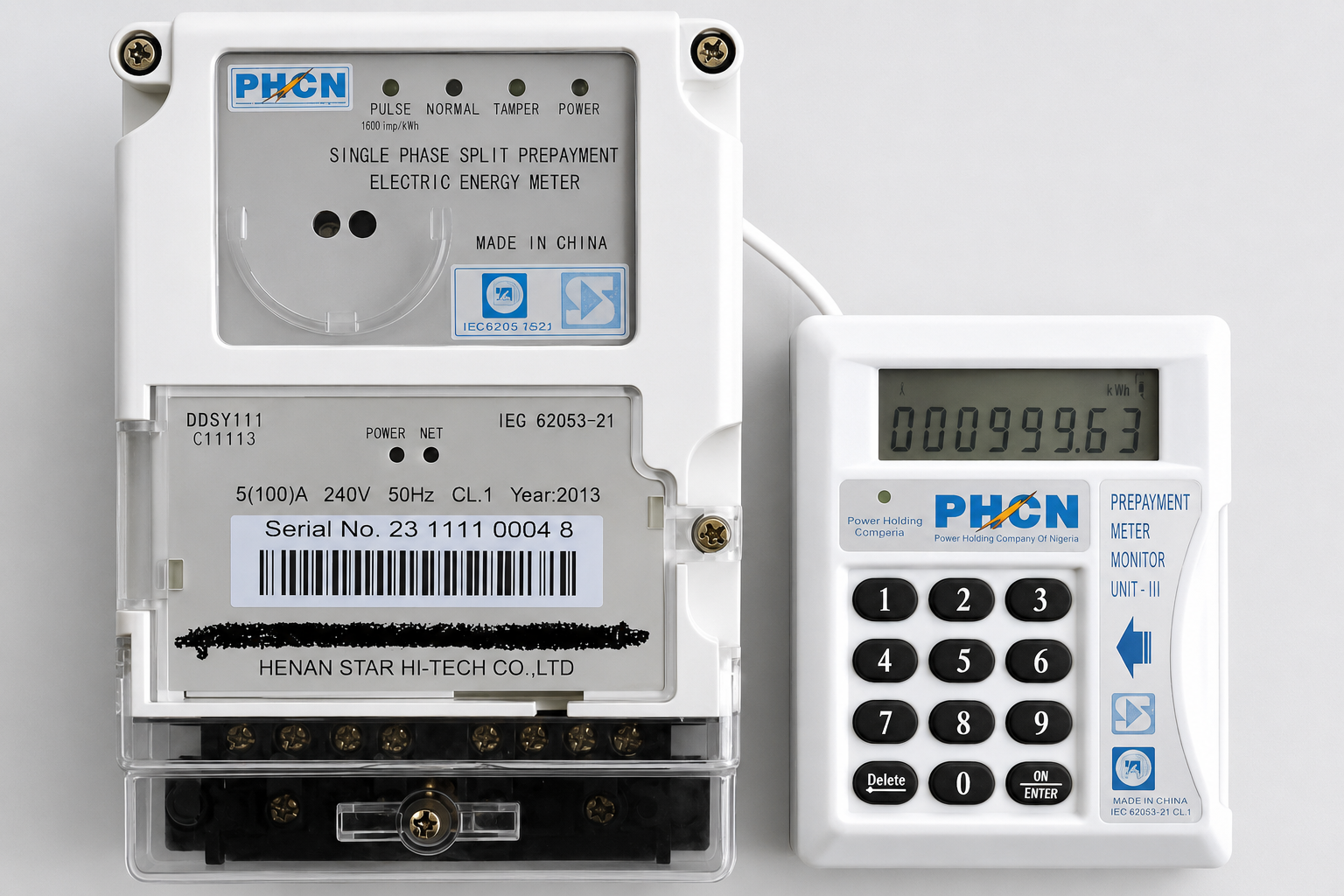
By March 2026, the Federal Government's free electricity metering programme funded with a $500 million World Bank loan had delivered only 217,784 smart meters, leaving almost three million yet to be installed and slowing efforts to end estimated billing for millions of electricity users across Nigeria.
The figures, contained in the Nigerian Electricity Regulatory Commission's first-quarter 2026 report, are important because the scheme was created to give consumers free meters, improve billing accuracy and strengthen the power distribution system.
The programme was introduced to tackle Nigeria's large metering gap and stop estimated billing, which has long been a source of complaints from electricity consumers. Government projections promised rapid installations, with millions of meters planned within a short period. The latest figures show implementation has fallen well below those projections, leaving many households and businesses still without prepaid meters.
The programme is financed through a World Bank loan and aims to install 3.2 million smart meters while improving the financial and technical performance of electricity distribution companies. It also seeks to reduce electricity losses, improve revenue collection and support local meter production.
Millions of planned installations yet to happen
NERC's report showed cumulative installations under the Distribution Sector Recovery Programme reached 217,784 meters as of March 31, 2026. That represents only 6.8 per cent of the overall target, leaving about 2.98 million meters still outstanding.
Meter deployment under the programme started in May 2025. During the first quarter of 2026, 129,224 meters were installed, compared with 99,545 in the previous quarter.
The commission stated, "A total of 129,224 meters were installed under the DISREP framework in 2026/Q1 compared to the 99,545 meters installed in 2025/Q4, representing an increase of 29.81 per cent. This brings the cumulative installations under the framework to 217,784."
Although the quarterly installation figure increased, the overall pace still falls far below the programme's original objectives.
Before the rollout, the Bureau of Public Enterprises projected that 1.2 million smart meters would be deployed by December 2024, followed by another 1.3 million by the second quarter of 2025. The programme was also designed to distribute about two million meters every year from 2025 to reduce Nigeria's metering shortage.
The Presidency had also urged electricity consumers served by Abuja, Benin, Eko, Enugu, Ibadan, Ikeja, Jos, Kaduna, Kano, Port Harcourt and Yola distribution companies to obtain the meters free of charge. Consumers were warned not to pay for either the meters or installation because both were funded under the programme.
Court case slows procurement process
The World Bank identified a legal dispute involving the Association of Meter Manufacturers of Nigeria as the biggest obstacle facing the programme.
The association obtained a court injunction stopping the procurement of 1.55 million additional smart meters. The bank warned that the dispute could force the cancellation of the procurement process if it is not resolved quickly.
The injunction has also stopped the opening of bids under the programme's second phase of international competitive procurement.
AMMON argued that the procurement arrangement left out Nigerian manufacturers and would weaken local meter production.
The dispute has also created uncertainty over the installation of meters already procured. Questions still surround how many meters have actually been installed from the nearly one million obtained under the first phase of the programme.
Even with the slow progress under DISREP, electricity distribution companies installed 357,495 meters nationwide during the first quarter of 2026, a 10.38 per cent increase from the previous quarter.
Out of that total, DISREP accounted for 129,224 installations, making it the largest single metering framework during the period. Another 118,681 meters were installed through the Meter Asset Provider scheme, while 97,992 were deployed under the Meter Acquisition Fund.
Benin Electricity Distribution Company recorded the highest number of DISREP installations with 26,083 meters. Abuja DisCo followed with 24,072, while Port Harcourt DisCo installed 22,145.
Nigeria still faces a major metering challenge. NERC reported that the country had 12,386,848 active electricity customers by the end of March 2026, yet only 7,324,079 had been metered. That leaves about 5.06 million active customers without meters and still outside the government's goal of providing accurate and transparent electricity billing.
Related Stories

Sign up for our newsletter.
Get the latest news, expert analysis, and industry insights delivered straight to your inbox. Join thousands of professionals shaping the future of energy.
By submitting my information, I agree to the Privacy Policy and Terms of Service.