Power
Ghana Advances Mission 300 Reforms as $4.4bn Energy Pipeline Grows
Ghana's Mission 300 reforms could unlock $4.4bn in energy investment, strengthen regional power links and help raise electricity access to 99% by 2030.
Ghana is moving to accelerate 13 priority reforms under its National Energy Compact as it seeks to attract $4.4 billion in energy investment and raise electricity access from 89.1 per cent to 99 per cent by 2030.
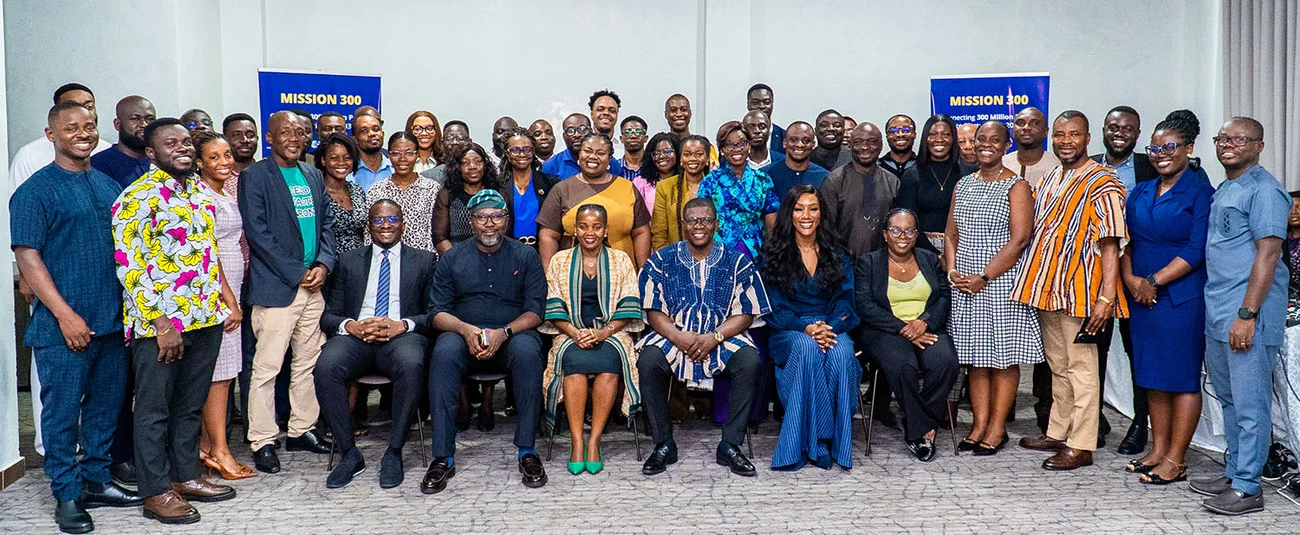
The progress was reviewed at a two-day Compact Implementation Support Workshop in Accra, where more than 70 representatives from government, development finance institutions, the private sector and civil society assessed the reforms needed to unlock investment and expand electricity access under Mission 300.
Mission 300 is a joint initiative of the African Development Bank and the World Bank Group that seeks to connect 300 million additional people across Africa to electricity by 2030. Sustainable Energy for All (SEforALL) facilitated the workshop, with support from the African Development Bank's Africa Energy Sector Technical Assistance Program.
Ghana targets private capital for energy projects
Participants reviewed an investment pipeline valued at $4.4 billion, with $2.6 billion expected to come from private-sector financing. The projects cover last-mile rural electrification, transmission expansion, utility-scale solar, mini-grids, distributed renewable energy and clean cooking.
The pipeline also includes planned regional power interconnections linking Ghana with Côte d'Ivoire, Mali and Burkina Faso, potentially strengthening electricity trade and improving the resilience of West Africa's power system.
Richard Gyan-Mensah, Deputy Minister for Energy and Green Transition, said the government was pursuing public-private partnerships to finance the country's energy priorities.
“The National Compact has an investment pipeline of US$4.4 billion, including US$2.6 billion expected from the private sector,” he said.
Gyan-Mensah noted that the government would work to remove administrative bottlenecks, improve coordination and turn the commitments in the National Energy Compact into projects that deliver electricity access.
Ghana has completed eight mini-grids during the first year of the Compact, while another 35 are under construction. The country is also expanding regional electricity trade through the West African Power Pool.
Conclusively, about 60 per cent of the Compact's actions have been completed, with the government expected to deliver 13 of its 16 priority reforms. The remaining measures face delays linked to administrative procedures, parliamentary approvals, budget allocations and procurement.
Government moves to unblock delayed reforms
The Ministry of Finance and the Ministry of Energy and Green Transition will continue discussions on counterpart funding and parliamentary approvals required for some of the outstanding reforms.
The Energy Sector Working Group has also been reconstituted under revised terms of reference, while implementing agencies have committed to regular progress reports to the Compact Delivery and Monitoring Unit.
The Ghana Compact Implementation Support Document, which will translate the country's commitments into specific actions, is now expected to be finalised following stakeholder input. The document will assign responsibilities and deadlines, establish escalation procedures and identify technical assistance requirements.
The project pipeline will also be refined ahead of engagement with potential investors.
The progress is significant because Ghana's challenge is increasingly shifting from expanding basic electricity access to securing the financing and infrastructure needed to reach underserved communities and support economic growth. Mobilising the targeted $2.6 billion in private capital will therefore depend not only on completing the remaining reforms but also on preparing projects that can attract investment and move efficiently from planning to implementation.
Related Stories
Sign up for our newsletter.
Get the latest news, expert analysis, and industry insights delivered straight to your inbox. Join thousands of professionals shaping the future of energy.
By submitting my information, I agree to the Privacy Policy and Terms of Service.