Oil & Gas
Ghana Moves to Cut Fuel Imports as Refineries Expand
Ghana's refinery expansion could reshape its fuel market by cutting import dependence, easing foreign exchange pressure and keeping more oil wealth within the domestic economy.

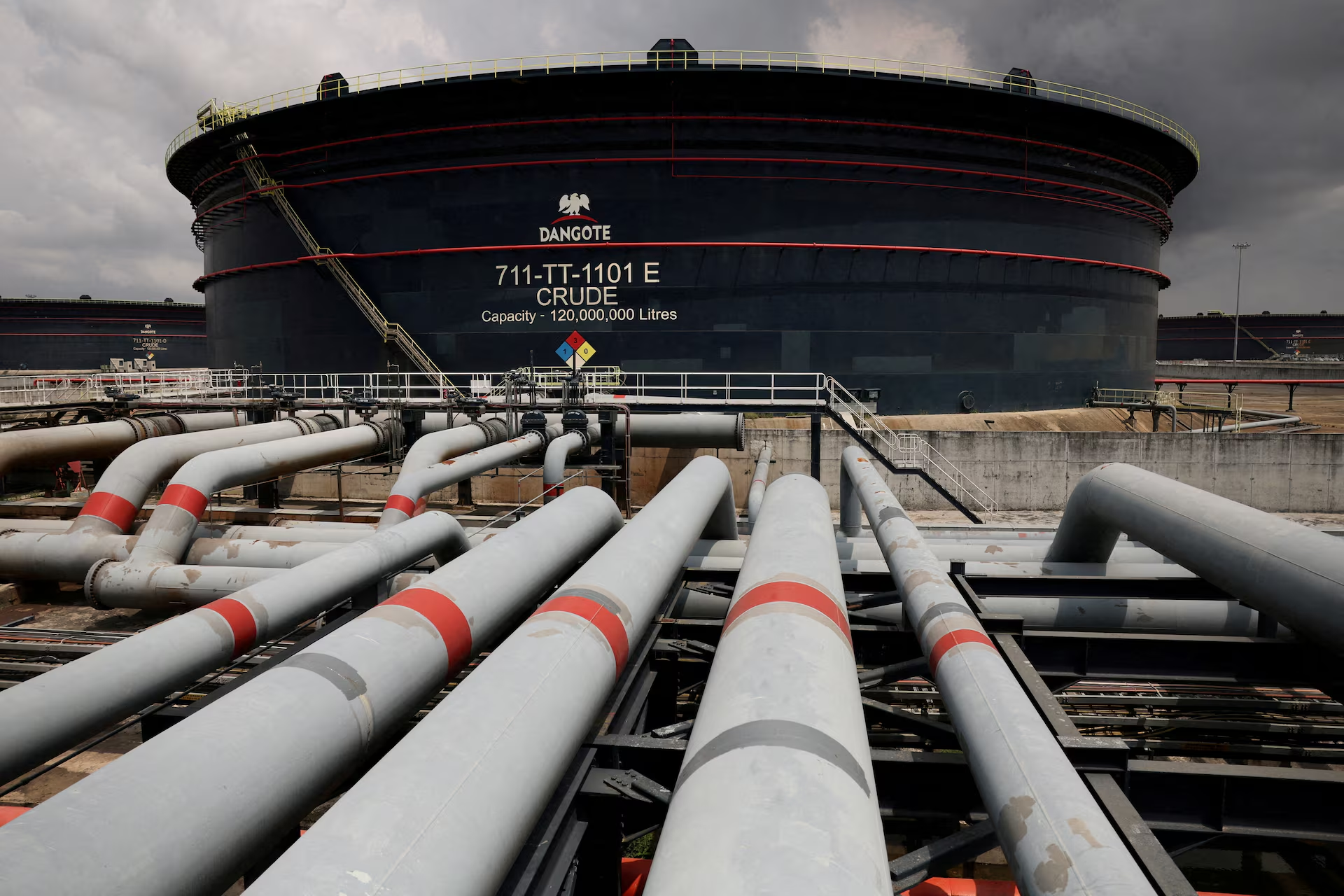
Ghana is moving to cut its dependence on imported petroleum products by expanding local refining capacity, with government targeting domestic production that could meet close to 70 per cent of the country's fuel needs once expansion works at the Tema Oil Refinery (TOR) and Sentuo Oil Refinery are complete.
Energy and Green Transition Minister Dr John Abdulai Jinapor outlined the plan while delivering the keynote address, on behalf of President John Dramani Mahama, at the seventh Ghana International Petroleum Conference (GhIPCon 2026) in Accra on 16 and 17 July.
"When the ongoing expansion at TOR and Sentuo is completed, the two refineries should be able to satisfy nearly 70 percent of Ghana's demand for refined petroleum product," Jinapor said.
Two refineries, one target
Sentuo Oil Refinery, Ghana's first privately owned refinery, was developed by China's Sentuo Group at a cost of $1.98 billion and began commercial operations in January 2024 with a processing capacity of 40,000 barrels per day. A planned expansion, backed by a $200 million loan arranged through Ecobank Ghana, will lift that capacity to 100,000 bpd.
TOR, the state-owned refinery and Ghana's oldest, resumed operations in December 2025 and is currently processing about 28,000 bpd, well below its installed capacity of 45,000 bpd. Its revival is central to the government's broader refining push.
President Mahama has already allocated a one million-barrel parcel of Jubilee crude to local refineries.
Jinapor confirmed the next allocation will go to TOR, describing the move as part of a deliberate policy to support domestic industry and retain more value from Ghana's oil resources within the country.
Reducing exposure to imported fuel
Government has recently relied on short-term measures to cushion consumers from rising fuel costs, including diesel price support that ran for eight consecutive weeks and, at one point, cut the cost of diesel by as much as GH¢2 per litre.
Jinapor said the aim now is to move from these temporary interventions towards longer-term measures that strengthen the country's ability to produce and store fuel locally.
"Resilience is not built in times of crisis. It is built through deliberate policy choices, strategic investments and innovation," he said.
Reduced reliance on imported fuel could ease pressure on Ghana's foreign exchange demand and balance of payments, while local refining could also stimulate business activity across transport, engineering, logistics, equipment supply and maintenance.
"Every refinery is more than an industrial facility. It creates an ecosystem of economic activity, supporting transport and logistics companies, engineering services, local contractors, manufacturers, technology providers and thousands of skilled jobs," Jinapor said.
Oil production recovery underpins the strategy
The refining plans coincide with a recovery in Ghana's upstream output. Jinapor said the Jubilee Field is now producing about 95,000 barrels of oil per day, reversing six consecutive years of decline, while gas output has increased by more than 50 million standard cubic feet per day.
Higher domestic crude production gives local refineries a stronger supply base to work with, though the strategy still depends on reliable crude allocation, efficient refinery operations and sustained investment to succeed.
Jinapor also called for greater participation by Ghanaian companies in the sector and urged industry players to adopt digitalisation and automation to improve efficiency, transparency and competitiveness.
Government, he said, remains committed to building a predictable regulatory environment and positioning Ghana as a leading petroleum and energy hub in West Africa.
Petroleum products will remain central to transport, industry, agriculture and commerce in Ghana for years to come, even as the country pursues cleaner energy sources alongside its refining ambitions.
Related Stories



Sign up for our newsletter.
Get the latest news, expert analysis, and industry insights delivered straight to your inbox. Join thousands of professionals shaping the future of energy.
By submitting my information, I agree to the Privacy Policy and Terms of Service.