Renewables
15 MW Agrivoltaic Deal to Power Water Facilities in Nigeria’s Nasarawa State
Nasarawa's proposed 15MW solar projects could strengthen power supply for public facilities while supporting agriculture, agro-processing and job creation.
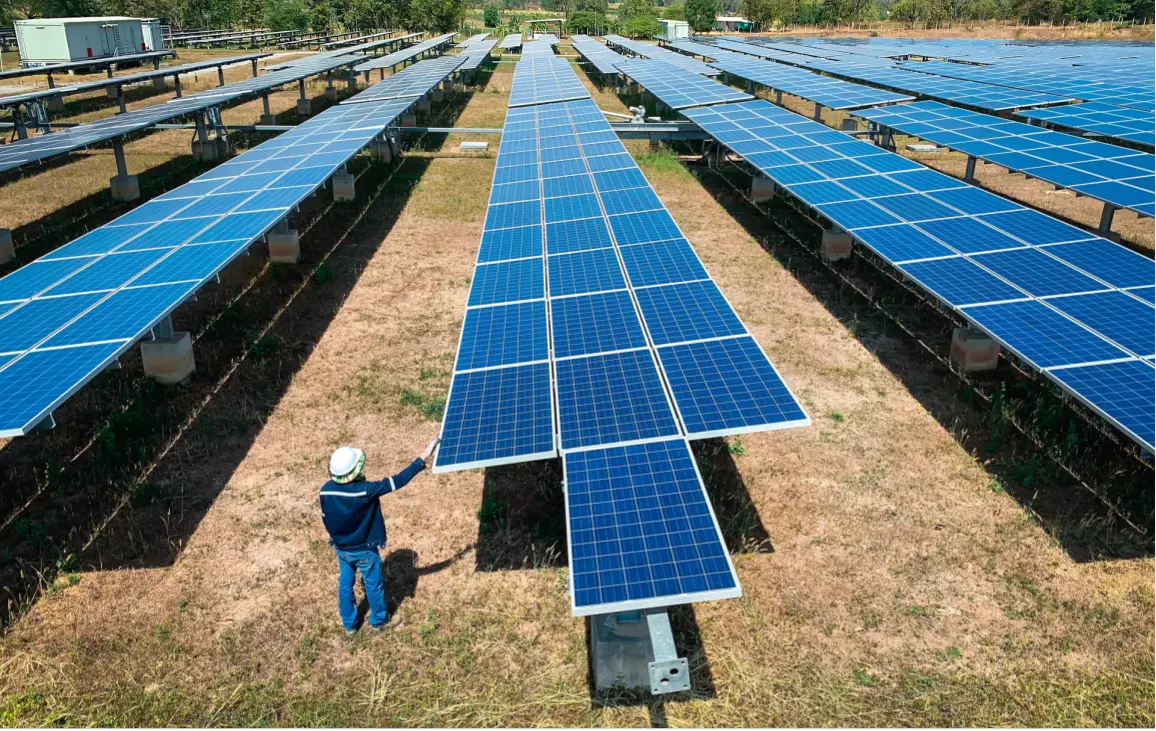
The Nasarawa State Government has signed a memorandum of understanding (MoU) with Combined Agriculture and Renewable Energy Company Limited (CAREC) to conduct feasibility studies for proposed solar power projects with a combined capacity of 15 megawatts across five locations in the state.
The projects, planned for critical public facilities in the state's three senatorial districts, are expected to improve electricity supply while supporting water infrastructure, healthcare education and agricultural activities.
The proposed sites include the Gudi Water Treatment Plant in Akwanga Local Government Area, where a 6MW project is planned; the Faculty of Engineering at Nasarawa State University, Keffi (2MW); Lafia Water Treatment Plant (2MW); College of Health Science and Technology, Keffi (2MW); and Doma Water Treatment Plant (3MW).
The feasibility studies will examine the technical viability of the projects, solar resource availability, land requirements, community considerations and the scale of generation needed to serve each location.
Speaking at the signing ceremony in Lafia on Tuesday, the Managing Director of the Nasarawa State Electricity Board (NASEB), Yakubu Suleiman, described the agreement as part of the state's efforts to expand access to clean, reliable and affordable electricity.
The MoU marks an early stage in the proposed projects, with the feasibility studies expected to determine whether the sites can support the planned solar installations and how they can be developed.
Solar projects target agriculture and jobs
The significance of the proposed partnership extends beyond electricity generation. If the projects proceed after the feasibility stage, the planned solar infrastructure could provide more reliable power for public facilities while supporting agricultural production, processing and other economic activities.
This matters in a state where unreliable electricity can increase operating costs for businesses and public institutions and limit the ability of farmers and processors to add value to agricultural products. By linking renewable power with agriculture and agro-processing, the initiative seeks to use energy infrastructure as a driver of broader economic activity and employment.
CAREC's Executive Vice Chairman, Jatto Adams, who represented the company's Chairman, Inda Abdul, said the partnership would involve developing integrated agrivoltaic power plants at five strategic locations.
Adams revealed that the proposed developments would include greenhouse farming for commercial vegetable production and agro-processing hubs for rice, sorghum, maize, sesame, cassava and millet.
He added that CAREC planned to develop waste-to-energy facilities in Doma and Lafia to process agricultural waste into briquettes and compost. The company also plans to establish assembly plants for solar generators, inverters, electric vehicles, hospital beds and pharmaceutical products through joint ventures with international partners.
Suleiman further explained that the state government had increased its engagement with renewable energy investors following CAREC's proposal and approval by Governor Abdullahi Sule.
He noted that reliable electricity was essential to healthcare delivery, digital learning, business expansion and agricultural value addition, adding that NASEB would provide institutional support for the feasibility studies.
CAREC also pledged to support project financing, local content development, skills development, environmental sustainability and operations and maintenance if the projects advance beyond the feasibility stage.
Related Stories

Sign up for our newsletter.
Get the latest news, expert analysis, and industry insights delivered straight to your inbox. Join thousands of professionals shaping the future of energy.
By submitting my information, I agree to the Privacy Policy and Terms of Service.