Renewables
Nigeria Joins Africa’s Six Gigawatts Solar Markets as 2026 Installations Hit Record
Ember forecasts 17GW of new solar capacity across Africa this year, with Nigeria expected to account for 1.7GW as smaller systems make up most new installations.
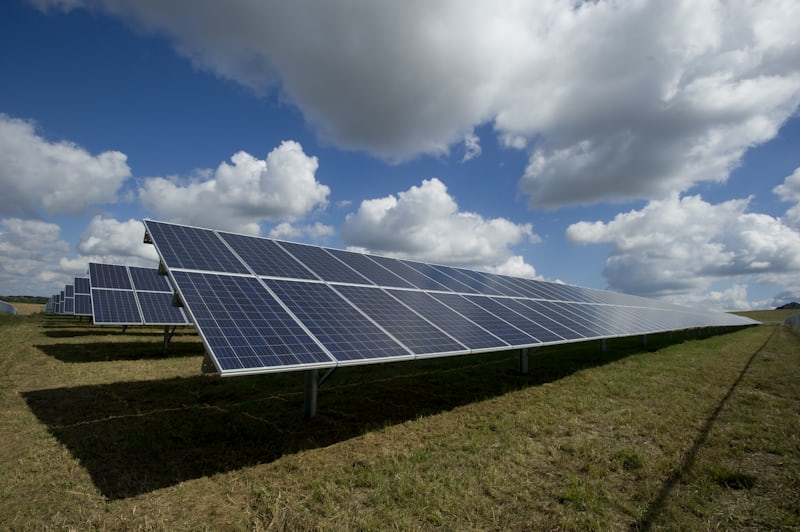
Nigeria is expected to install 1.7 gigawatts of solar power in 2026 as Africa heads for a record 17GW of new solar capacity, with smaller decentralised systems making up much of the continent’s new installations. The forecast by energy think tank Ember puts Nigeria among six African countries set to install at least one gigawatt this year, as solar power expands outside South Africa.
The 17GW forecast is about 100,000 solar panels each day. It would represent a 45 per cent increase from 2025, after solar installations rose by 51 per cent in 2025 and 25 per cent in 2024.
The figures show a major change in the geography of solar installations on the continent. South Africa, which has traditionally dominated the African market, is expected to account for less than 20 per cent of installations in 2026. This would be its lowest share since 2019.
Nigeria among six major solar markets
Ember expects South Africa to install 3.3GW this year, followed by Egypt with 2.0GW. Nigeria and the Democratic Republic of the Congo are both projected to install 1.7GW.
Algeria is expected to record 1.4GW, with Morocco at 1.0GW. These six countries are now classed as gigawatt-scale solar markets.
The study also forecasts record solar installations in 36 African countries. Nineteen countries are projected to record year-on-year growth of more than 100 per cent.
The highest projected rises include 544 per cent in the DR Congo, 282 per cent in Zimbabwe, 176 per cent in Egypt and 117 per cent in Zambia.
Not all major African economies are recording similar figures. Angola is projected to install only 50 megawatts, compared with 10MW in Libya.
Ember estimates that solar capacity installed in 28 countries this year will exceed their historical electricity demand growth.
The new solar systems are also projected to generate about 23 terawatt-hours of electricity each year. That is equal to about 2.3 per cent of Africa’s total electricity generation.
The figure is higher than the continent’s average annual electricity demand growth of 2.2 per cent between 2014 and 2024.
In 10 countries with a combined population of 190 million people, solar installations made this year are projected to provide more than 10 per cent of electricity generation.
Small systems account for much of new capacity
A large share of Africa’s solar expansion is coming from decentralised systems, which are solar installations located closer to users instead of being part of large power plants.
Ember estimates that these systems accounted for 75 per cent of new solar capacity installed in Africa between 2023 and 2025.
The pattern is also found in countries with large solar plants. In Egypt, for example, decentralised systems are estimated to account for 43 per cent of solar sector growth.
However, the scale of this market is difficult to capture through national records. Ember estimates that half of Africa’s solar growth is missing from official statistics because national reporting is incomplete.
Most African countries do not regularly report newly installed solar capacity. Smaller decentralised systems are especially difficult to track.
As a result, Ember’s estimate of African solar installations is almost twice as high as estimates from the International Energy Agency and the International Renewable Energy Agency.
The supply of solar equipment also shows Africa’s reliance on imports. China supplied 94 per cent of the solar modules installed on the continent.
Chinese solar exports to Africa reached 23GW in the 12 months to June 2026. That was 53 per cent higher than the amount recorded in the same period a year earlier.
Only six per cent of installed solar modules were made in Africa. Production was reported at smaller plants in South Africa, Nigeria, Morocco, Algeria, Tunisia and Kenya.
African manufacturing capacity is set to rise later this year when new large-scale plants in Egypt and Tanzania begin production. Annual production capacity is then expected to reach 3.5GW, up from about 800MW in 2025.
Related Stories
Sign up for our newsletter.
Get the latest news, expert analysis, and industry insights delivered straight to your inbox. Join thousands of professionals shaping the future of energy.
By submitting my information, I agree to the Privacy Policy and Terms of Service.