Renewables
Rwanda's Nyabarongo II Hydropower Dam Reaches 75% Completion
Rwanda's biggest hydropower project is emerging as more than a power plant, with plans for tourism, floating solar and water transport tied to its reservoir.
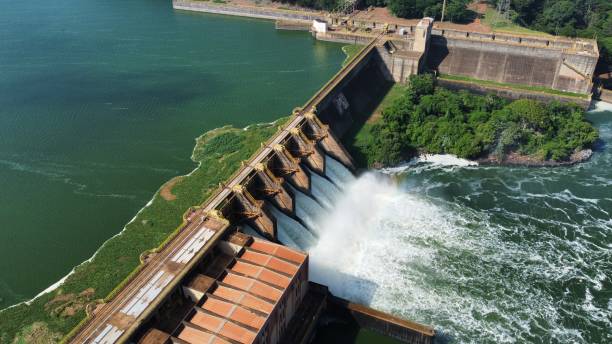
Rwanda's 43.5-megawatt Nyabarongo II Hydropower Project is now 75% complete and on course to become the country's largest hydropower plant when it enters service in December 2027, according to the Energy Development Corporation Limited (EDCL), a subsidiary of state-owned Rwanda Energy Group (REG) that is implementing the project.
Once commissioned, the plant will overtake the existing 28-megawatt Nyabarongo I facility as the country's biggest hydropower asset.
Theoneste Higaniro, EDCL's director of generation and transmission, told The New Times that the project's scale and multipurpose design make it a flagship national infrastructure scheme, generating more electricity than any hydropower plant currently operating in Rwanda.
Work is under way across the dam, powerhouse, transmission lines and other associated facilities, with a new transmission line being built to carry the plant's output into Rwanda's national grid.
Unlike Nyabarongo I, a run-of-river plant that generates electricity directly from a river's natural flow, Nyabarongo II includes a large dam and reservoir that will allow water to be stored and released as needed, a design that should make power generation more resilient during dry spells by drawing on water accumulated in wetter periods.
The scale of the addition is significant for a country still short of generation capacity, according to EDCL. Higaniro said some Rwandan provinces consume less electricity in total than the 43.5 megawatts the new plant alone will produce, illustrating the scale of the addition. Even so, officials say the project will not remove the need for further investment in generation as Rwanda's economy and industrial base continue to expand.
Reservoir opens door to tourism, transport
Excluding electricity, the project is designed to serve several other purposes. Its reservoir will support water management and flood control while opening up possibilities for irrigation, tourism, recreation and inland water transport. The resulting artificial lake is expected to stretch about 67 kilometres across five districts, Gakenke, Kamonyi, Muhanga, Nyabihu and Ngororero, creating a substantial new body of water close to Kigali.
EDCL believes the reservoir's proximity to the capital could draw hotel and tourism investment, and that boats could eventually move agricultural produce between the country's northern regions and Kigali. "We believe tourism will develop around the reservoir," Higaniro said, adding that it would become the largest lake near Kigali.
The site is also being studied for further renewable energy development. Feasibility work has identified potential for additional hydropower and pumped-storage generation downstream, while the reservoir itself has been flagged for floating solar installations that officials say could eventually add up to 105 megawatts of clean generation capacity, subject to further studies and financing. Combined with the hydropower and water-storage functions, that could turn the site into a broader renewable energy hub over time.
Construction has not been without setbacks. The project has faced delays tied to land acquisition and compensation, heavy rainfall affecting civil works, global supply chain disruptions affecting imported materials, and rising costs for construction inputs and fuel.
Despite these pressures, the contractor has kept construction moving toward the 2027 commissioning target, and environmental measures, including rehabilitating borrow pits, protecting the surrounding catchment area and managing sediment and floating debris, have been built into the project to protect the long-term efficiency of the plant.
The project is being built by Chinese contractor Sinohydro, with technical supervision from international consultants, at a cost of approximately $230 million. With construction now three-quarters complete, attention is turning to whether the remaining civil works and transmission integration can stay on track for the December 2027 commissioning date.
Related Stories
Sign up for our newsletter.
Get the latest news, expert analysis, and industry insights delivered straight to your inbox. Join thousands of professionals shaping the future of energy.
By submitting my information, I agree to the Privacy Policy and Terms of Service.