Power
Nigeria Unveils Plan for Round-the-Clock Power Corridors
Nigeria's new power zones target a distribution bottleneck that has already forced some utilities to start compensating customers for undelivered electricity.
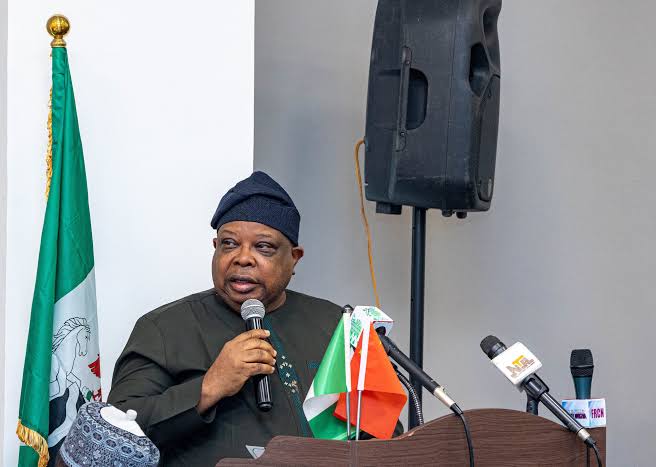
Nigeria's Federal Government has begun engagements with electricity distribution companies to develop proposed "Energy Zones" aimed at delivering 24-hour power supply to homes, businesses and industries in the Lagos axis, the Abuja-Kaduna-Kano corridor and the Enugu-Port Harcourt corridor.
Minister of Power Joseph Tegbe disclosed in a statement issued Wednesday by his media aide, Adeola Adelabu.
Tegbe held a closed-door meeting with the leadership of selected distribution companies to discuss the proposal, which is intended to address distribution constraints and ensure that power already generated and transmitted to the national grid reaches consumers more reliably, particularly in areas of high commercial and industrial demand.
"The constraint on the sector is not limited to generation and transmission but includes how much power is taken up and delivered at the distribution end," Tegbe said, according to the statement.
A gap between what's promised and what's delivered
Tegbe's framing points to a distribution bottleneck that has already become visible to millions of Nigerian electricity customers.
Under the Nigerian Electricity Regulatory Commission's Service-Based Tariff system, customers are classified into bands based on the minimum daily supply hours they are guaranteed, with Band A customers paying premium rates of around N225 per kilowatt-hour in exchange for at least 20 hours of electricity a day.
But regulatory data from earlier this year showed that even as the number of Nigerians on Band A grew by more than 60% over two years, national grid generation remained stuck around 4,200 megawatts, while distribution companies were only able to absorb and deliver about 3,618 megawatts of that, leaving a gap between available power and what reaches homes and businesses.
A separate investigation by the Lagos State Electricity Regulatory Commission found that Lagos has the capacity to receive more electricity from the national grid, but bottlenecks between the Transmission Company of Nigeria and distribution companies, rather than a shortage of generation, were limiting how much power actually reached consumers.
The consequences of that gap have shown up directly on customer bills.
Some distribution companies, including Eko Electricity Distribution Company, have begun crediting customer accounts with compensation, in some cases exceeding N30,000, for failing to meet the minimum supply hours owed to Band A customers, a regulatory requirement intended to hold DisCos accountable when they charge premium rates but deliver substandard service.
Industry analysts have pointed to a mix of underlying causes, including an unstable and ageing transmission grid, more than 40% of customers remaining unmetered, weak revenue collection that has left a majority of distribution companies financially strained, and persistent gas supply shortfalls that limit how much power plants can generate in the first place.
Zones would concentrate reliable supply in priority areas
Tegbe said the proposed Energy Zones would help close that gap by concentrating reliable, round-the-clock supply in the country's highest-demand commercial and industrial corridors, unlocking demand and improving the revenue and collection performance of distribution companies serving those areas.
He reaffirmed the government's commitment to expanding electricity infrastructure in high-demand areas, saying supply capacity must grow in step with the needs of Nigeria's expanding economy.
The statement did not provide a timeline for implementation, the proposed generation or distribution capacity of the zones, or the specific infrastructure investments required to deliver uninterrupted supply.
The distribution companies and energy firm represented at the meeting were Abuja Electricity Distribution Company, Ikeja Electric, Eko Power, Ibadan Electricity Distribution Company and Sahara Energy Group.
The engagement forms part of what the statement described as Tegbe's commitment, since taking office in June, to a disciplined and phased approach to the sector's longstanding challenges, and aligns with President Bola Tinubu's Renewed Hope Agenda, which identifies reliable electricity supply as central to economic growth, industrialisation and job creation.
Related Stories
Sign up for our newsletter.
Get the latest news, expert analysis, and industry insights delivered straight to your inbox. Join thousands of professionals shaping the future of energy.
By submitting my information, I agree to the Privacy Policy and Terms of Service.