Oil & Gas
Nigeria’s Refining Boom Turns into Export Surge, Barrels Reach 350,000
Nigeria shipped 350,000 barrels of petroleum products daily by sea in Q2 2026, as a sharp rise in refining activity put more locally processed fuel into overseas markets.
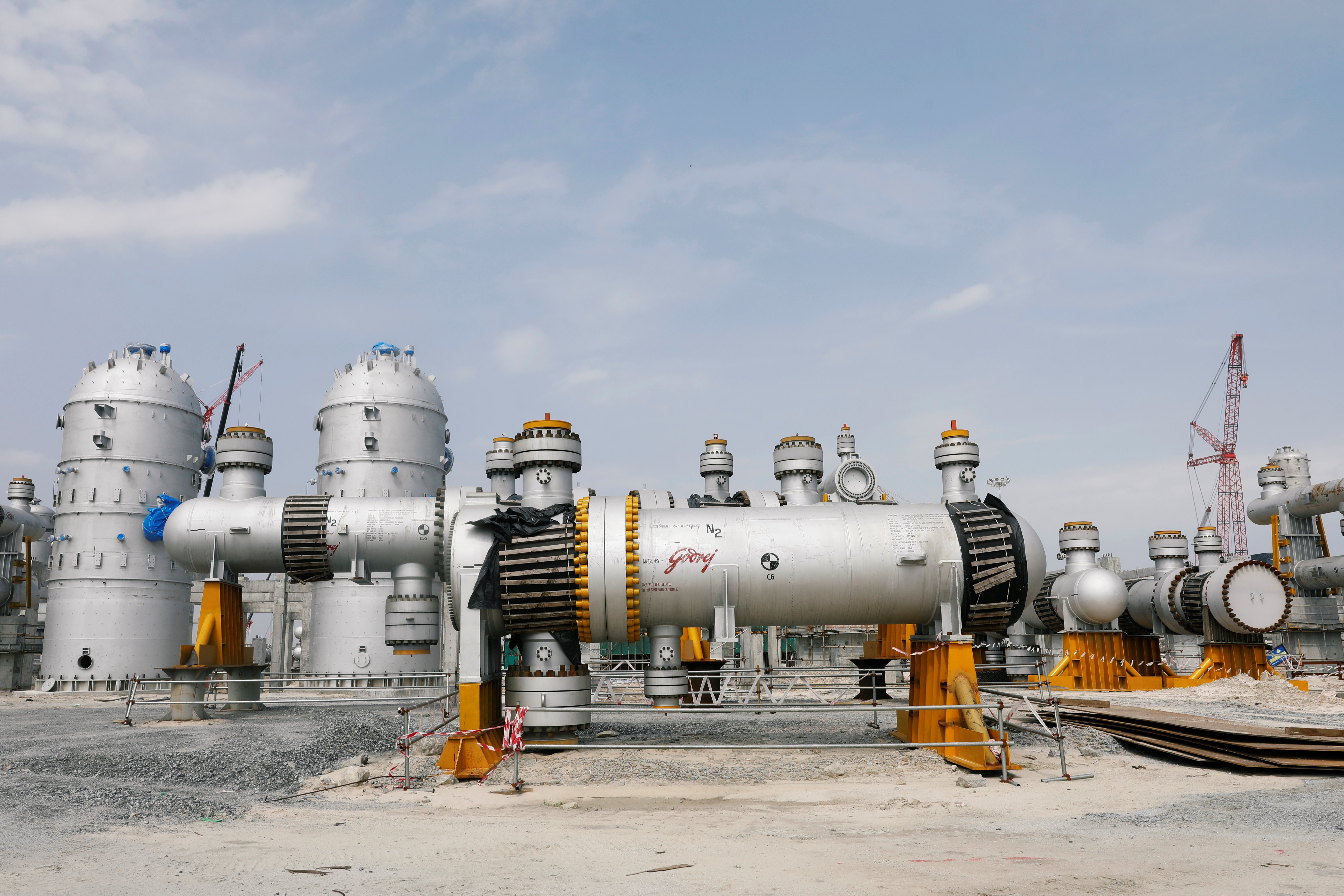
Nigeria’s expanding refining capacity is beginning to show up in its export figures, with petroleum product shipments by sea reaching 350,000 barrels per day in the second quarter of 2026 as domestic refining activity recorded its strongest quarterly growth.
The export figure, from the U.S. Energy Information Administration, came as oil refining grew 43.94 per cent year-on-year in Q2 2026, the highest quarterly growth recorded in the data supplied by the National Bureau of Statistics (NBS).
The development marks a notable change in Nigeria’s petroleum trade, with refined products from the country reaching markets in Europe, Africa, Asia and Oceania in significant volumes.
Total seaborne petroleum product shipments averaged 561,000 b/d during the quarter. Europe took about 130,000 b/d, other African markets received nearly 120,000 b/d, and about 110,000 b/d went to Asia and Oceania.
The European volume was more than three times the 40,000 b/d recorded in 2025 and far above the 15,000 b/d recorded in 2023.
More fuel is leaving Nigeria as refining expands
The export figures coincided with a sharp increase in Nigeria’s refining activity, led by the Dangote Petroleum Refinery.
The National Bureau of Statistics released the Q2 2026 GDP report on Monday, August 31, 2026. The report contains rebased quarterly GDP estimates covering the four quarters of 2025 and the first two quarters of 2026.
Its figures show that oil refining grew by 43.94 per cent year-on-year in Q2 2026. That followed 37.46 per cent growth in Q1 2025 and was well above the 19.42 per cent recorded in Q3 2024 and 12.33 per cent in Q4 under the rebased series.
The refinery’s capacity also increased during the period. Maintenance and expansion work completed in February 2026 lifted its crude oil distillation capacity from 650,000 barrels per day to 700,000 b/d.
The higher capacity has been supported by increased crude supplies to domestic refineries.
Data from the Nigerian Upstream Petroleum Regulatory Commission showed that domestic crude oil and condensate supply to local refineries reached 97.4 per cent in Q2. A total of 53.7 million barrels was supplied between April and June.
Dangote required 63 million barrels during the quarter. Producers offered 68.1 million barrels, of which the refinery accepted 52.6 million barrels, about 78 per cent of the volume offered.
The supply was substantially higher than the 28.5 million barrels delivered to all domestic refineries in Q1. That quarter had seen 61.9 million barrels allocated and 68.7 million barrels offered by producers.
The figures provide the supply base behind the rise in refining activity, as more crude became available to local processing plants and the Dangote refinery operated with a higher processing capacity.
The refinery is located in the Lekki Free Trade Zone on the outskirts of Lagos.
Oil output and GDP also rise
The rise in refining activity came alongside an increase in crude oil production during the second quarter.
Nigeria produced an average of 1.72 million b/d of crude oil in Q2 2026, up from 1.68 million b/d in the same quarter of 2025 and 1.55 million b/d in Q1 2026.
The oil sector itself grew by 7.31 per cent year-on-year during the quarter. Although that was below the 20.46 per cent recorded in Q2 2025, it was higher than the 2.57 per cent recorded in Q1 2026.
On a quarter-on-quarter basis, the oil sector expanded by 10.91 per cent.
Its share of real GDP also increased to 4.16 per cent, compared with 4.05 per cent in Q2 2025 and 3.92 per cent in Q1 2026.
The overall economy recorded 4.43 per cent real GDP growth year-on-year in Q2 2026, compared with 4.23 per cent in Q2 2025.
The non-oil sector grew by 4.31 per cent during the quarter, up from 3.64 per cent in Q2 2025 and 3.94 per cent in Q1 2026. It accounted for 95.84 per cent of real GDP.
For the refining industry, the growth figures show how quickly activity has increased over the period covered by the NBS data.
Oil refining grew by 35.84 per cent in Q1 2023, 35.56 per cent in Q2, 37.01 per cent in Q3 and 35.33 per cent in Q4, giving full-year growth of 35.81 per cent.
In 2024, growth stood at 33.38 per cent in Q1, 35.41 per cent in Q2, 32.39 per cent in Q3 and 9.59 per cent in Q4. Full-year growth was 16.67 per cent.
The value of refining activity at current basic prices also increased from about N2.46 billion in Q1 2026 to N5.36 billion in Q2. The Q2 figure represented a 90.85 per cent nominal year-on-year increase, compared with 57.06 per cent in Q1.
The combination of higher processing capacity, greater crude supply and increased product shipments gives the Q2 figures a clear export dimension.
Nigeria’s refined petroleum products are no longer being measured only by the volume processed at home. The EIA figures show that substantial quantities are also reaching overseas buyers, with Europe alone taking about 130,000 b/d during the quarter.
That export flow, alongside the 43.94 per cent growth recorded by the NBS for oil refining, puts the second quarter among the strongest periods yet for Nigeria’s refining industry in the data supplied.
Related Stories



Sign up for our newsletter.
Get the latest news, expert analysis, and industry insights delivered straight to your inbox. Join thousands of professionals shaping the future of energy.
By submitting my information, I agree to the Privacy Policy and Terms of Service.