Oil & Gas
Tanzania Explored Just 30% of Its Oil and Gas Potential, PURA Says
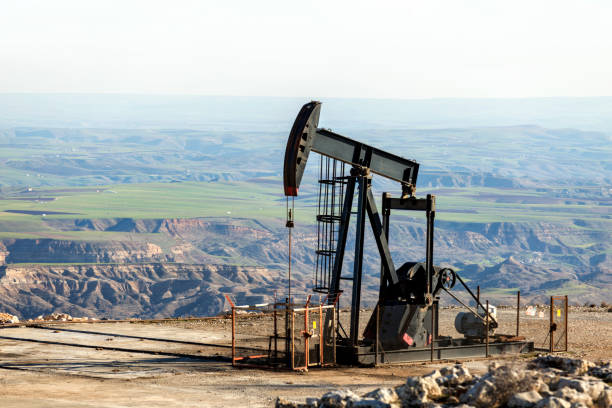
Tanzania has explored less than a third of its prospective oil and gas acreage, leaving substantial room for new discoveries as the country expands gas development, LNG plans and local industry capacity.

Tanzania has explored only about 162,000 square kilometres of the estimated 534,000 square kilometres identified as having oil and gas potential, leaving roughly 70% of the country’s prospective acreage largely unexplored.
The figures, disclosed by Petroleum Upstream Regulatory Authority (PURA) Director General Charles Sangweni in Dodoma, highlight both the limited extent of Tanzania’s petroleum exploration and the scale of the opportunity still available to the country.
Speaking to journalists during the Nanenane Agricultural Exhibition, Sangweni said Tanzania had been conducting petroleum exploration since the early 1950s, with much of the prospective acreage underlain by sedimentary rocks capable of containing hydrocarbons.
He explained that sedimentary formations are particularly important in petroleum exploration because their porous structure can allow oil and gas to accumulate underground.
Despite decades of exploration, Tanzania is yet to establish a commercial crude oil discovery. The country's petroleum sector has, however, recorded significant success in natural gas, with estimated reserves of about 57.54 trillion cubic feet.
Gas discoveries provide a foundation for expansion
Natural gas production is already taking place at the Mnazi Bay and Songo Songo fields, while the Ntorya gas field in Mtwara is expected to add further production.
Sangweni added that the continued exploration of Tanzania’s prospective acreage could potentially lead to additional discoveries as exploration technologies improve and companies gain access to areas that have so far received limited attention.
The government is also looking beyond simply finding more gas. It is pursuing projects intended to process and commercialise the resource, including the proposed Liquefied Natural Gas (LNG) project in Lindi Region, which is expected to provide a route for Tanzanian gas to international markets.
That strategy could give greater economic significance to the country’s remaining unexplored acreage. New discoveries would not only increase reserves but could also provide additional feedstock for domestic energy use, industrial development and export projects.
Skills and local participation remain part of the strategy
Sangweni noted that the Tanzania’s petroleum ambitions would also depend on developing a workforce capable of participating across the industry, from exploration and production to technical and support services.
Higher education institutions, including the Dar es Salaam Institute of Technology and the University of Dodoma, are offering programmes linked to petroleum, oil and gas, while vocational institutions such as the Vocational Education and Training Authority are preparing workers for technical roles.
PURA is also seeking to increase the participation of communities located near petroleum operations.
Sangweni cited Mnazi Bay in Mtwara, where people from surrounding communities and the wider region are being employed in positions that do not require advanced professional qualifications.
The approach illustrates a broader effort to ensure that petroleum development generates benefits beyond government revenues and energy production, including employment, skills development and opportunities for local businesses.
With about 372,000 square kilometres of prospective acreage yet to be covered by preliminary exploration, Tanzania's petroleum story remains far from complete. The challenge now is to turn that geological potential into commercially viable discoveries while developing the infrastructure, skills and investment framework needed to capture more value from the country's oil and gas resources.
Related Stories


Sign up for our newsletter.
Get the latest news, expert analysis, and industry insights delivered straight to your inbox. Join thousands of professionals shaping the future of energy.
By submitting my information, I agree to the Privacy Policy and Terms of Service.