Power
Uganda Targets Energy Investment to Unlock $500bn Economy
Uganda's energy ambitions hinge on closing electricity access gaps, improving project bankability and attracting private capital to support its $500 billion economic goal.

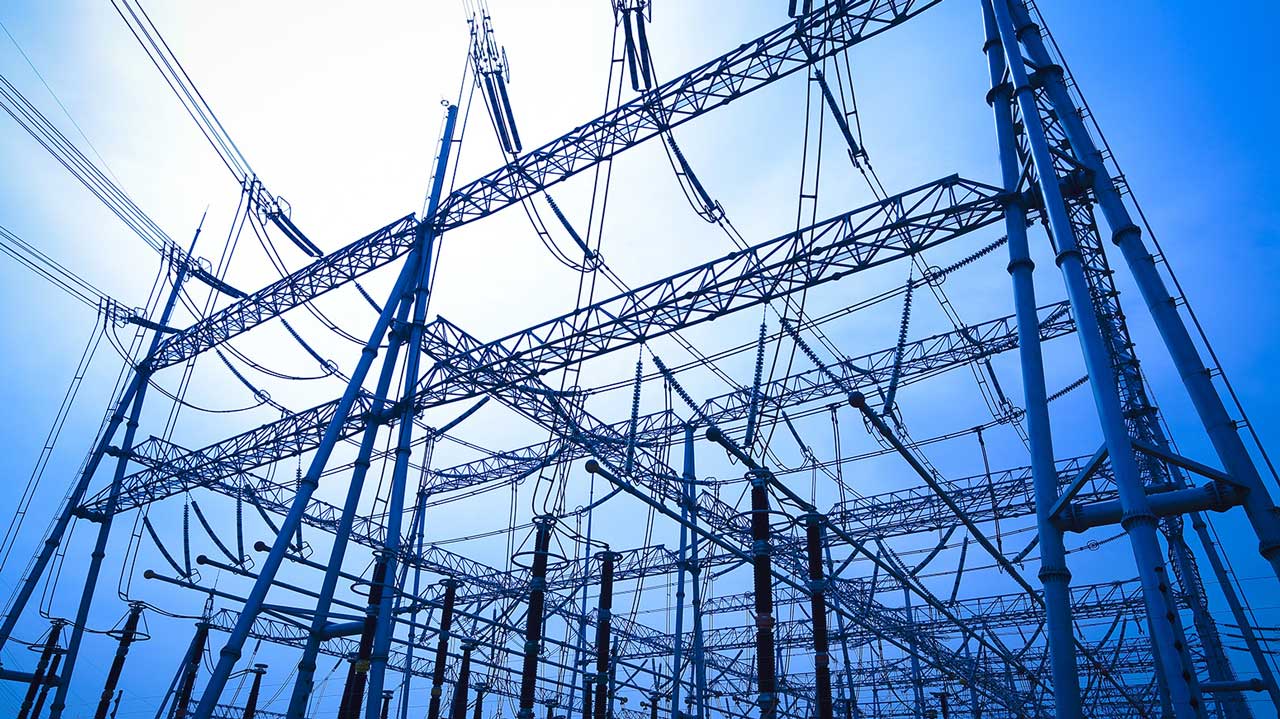
Uganda's push to build a $500 billion economy will depend not only on expanding electricity generation but also on closing persistent gaps in access, affordability and investment, energy and finance experts have said.
The concerns emerged at the second Energy Convention held at Four Points by Sheraton, where government officials, financial institutions and energy-sector stakeholders examined how Uganda can finance the infrastructure needed to meet its long-term energy ambitions.
Uganda's installed electricity generation capacity has risen to 2,098 megawatts, but national electricity access remains at about 60 per cent, falling to 42.4 per cent in rural areas. More than 90 per cent of rural households still rely on biomass fuels, highlighting the gap between generating more power and ensuring that households and businesses can access and afford it.
The country aims to increase generation capacity to 15,420MW by 2030 and 52,482MW by 2040. Participants at the convention argued that achieving those targets will require greater private-sector participation, better project preparation and financial structures capable of making energy projects attractive to investors.
Absa Bank Uganda Chief Financial Officer, Michael Segwaya, said the financial sector had a critical role to play in turning Uganda's energy plans into investable projects.
He pointed to the UGX 2.07 trillion allocated to the power and renewable energy sector in the 2026/27 national budget as evidence of government commitment, but stressed that public funding alone would not be enough to meet the country's long-term energy needs.
"Uganda's Tenfold Growth Strategy is an ambitious but achievable target," Segwaya said. "However, as financial institutions, our role is to co-create long-term, bankable financial structures that turn ambitious masterplans into operational assets."
The focus on bankability is significant because Uganda's energy challenge is increasingly shifting from generation capacity to the ability to finance, build and connect projects at scale. Without sufficient investment in feasibility studies, environmental assessments, technical due diligence and other early-stage work, potentially viable projects can struggle to secure financing.
Segwaya cited Absa's involvement in major energy projects, including the Bujagali Hydropower Project, as well as a $50 million five-year facility provided to Uganda Electricity Distribution Company Limited in December 2025 to support connections for more than 200,000 households.
The bank also provided a UGX 11.085 billion concessional credit facility to the Uganda Energy Credit Capitalisation Company under the Electricity Access Scale-Up Project.
Financing remains key to energy access
Benard Kamatte, Absa Bank Uganda's Head of Financial Institutions Group, said the availability of capital was not necessarily the main constraint facing Uganda's energy transition.
"Our biggest bottleneck is bankability. Capital follows risk mitigation and if we don't have a good understanding of the technology we're supporting, it becomes very difficult to pull capital into that space," he said.
He identified inadequate project preparation as a major obstacle, noting that insufficient investment in feasibility studies, environmental assessments and technical advisory services often makes it difficult for financial institutions to assess and fund emerging energy technologies.
Kamatte added that Uganda's commercial banks had demonstrated their ability to finance large infrastructure projects, pointing to their participation in the $5.6 billion East African Crude Oil Pipeline (EACOP) oil and gas development.
He argued that a similar financing model could support renewable energy, mini-grids and battery storage if development finance institutions intervened earlier to reduce risks during the pre-construction stage and address gaps in technical information.
Absa's partnership with the UECCC was presented as one example of how blended finance can help make energy projects more affordable. Under such arrangements, concessional funding from governments and development partners helps reduce the cost of capital, with the UECCC facility capping on-lending interest rates at 15 per cent annually for initiatives including last-mile electricity connections, institutional solar systems and clean cooking technologies.
The convention also explored green bonds and carbon credit monetisation as potential sources of additional funding for Uganda's energy transition. Participants said these instruments could help reduce investment risks and attract more private capital into renewable energy and other low-carbon projects.
Uganda's energy challenge now extends beyond generating more electricity. Unless reliable and affordable power reaches more households and businesses, higher generation capacity will have limited impact on economic growth. The country will need sustained public investment, stronger private-sector financing and better-prepared projects to expand generation, strengthen transmission networks and close the access gap.
The discussions placed financing at the centre of Uganda's wider economic ambitions, with stakeholders arguing that the country's energy plans must increasingly focus on converting policy targets into projects that can attract capital, reach consumers and deliver measurable economic benefits.
Related Stories

Sign up for our newsletter.
Get the latest news, expert analysis, and industry insights delivered straight to your inbox. Join thousands of professionals shaping the future of energy.
By submitting my information, I agree to the Privacy Policy and Terms of Service.