Power
Abuja Gets Largest Share as Nigeria Delivers 4,379mw Power to States
Distribution companies receive 81 per cent of available electricity while transmission losses and international supplies account for the rest.
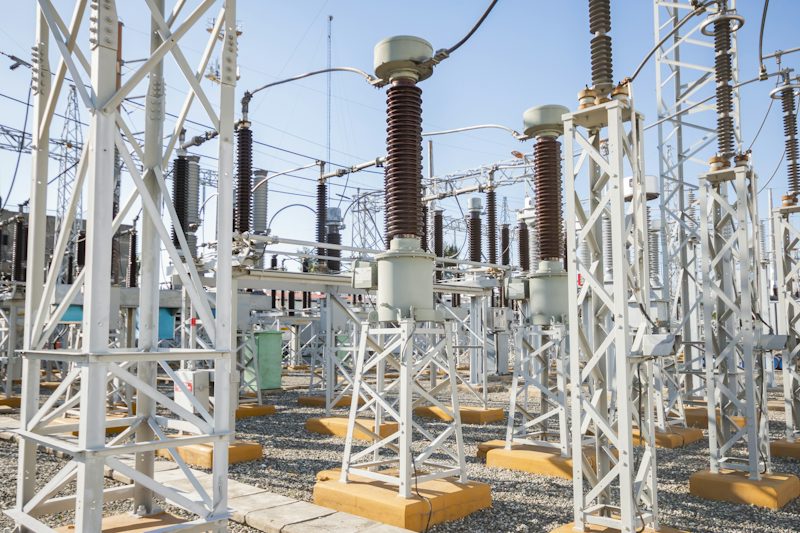
Abuja Electricity Distribution Company received 700 megawatts of electricity on Tuesday marking the highest allocation given to any region as Nigeria distributed 4,379.07MW to power companies nationwide.
The National Control Centre of the Transmission Company of Nigeria recorded a total available generation of 5,403.3MW on the same day.
This figure is about 399MW below the country's record high of 5,801.84MW achieved in March 2025. The new figure beats the previous peak of 5,330MW recorded between August and September 2026.
Prior to June 2026, daily power output hovered between 3,700MW and 4,700MW, before rising above 5,000MW in recent weeks.
How power was shared across regions
The Transmission Company of Nigeria shared the available power among eleven distribution companies based on percentages set by the Nigerian Electricity Regulatory Commission.
Abuja DisCo got 15.20 per cent of the total supply, equal to 700MW. Ikeja DisCo in Lagos followed with 581MW, which equals 15.01 per cent. Ibadan DisCo took 550MW or 11.93 per cent, while Benin DisCo received 531MW, representing 8.04 per cent.
Other power suppliers also received their shares from the grid. Eko DisCo got 519MW, Enugu DisCo took 512MW, and Port Harcourt DisCo received 466MW.
Kano DisCo was given 161MW, Kaduna DisCo received 155MW, Jos DisCo got 134MW, and Yola DisCo received 70MW.
A total of 1,024.18MW was kept away from direct regional sharing.
Out of this unallocated power, 108.07MW went to power stations for running equipment, while 367.87MW covered energy lost during transmission and substation operations. The rest went to international supply deals with Niger and local factory customers.
Fixing equipment to reach full capacity
Nigeria has total installed power plants capable of producing 13,014.40MW. However, the highest output ever reached was 5,801.84MW at 9:15 pm on March 4, 2025.
Power output went below 3,000MW in early 2026 because of gas shortages. The Minister of Power, Joseph Tegbe, said early checks showed problems in gas supply, plant repairs, line connections, and bill payments.
"Upon assuming office, the diagnosis we undertook at the onset revealed constraints at every segment of the electricity value chain. Gas supply to power stations was limited by damaged pipelines and commercial terms that discouraged investment," Tegbe stated.
He said many plants relied heavily on gas, while old machines and delayed projects stopped electricity from reaching homes.
"Our generation fleet was heavily dependent on thermal plants, with ageing equipment, deferred maintenance, stalled projects and capacity unable to reach consumers.
The sector diagnosis revealed payment of only 27 per cent of generation companies' bills, undermining their ability to maintain plants and pay gas suppliers," Tegbe stated.
Recent repairs helped restore the 375MW Alaoji power plant after three years off the grid. New power transformers in Apapa, Ijora, Alausa, and Lekki in Lagos released 672MW of transmission space, while a new 300MVA transformer in Katampe, Abuja, added 240MW capacity.
Federal authorities plan to focus next on repair work along the Lagos, Enugu-Port Harcourt, and Abuja-Kaduna-Kano power lines, while preparing to build a larger s
upergrid network.
Related Stories
Sign up for our newsletter.
Get the latest news, expert analysis, and industry insights delivered straight to your inbox. Join thousands of professionals shaping the future of energy.
By submitting my information, I agree to the Privacy Policy and Terms of Service.