Renewables |Power
Nigeria: FG Commissions 581kWp Solar Mini-Grid in Kwara
Kwara's new solar mini-grid shows how rural electrification can spark small business growth, even as Nigeria's overall access gap remains the world's largest.
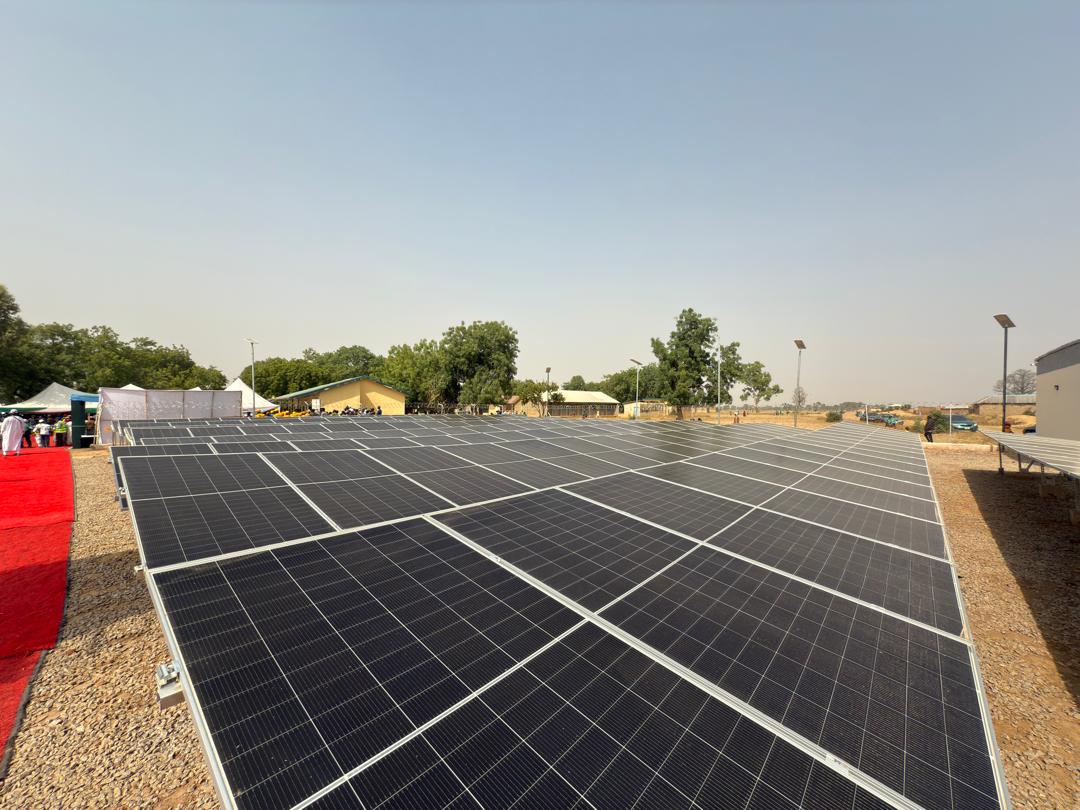
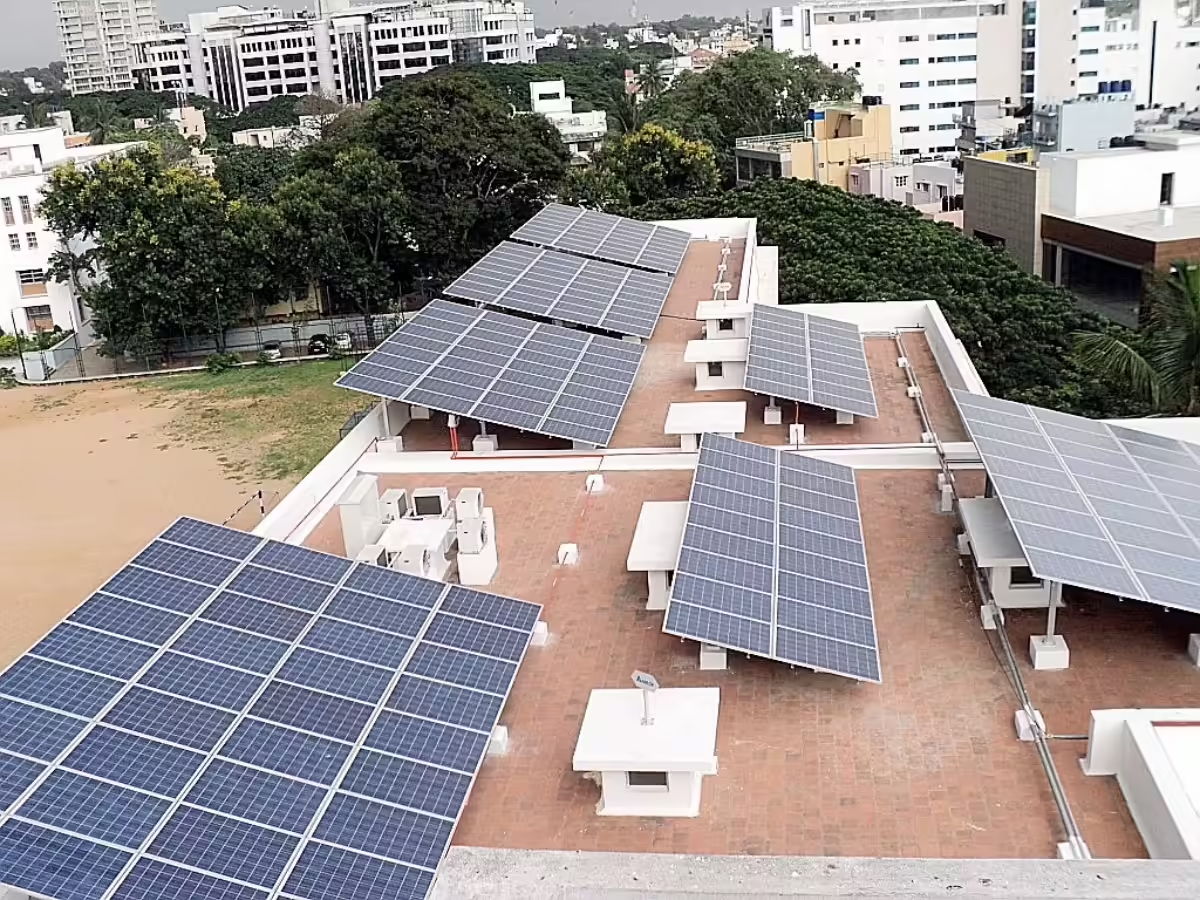
The Federal Government, through the Rural Electrification Agency (REA), has commissioned a 581-kilowatt-peak solar mini-grid in Oke-Oyi community, Ilorin East Local Government Area of Kwara State, adding to a national push to reach the more than 85 million Nigerians who still lack reliable access to grid electricity.
The project was developed by Nayo Tropical Technologies Limited under the Rural Electrification Fund-Interconnected Mini-Grid Acceleration Scheme, with support from German Cooperation and the European Union through the Deutsche Gesellschaft für Internationale Zusammenarbeit (GIZ), Germany's federal development agency.
Minister of Power Joseph Tegbe commissioned the project on Thursday, commending President Bola Tinubu's administration for its commitment to expanding electricity access.
Nigeria's electrification gap remains the world's largest
Nigeria has the highest number of people without electricity access of any country in the world, a gap that REA Managing Director Abubakar Aliyu said in August stood at more than 85 million people, or about 40% of the population.
An investigation cited by Sahara Reporters found that 22 of Nigeria's 774 local government areas have gone without electricity in their headquarters and surrounding communities for years, in some cases decades, while the REA has separately said more than 20,000 communities nationwide remain unconnected.
Rural areas bear the brunt of the gap, and projects like Oke-Oyi's mini-grid form part of a broader federal strategy that includes the $750 million Distributed Access to Renewable Energy Scale-Up (DARES) project, approved by President Tinubu, which aims to supply electricity to 17.5 million Nigerians through 1,350 mini-grids nationwide.
New businesses have already emerged in Oke-Oyi
Tegbe said the Oke-Oyi project reflects the government's broader approach to using electricity as a driver of economic activity, employment and improved livelihoods.
"The purpose of electrification is ultimately to improve lives and create opportunities. What we are commissioning today in Oke-Oyi is an investment in the productive capacity of the community," he said, noting that reliable electricity could allow welders, grain millers and other businesses to expand while creating room for new enterprises.
The mini-grid comprises 1,336 solar panels and 84 batteries, supported by about 10 kilometres of distribution cables and transformers, and serves an estimated 13,000 residents.
The intervention has already been linked to new economic activity in the community, including 12 welding businesses, two pure water companies, four grain mills, four aluminium artisan businesses, an ice-block production business and a cold-room and ice-fish depot, activities that would previously have relied on costly diesel generators, a common workaround in a country where the International Renewable Energy Agency has found that the large majority of businesses and urban households own or share a generator.
Three electricity vendors are currently operating in Oke-Oyi, with three more, including a female entrepreneur, expected to be registered.
Officials stress need to maintain the infrastructure
Kwara State Governor Abdulrahman Abdulrazaq, represented by Speaker of the Kwara State House of Assembly Yakubu Danladi-Salihu, welcomed the project, describing reliable electricity access as important to enterprise, employment and community development.
REA's Aliyu said the project reflects the agency's focus on ensuring electrification investments generate measurable economic benefits.
"The real measure of an electrification project is not only the infrastructure we commission, but the opportunities that reliable electricity creates for the people who use it," he said, adding that sustaining the investment would remain a priority beyond the commissioning, with communities, developers and other stakeholders all responsible for protecting the infrastructure.
Karin Jansen, Head of Development Cooperation at the German Embassy, stated that the project demonstrates the value of partnerships in delivering sustainable energy solutions, thanking the Federal Ministry of Power, REA, the Kwara State Government, Ibadan Electricity Distribution Company (IBEDC), Nayo Tropical Technologies, the European Union, GIZ and the Oke-Oyi community for their contributions.
Oke-Oyi community leader Oseni Elemoso thanked the Federal Government and development partners for the intervention.
"Today is a day of joy for the people of Oke-Oyi. We have longed for reliable electricity to improve our lives and economic activities, and we are already seeing new businesses emerge in our community," he said.
Construction of the project also created temporary employment for residents working as painters, welders, bricklayers, iron benders, tilers, plumbers, borehole diggers and excavation labourers.
The project forms part of the Federal Government's wider efforts through REA to expand electricity access to unserved and underserved communities, an effort that, given the scale of Nigeria's access gap, will need many more projects the size of Oke-Oyi's to make a measurable dent in the tens of millions of Nigerians still living without reliable power.
Related Stories
Sign up for our newsletter.
Get the latest news, expert analysis, and industry insights delivered straight to your inbox. Join thousands of professionals shaping the future of energy.
By submitting my information, I agree to the Privacy Policy and Terms of Service.