Renewables
Africa’s Renewable Power Capacity Set to More Than Double by 2031
Falling solar costs and new wind, mini-grid and green hydrogen projects are reshaping Africa’s renewable energy market, but weak power grids could limit the gains.
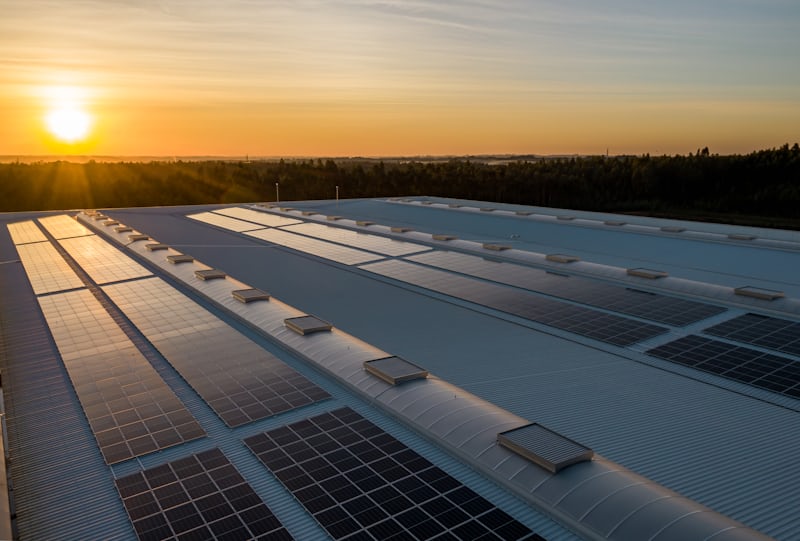
Africa’s renewable energy capacity is projected to rise from 77.91 gigawatts in 2025 to 179.66GW by 2031, with solar power recording the fastest expansion across the continent.
The forecast, contained in a renewable energy market report by Mordor Intelligence, puts Africa’s installed renewable capacity at 86.95GW in 2026. The market is projected to record an annual growth rate of 15.62 per cent between 2026 and 2031.
Solar power is expected to grow at 27.84 per cent annually during the period. Its rapid expansion is being supported by falling equipment costs, shorter construction periods and lower initial spending on projects.
Hydropower currently holds the largest share of Africa’s renewable capacity. It accounted for 62.25 per cent of the continent’s renewable energy market in 2025.
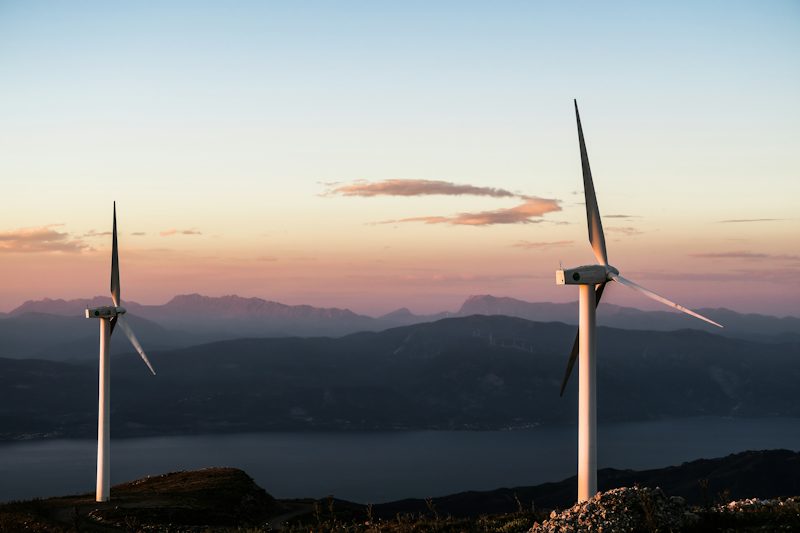
The forecast points to a major change in the technology mix, with wind and solar expected to overtake hydropower together by 2029.
Solar costs are opening more projects
The cost of producing solar power has fallen sharply in several African countries.
Utility-scale solar auction prices dropped below $0.03 per kilowatt-hour in Egypt and Morocco during 2025. The report says the prices were more than 40 per cent below the cost of new coal and gas power.
Solar module prices also fell to $0.12 per watt in early 2026.
In South Africa, Bid Window 7 cleared 2.6GW at an average price of $0.025 per kilowatt-hour. Algeria’s 1GW solar tender set a ceiling price of $0.028 per kilowatt-hour.
Algeria is forecast to record the fastest renewable energy expansion on the continent, with a 42.51 per cent annual growth rate from 2026 to 2031. Its expansion is tied to a 1GW solar tender and plans involving green hydrogen.
South Africa has the largest installed renewable energy base among the countries covered in the report. It held a 20.89 per cent revenue share in 2025.
The country also has a 48GW wind project pipeline, with much of it located in the Northern and Eastern Cape provinces. Projects awarded under Bid Windows 5 to 7 total 5.3GW, with commercial operation dates extending to 2029.
Kenya had 985MW of geothermal capacity at Olkaria and 310MW of wind capacity. Ethiopia had 5,150MW from the Grand Renaissance Dam, although 40 per cent of its wet-season potential was described as stranded.
Egypt had 1.8GW at Benban and is targeting 10GW by 2028. Morocco had 580MW from its Noor concentrated solar power project, which includes seven hours of storage.
Power grids pose a major test
The rapid construction of renewable projects is also exposing weaknesses in electricity networks.
South Africa curtailed 4,363 gigawatt-hours of renewable electricity in 2024, equal to 12 per cent of total output. Kenya restricted power from the Lake Turkana wind project for 18 per cent of the hours in 2025, while Egypt disconnected Benban for 200 hours.
South Africa’s 2025 Grid Code now requires two-hour energy storage for some projects. The report estimates that this requirement adds $300 per kilowatt to project costs.
Currency problems are another obstacle for independent power producers. Nigeria had $2.5 billion in trapped dividends in 2024, while Zambia’s kwacha lost 40 per cent in 2024-25. Ethiopia also limited foreign exchange transfers to 50 per cent in 2025.
The report also identifies delays in sovereign guarantees for power purchase agreements and opposition to some large hydropower projects on social and environmental grounds.
Nigeria recorded 90,000 solar home systems and nine mini-grids under its 2025 DARES rollout. The programme reduced rural electricity costs from $0.80 to $0.35 per kilowatt-hour.
The World Bank’s Mission 300 programme has pledged $35 billion to provide electricity to 300 million Africans by 2030.
Commercial and industrial renewable installations are forecast to grow by 18.36 per cent annually through 2031. Mining companies, data centres and manufacturers are expected to account for much of that demand.
Recent projects include EDF Renewables’ 420MW Koruson 1 wind cluster, commissioned in March 2026, and Enel Green Power’s 330MW Impofu Wind Farm Cluster, which came online in June 2026.
Vestas completed installation of the 420MW Northern Cluster wind project in South Africa’s Karoo in July 2026.
The report also projects further renewable investment in Nigeria, including a $145 million solar manufacturing plant in Abia State, with its first tranche scheduled for September 2026.
Related Stories
Sign up for our newsletter.
Get the latest news, expert analysis, and industry insights delivered straight to your inbox. Join thousands of professionals shaping the future of energy.
By submitting my information, I agree to the Privacy Policy and Terms of Service.