Oil & Gas
Dangote Switches Petrol Sales to Dollars, Ends Naira Pricing
Dangote's switch to dollar-denominated fuel sales draws attention to growing foreign exchange pressures and could reshape fuel pricing, the naira-for-crude policy and Nigeria's downstream oil market.
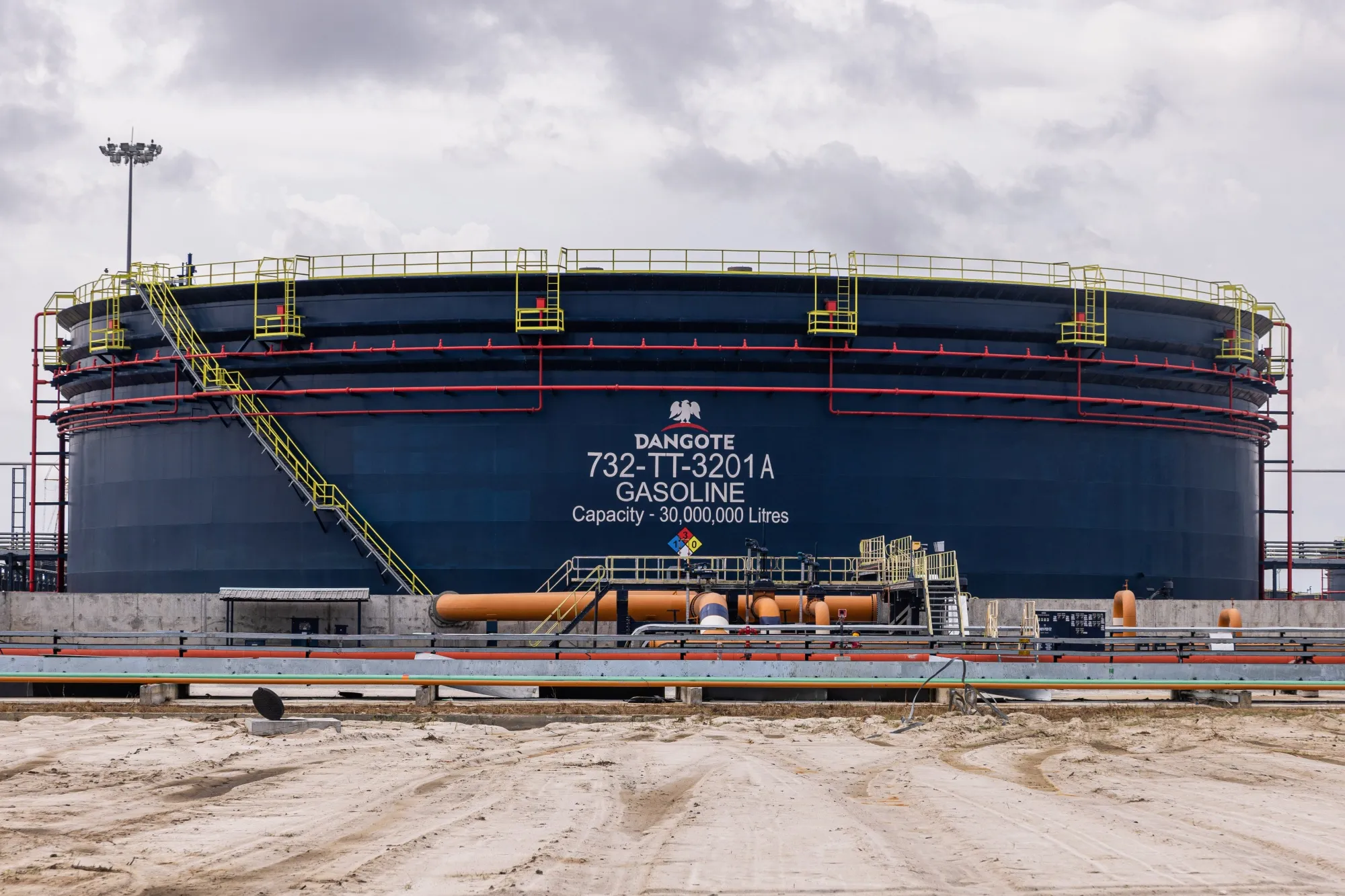
Dangote Petroleum Refinery on Monday officially adopted a dollar-denominated pricing system for its refined petroleum products, replacing the naira payment arrangement introduced under the Federal Government's domestic crude supply initiative.
Under the new pricing structure, petrol will sell at an ex-depot price of $0.779 per litre, while Automotive Gas Oil (diesel) is priced at $1.087 per litre and Aviation Turbine Kerosene (aviation fuel) at $0.942 per litre. Petrol supplied through coastal deliveries will cost $1,044.62 per metric tonnes.
In a notice to marketers, the refinery said all previously issued naira-denominated Proforma Invoices and Deal Recaps for gantry and coastal transactions were no longer valid following the switch to dollar payments. It added that the new arrangement does not apply to Liquefied Petroleum Gas (LPG), which will continue to be sold under the existing system.
The move represents a significant shift in the refinery's commercial operations. As the country's largest supplier of refined petroleum products, Dangote's pricing decisions have become a major reference point for fuel marketers, making any change in its pricing model one that could ripple across Nigeria's downstream petroleum market.
Industry sources said the refinery decided to price its products in dollars after buying an increasing share of its crude oil in the same currency while continuing to sell most refined products locally in naira. That mismatch exposed the company to exchange-rate swings, making it more difficult to manage costs.
The development also points to the growing strain on the Federal Government's naira-for-crude initiative, launched in October 2024 to allow local refiners buy crude oil in naira. The policy was introduced to reduce pressure on foreign exchange, support domestic refining and help stabilise fuel prices. However, Industry players asserted that more crude supplies have gradually returned to dollar-based transactions, weakening one of the policy's key objectives.
Dollar pricing could reshape fuel market
The refinery's decision is likely to affect petroleum marketers first, as they will now buy products in dollars rather than naira. That means changes in the exchange rate could feed more quickly into wholesale fuel prices and, ultimately, what motorists pay at filling stations.
Beyond the immediate impact on fuel marketers, the shift raises broader questions about Nigeria's downstream petroleum reforms. It suggests that despite expanding local refining capacity, foreign exchange remains a critical factor in the economics of the country's oil industry. If domestic crude continues to be priced largely in dollars, shielding consumers from currency volatility may become increasingly difficult.
The development also brings into focus the complex realities of Nigeria's energy transition. While the Dangote refinery has reduced the country's dependence on imported fuel, access to crude oil, exchange-rate stability and a reliable domestic supply framework remain essential to delivering the full benefits of local refining.
Going forward, the refinery's dollar prices will serve as the benchmark for marketers buying products directly from its facilities. However, the final pump price paid by consumers will still depend on the naira-to-dollar exchange rate, transportation costs, distribution margins, regulatory charges and movements in global crude oil prices.
Related Stories



Sign up for our newsletter.
Get the latest news, expert analysis, and industry insights delivered straight to your inbox. Join thousands of professionals shaping the future of energy.
By submitting my information, I agree to the Privacy Policy and Terms of Service.