Power
Eskom Delays Solar Registration Deadline After Public Pushback
South Africa’s power utility faces mounting criticism over rooftop solar rules as consumers and industry groups question costs, duplication, and policy clarity.
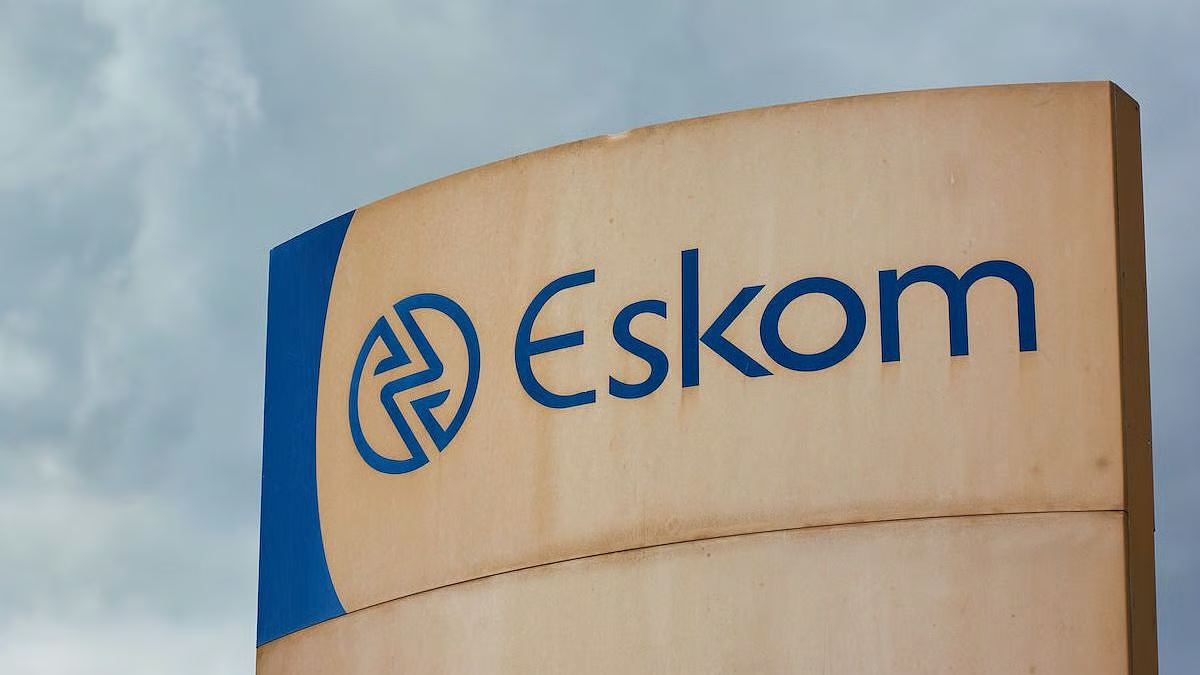
Eskom has extended a waiver on rooftop solar registration fees by six months, offering temporary relief to households and businesses amid growing criticism of its grid-connection rules.
In a statement, the utility said the waiver, which applies to small-scale embedded generation systems of up to 50kW, will now run until September 30, 2026. It also confirmed plans to introduce a prepaid option for residential solar users, allowing them to remain on prepaid metering while connecting rooftop systems.
Eskom said the measures are designed to support the safe integration of solar into the national grid as adoption accelerates. “We recognise the important role customers play in South Africa’s energy transition. Our goal is to ensure installations are safe, compliant and aligned with protecting the national grid,” said Agnes Mlambo, the utility’s acting group executive for distribution.
The extension follows mounting public and industry pushback over Eskom’s requirement that all grid-connected solar systems be registered and moved to its Homeflex tariff. Critics, including the Organisation Undoing Tax Abuse, argue that the policy adds complexity and cost for users already investing in alternative power amid persistent electricity shortages.
Eskom, however, maintains that registration is a regulatory requirement rather than a barrier to adoption. Citing guidance from the National Energy Regulator of South Africa, the utility said registration ensures that rooftop systems are integrated safely and do not compromise grid stability.
While a Certificate of Compliance confirms that installations meet technical standards, Eskom said registration allows operators to monitor and manage the growing number of distributed energy systems connected to the network.
Even so, industry experts continue to question the need for a parallel process, arguing that existing certification frameworks already address safety concerns. For many users, the additional administrative steps, alongside tariff changes, have fuelled resistance.
The latest extension also reflects low compliance levels, with many solar users yet to register their systems amid confusion over requirements and costs. By waiving fees and simplifying documentation, Eskom appears to be trying to improve participation while maintaining oversight of the grid.
Emergy analysts say the dispute highlights a broader tension in South Africa’s energy transition: balancing the rapid rise of private solar generation with the operational and financial pressures facing the national utility.
Related Stories
Sign up for our newsletter.
Get the latest news, expert analysis, and industry insights delivered straight to your inbox. Join thousands of professionals shaping the future of energy.
By submitting my information, I agree to the Privacy Policy and Terms of Service.