Power
Eskom Marks One Year without Loadshedding
After years of crippling blackouts, South Africa has gone a full year without loadshedding, as Eskom says stronger plant performance and grid recovery efforts are reshaping the country’s energy outlook.
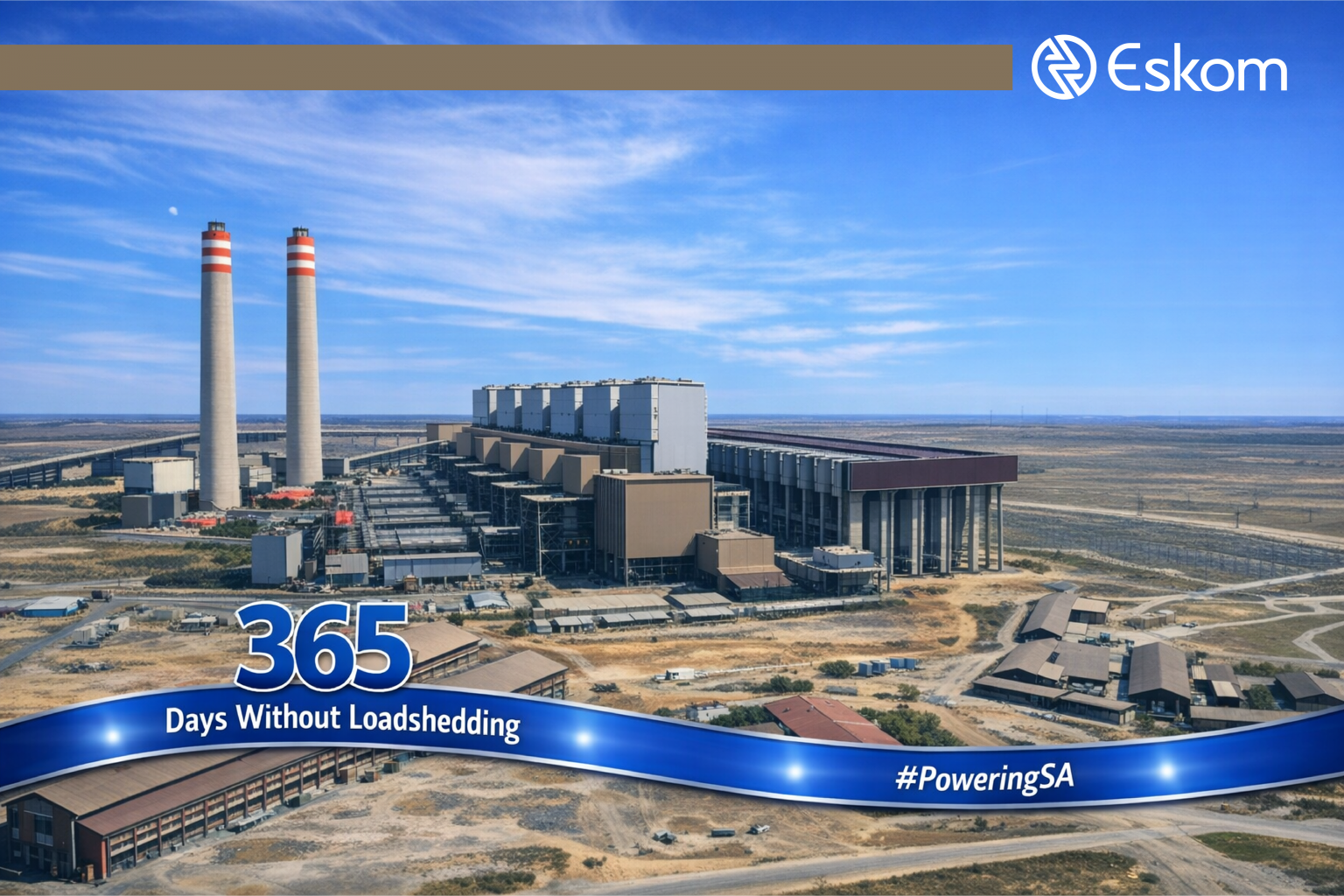
South Africa’s state-owned power utility, Eskom, has recorded 365 consecutive days without loadshedding for the first time since 2018, marking a major milestone in the country’s efforts to stabilise electricity supply and rebuild confidence in the power sector.
The utility announced that uninterrupted electricity supply was achieved at 00:01 on May 16, 2026, describing the achievement as a turning point in the recovery of South Africa’s electricity system after years of recurring blackouts that disrupted businesses, weakened economic growth and strained households.
According to Eskom, the milestone reflects the impact of its generation recovery plan launched in 2023, alongside intensified maintenance, improved plant performance and stronger operational discipline across the utility’s generation fleet.
Eskom said the improved stability helped the company save about R26.9 billion in diesel costs over the past three years while meeting 100 per cent of national electricity demand during the period.
Chairman of the Eskom Board, Mteto Nyati, said the achievement was the result of years of operational reforms and the technical expertise of the utility’s workforce.
“This moment has been three years in the making since the inception of the generation recovery plan,” he stated.
Group Chief Executive of Eskom, Dan Marokane, said the stable electricity supply now provides a foundation for broader energy sector reforms and increased private-sector participation in the power market.
He added that Eskom was positioning itself to support South Africa’s long-term energy transition and infrastructure investment plans.
Operational data released by the utility showed that the Energy Availability Factor (EAF) improved from 54.56 per cent in March 2023 to 65.16 per cent, while unplanned outages declined significantly during the same period.
Diesel expenditure used for emergency generation also fell sharply from approximately R33.3 billion to R6.4 billion, reflecting lower dependence on backup generation systems.
Eskom said the improved grid reliability had also supported energy-intensive industries such as ferrochrome production, helping companies maintain operations and reduce the risk of job losses linked to electricity shortages.
The utility noted that a more stable baseload system has further strengthened South Africa’s ability to integrate renewable energy into the grid, particularly during peak demand periods.
On the financial side, Eskom disclosed that operational improvements contributed to an upgrade in its credit rating by Standard & Poor’s Global Ratings, while the utility also recorded improvements in pre-tax profit and EBITDA during the 2026 financial year.
Looking ahead, Eskom said it would continue implementing maintenance and generation recovery measures while preparing for the gradual transition away from older coal-fired power stations under South Africa’s energy transition strategy.
The utility added that decisions regarding the phased shutdown, repowering and repurposing of ageing coal plants are expected during the second quarter of the 2027 financial year.
Eskom also highlighted progress in reducing electricity load reduction programmes in underserved communities, noting that more than half a million households have already benefited from improved supply reliability.
Related Stories
Sign up for our newsletter.
Get the latest news, expert analysis, and industry insights delivered straight to your inbox. Join thousands of professionals shaping the future of energy.
By submitting my information, I agree to the Privacy Policy and Terms of Service.