Policy & Governance
Nigeria Budgets Solar Power for Presidential Villa While Retaining Diesel, Grid Supply
Nigeria’s 2026 budget allocates over N16 billion for energy supply at the Presidential Villa, combining new solar investments with continued spending on diesel fuel and grid electricity amid ongoing power sector instability.
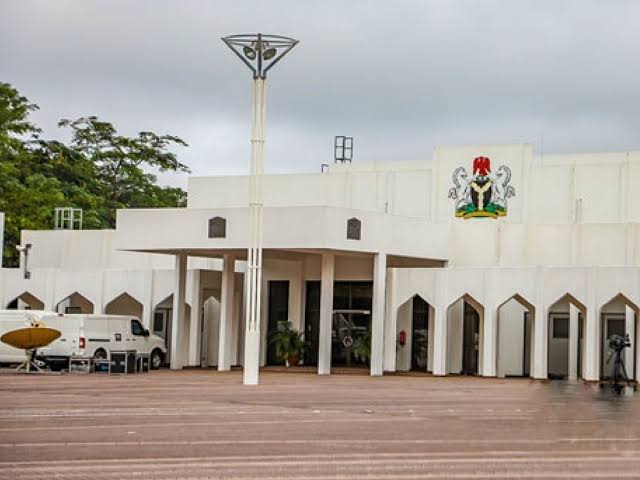
Nigeria’s Federal Government has allocated more than N16 billion for energy supply and related services at the Presidential Villa in its proposed 2026 budget, combining new solar investments with continued spending on diesel fuel and grid electricity.
Appropriation documents submitted to the National Assembly show that the allocation covers funding for a solar mini-grid project, generator fuel and electricity supplied by the Abuja Electricity Distribution Company (AEDC).
Of the total allocation, about N7 billion is designated for a solar mini-grid project at the State House. The budget also sets aside nearly N2 billion for generator fuel, alongside electricity charges and other utility-related expenses, indicating that the facility will continue to rely on multiple power sources.
In total, energy and infrastructure-related spending at the Presidential Villa exceeds N16 billion within the N58.18 trillion federal appropriation bill for the 2026 fiscal year.
The funding structure follows a familiar pattern. In 2025, the federal government approved N10 billion for solarisation projects at the Villa amid rising diesel costs and unreliable grid supply. Despite the investment, operational budgets continued to include provisions for generator fuel and grid electricity.
The continued reliance on multiple power sources comes as Nigeria’s electricity system remains fragile. The national grid has already suffered repeated collapses in early 2026, disrupting power supply to homes, hospitals and businesses nationwide.
Data published by the Nigerian Independent System Operator (NISO) show that electricity generation dropped sharply during recent incidents, at one point falling to zero megawatts and leaving distribution companies without supply.
Power sector analysts attribute the grid’s instability to ageing transmission infrastructure, inadequate maintenance and fluctuations in generation capacity. These constraints have limited the ability of institutions , including high-security government facilities to rely solely on grid electricity.
As outages persist and fuel prices remain elevated, households and small businesses across the country are increasingly adopting small-scale solar systems to meet basic electricity needs. At the federal level, however, budget allocations suggest a cautious transition, with renewable investments continuing alongside diesel and grid-based supply to manage reliability risks.
Related Stories




Sign up for our newsletter.
Get the latest news, expert analysis, and industry insights delivered straight to your inbox. Join thousands of professionals shaping the future of energy.
By submitting my information, I agree to the Privacy Policy and Terms of Service.