Oil & Gas
Nigeria Targets End to Crude Exports as Refining Capacity Grows
Nigeria plans to shift from exporting crude oil to refined petroleum products as expanding refinery capacity, stronger domestic processing and regional trade ambitions reshape the country's energy sector.

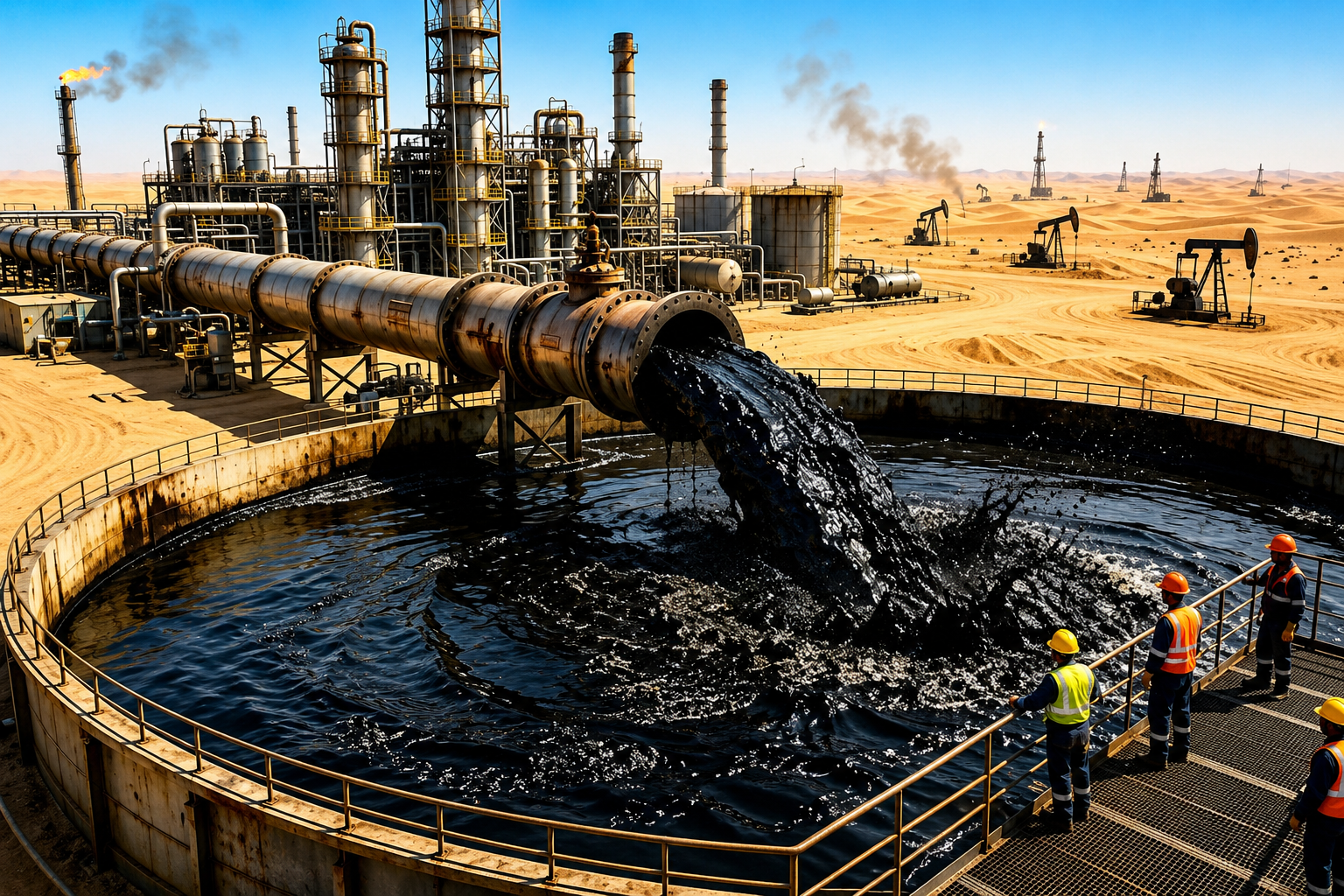
The Federal Government has unveiled plans to phase out crude oil exports over the coming years, signalling a major shift in Nigeria's petroleum strategy as expanding domestic refining capacity is expected to enable more crude to be processed locally and exported as higher-value refined products.
The plan was announced by the Chief Executive of the Nigerian Midstream and Downstream Petroleum Regulatory Authority (NMDPRA), Rabiu Umar, at the 49th Nigeria Annual International Conference and Exhibition organised by the Society of Petroleum Engineers (SPE) Nigeria Council in Lagos.
Umar said Nigeria's refining landscape has changed significantly with the emergence of large-scale private and modular refineries, creating the prospect of processing all crude produced domestically instead of exporting it in its raw form.
The government is targeting crude oil production of three million barrels per day in the coming years and expects the country's expanding refining capacity to absorb much of that output.
The proposed shift could redefine Nigeria's role in the global oil market. For decades, the country has relied largely on crude oil exports while importing much of its refined petroleum products, limiting the value captured from its hydrocarbon resources. Processing more crude at home could increase export earnings from higher-value fuels, reduce pressure on foreign exchange, support industrialisation, create jobs across the petroleum value chain and strengthen energy security if refining capacity and crude supply continue to expand as planned.
Domestic refining takes priority
Umar stated that the NMDPRA is working with the Nigerian Upstream Petroleum Regulatory Commission (NUPRC) to enforce the Domestic Crude Supply Obligation, a policy that requires oil producers to make crude available to local refineries before exporting.
The Domestic Crude Supply Obligation is designed to guarantee feedstock for Nigerian refineries, helping ensure stable operations and reducing dependence on imported petroleum products.
According to Umar, increasing domestic refining will strengthen links across Nigeria's upstream, midstream and downstream petroleum industries while creating additional value through refining, petrochemicals and gas processing.
He also noted that the regulator is developing strategic petroleum reserves by maintaining fuel stocks close to major consumption centres to improve energy security and cushion the domestic market against global supply disruptions and price shocks.
The authority is simultaneously working to remove regulatory and infrastructure bottlenecks affecting pipelines, depots and storage facilities, while collaborating with the Nigerian National Petroleum Company (NNPC) Limited to rehabilitate critical midstream infrastructure under the Petroleum Industry Act.
Nigeria eyes regional trading hub
Apart from meeting domestic demand, the government is positioning Nigeria as a regional supplier of refined petroleum products across West Africa.
Umar revealed that the NMDPRA is collaborating with regional regulators and S&P Global Commodity Insights to establish a common fuel specification and regional pricing benchmark that would simplify cross-border petroleum trade.
He averred that harmonising fuel specifications across West Africa would remove technical barriers that currently limit regional trade and strengthen Nigeria's ambition to become a major petroleum trading hub.
The regulator is also seeking to improve investor confidence by making licensing and regulatory approvals more predictable and efficient, reducing bureaucratic delays that have historically slowed investment in the sector.
Speaking at the conference, Nigerian Upstream Petroleum Regulatory Commission (NUPRC) Chief Executive, Oritsemeyiwa Eyesan, said collaboration across the industry remains essential as geopolitical developments, climate policies, technological advances and changing investment patterns continue to reshape the global energy market.
SPE Nigeria Council Chairman Francis Nwaochie added that Nigeria's ability to increase oil production, commercialise its gas resources, strengthen local content and attract long-term investment would determine whether the country can fully realise the opportunities presented by its evolving energy sector.
Related Stories


Sign up for our newsletter.
Get the latest news, expert analysis, and industry insights delivered straight to your inbox. Join thousands of professionals shaping the future of energy.
By submitting my information, I agree to the Privacy Policy and Terms of Service.