Oil & Gas
NLNG Plans Three New Gas Trains to Aid Nigeria's Gas Output
Nigeria must move fast on its 290 trillion cubic feet of gas reserves, NLNG's CEO warns, as Train 7 nears completion and cooking gas supply hits record levels.
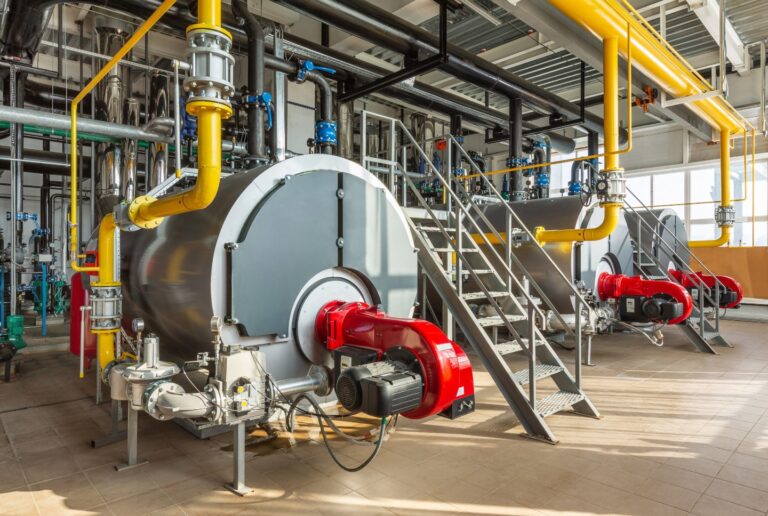
Nigeria LNG Limited (NLNG), said to have earned $149.6 billion since it started operations, is now studying plans to build three new gas trains.
This was revealed by its Chief Executive Officer, Mr. Adeleye Falade, on Tuesday, July 28, 2026, in Lagos, at the unveiling of the company's Facts and Figures 2026 publication.
The new trains, to be named Train 8, Train 9, and Train 10, will come after Train 7, which is already 93 per cent complete and will lift NLNG's gas output by 35 per cent once finished.
Falade said Nigeria holds about 290 trillion cubic feet of proven gas reserves, with more still to be confirmed, and told the gathering that the country cannot afford to sit on this resource while the world still wants gas.
"There is a window within which we must take advantage of the resources that God has given to us," he said.
He noted that gas will stay important in global energy for many years, but said Nigeria must move fast to get full value from it before that window closes.
This is why NLNG has now opened early talks on three additional trains, on top of Train 7, which will push the company's yearly LNG output from 22 million tonnes to 30 million tonnes.
"Today, we've started having initial conversations and doing exploratory activities around what it will take to go to Train 8, Train 9 and Train 10," Falade said.
He explained that Train 7 alone will also lift NLNG's cooking gas output by 50 per cent, on top of the record 500,000 tonnes it already supplied to Nigerian homes and businesses in 2025, which was about one-third of national demand.
Since 2022, NLNG has sold all its cooking gas only within Nigeria, a policy Falade said has helped more households switch from firewood and charcoal to cleaner cooking fuel. He said the extra gas from Train 7 will push this further.
What NLNG has paid, and what still slows it down
Falade gave figures to back the scale of NLNG's business. The company has paid $47.2 billion in dividends to its shareholders and $10.8 billion in tax to government since it became tax compliant in 2009.
It runs six liquefaction trains, owns assets worth over $22.9 billion, and has shipped more than 6,285 LNG cargoes abroad without incident, supplying about six per cent of the world's LNG.
Yet Falade admitted that gas supply shortages remain NLNG's toughest problem.
"Last year was extremely difficult for us because of gas supply constraints. However, the situation has improved this year, and we are optimistic about the future," he said.
He also credited NLNG's model of using gas rather than burning it off for cutting Nigeria's gas flaring rate from around 65 per cent to under 20 per cent.
"We are really a gas country with some oil," he said.
Falade pointed to the newly completed Bonny-Bodo Road as proof of NLNG's community work, calling it one of the largest corporate social projects by any company in Nigeria.
The road gives Bonny Island its first direct link by road to the mainland, opening up trade and travel for Rivers State.
Speaking on media access to company data, NLNG's Manager of Corporate Communications and Public Affairs, Mrs Anne-Marie Palmer-Ikuku, said the Facts and Figures booklet should be the first place journalists turn to for accurate numbers on the company.
"We remain fully committed to meeting your information needs. The Facts and Figures should be your go-to point. Should you require any clarification or additional information, please do not hesitate to reach out to us," she said.
Falade maintained that NLNG will keep its attention on steady output, production growth, and obtaining more value from Nigeria's gas for the country.
Related Stories
Sign up for our newsletter.
Get the latest news, expert analysis, and industry insights delivered straight to your inbox. Join thousands of professionals shaping the future of energy.
By submitting my information, I agree to the Privacy Policy and Terms of Service.