Power
Rwanda Targets $1bn Private Investment to Achieve Universal Electricity Access
Rwanda is seeking $1 billion in private investment to expand electricity generation, accelerate renewable energy projects and deliver universal access to power by 2030.
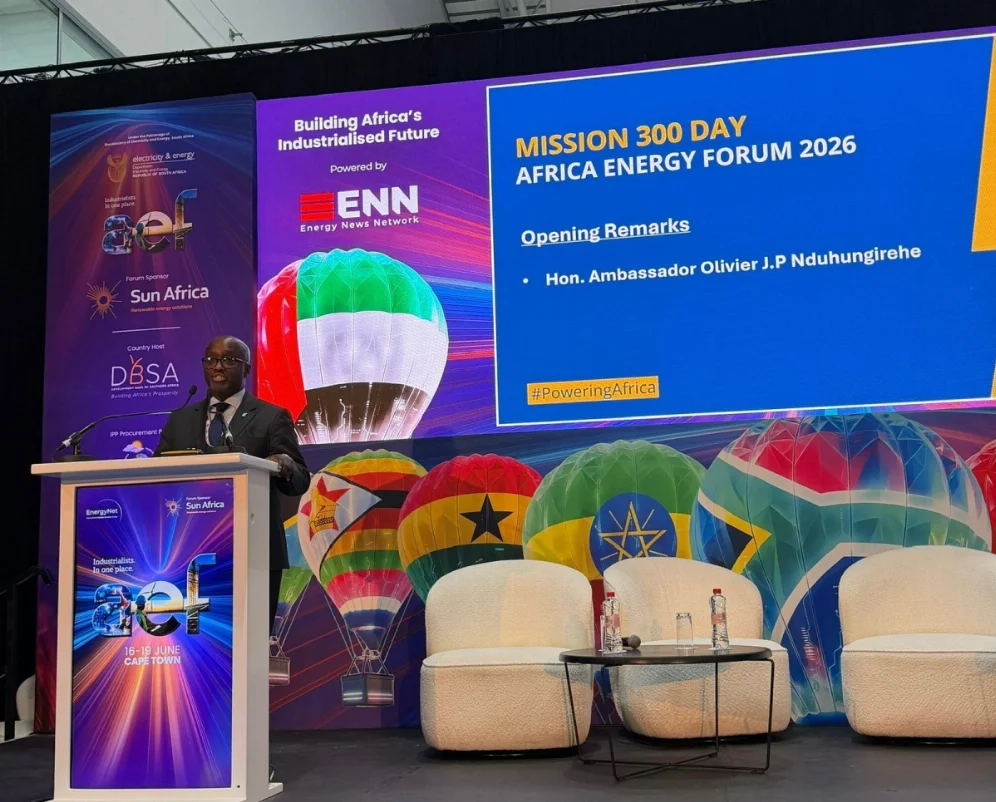
Rwanda is seeking to attract $1 billion in private-sector funding as part of a broader strategy to expand electricity generation, strengthen energy infrastructure and achieve universal access to power by 2030.
The investment drive was presented during the launch of the Rwanda Energy Compact at the Africa Energy Forum in Cape Town, South Africa, where government officials outlined plans to double the country's electricity generation capacity and accelerate energy access.
Minister of Foreign Affairs and International Cooperation Olivier Nduhungirehe said electricity access in Rwanda has grown from about one per cent in 1994 to more than 86 per cent today, describing energy as a critical tool for economic transformation and industrial development.
Universal access drive hinges on private investment
Rwanda's energy plan is backed by a fully costed investment programme valued at about $3 billion and aims to increase installed generation capacity to 1,066 megawatts by 2030.
According to the government, private investment will play a central role in achieving the target, particularly in renewable energy and emerging power technologies.
Officials said expanding electricity access remains essential to supporting industrialisation, increasing local production and strengthening economic growth.
Speaking at the launch of the Energy Compact, Nduhungirehe called on public and private investors to support Rwanda's long-term energy ambitions while stressing the importance of regional cooperation in the power sector.
Renewables central to expansion plans
Hydropower, solar energy and methane-to-power projects are expected to drive Rwanda's next phase of electricity growth.
Among the projects highlighted are the 43.5MW Nyabarongo II Hydropower Plant, the 9.7MW Rukarara VI Hydropower Plant and the Nyirahundwe Hydropower Plant. The country is also expanding electricity generation from methane gas extracted from Lake Kivu, where existing projects currently supply about 82MW of power.
Rwanda is also participating in the 206MW Rusizi III Hydropower Project, a regional initiative involving Burundi and the Democratic Republic of Congo, while several solar projects are planned to support future electricity demand.
The Rwanda Energy Group estimates that about $3.2 billion will be required to implement the country's 10-year energy strategy, with funding expected from concessional loans, climate finance instruments, green bonds, carbon credits and private-sector investment.
Related Stories
AfDB Approves $164 Million for Clean Energy Projects to Power Six Million Africans
Rwanda Targets $1bn Private Investment to Achieve Universal Electricity Access
Zambia Signs 500 MW Solar Deal With Korea's KS Eco, Eyes Nuclear Power
Over 720,000 Homes Regain Stable Power as Eskom Expands Electricity Access in South Africa
Sign up for our newsletter.
Get the latest news, expert analysis, and industry insights delivered straight to your inbox. Join thousands of professionals shaping the future of energy.
By submitting my information, I agree to the Privacy Policy and Terms of Service.