Power
Zambia Signs 500 MW Solar Deal With Korea's KS Eco, Eyes Nuclear Power
ZESCO has signed a 500-megawatt solar and storage agreement with South Korea's KS Eco Solutions, the firmest result of a drive to wean the grid off drought-hit hydropower. A proposed nuclear component sits much further over the horizon.
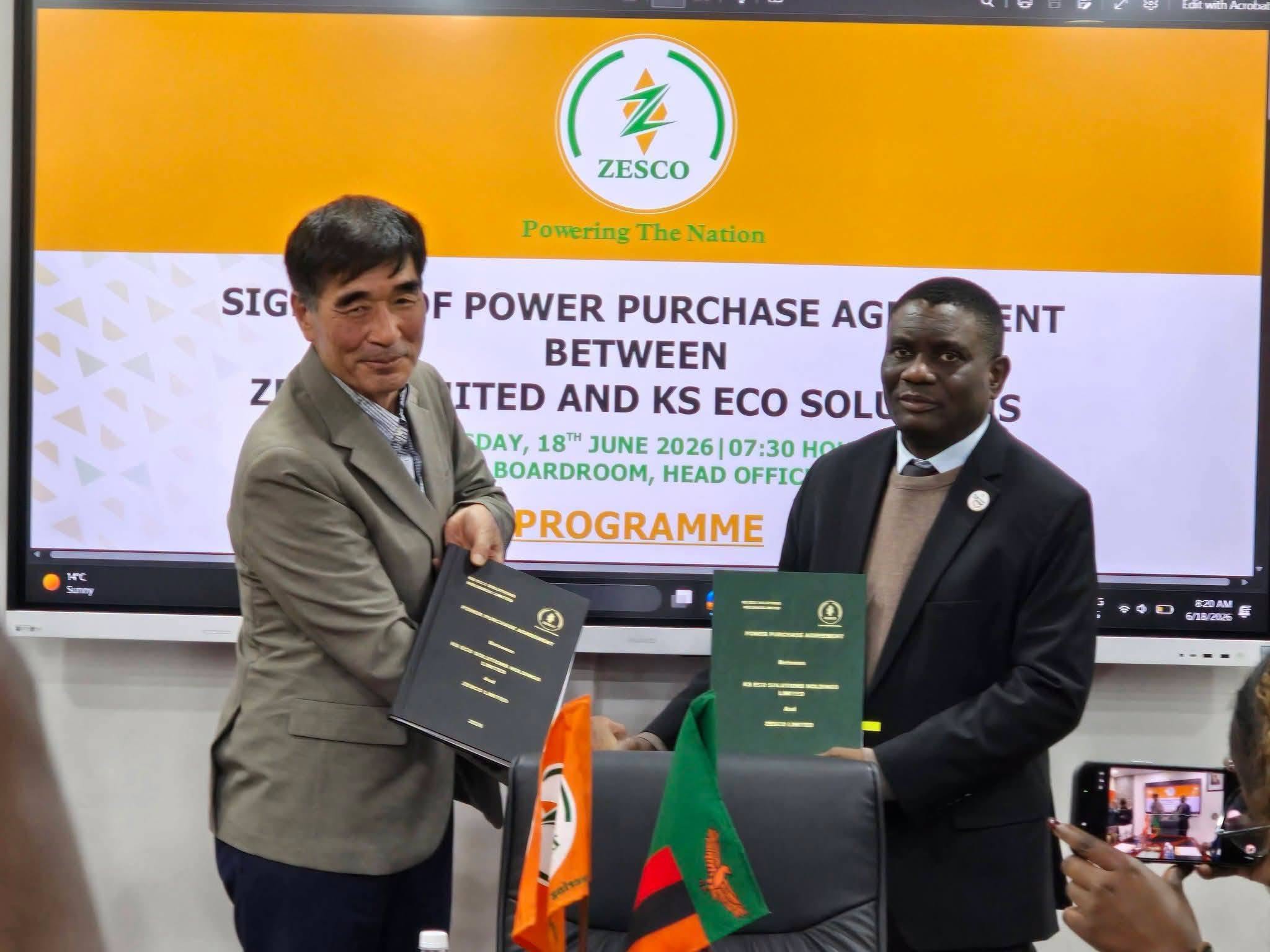
Zambia has signed a power purchase agreement for a 500-megawatt solar plant, the most concrete step yet in its push to lift electricity generation from about 4,000 megawatts to 10,000 megawatts and reduce a heavy reliance on hydropower that the 2024 drought exposed as a liability.
The state utility ZESCO signed the agreement with South Korea's KS Eco Solutions Holdings Limited on 19 June, witnessed by the Ministry of Energy. ZESCO Managing Director Justin Loongo signed for the utility and KS Eco chief executive Prof. Ma Hong-il for the Korean firm.
The plant, which comes with battery storage, is to be built in ten phases of 50 megawatts each, at a reported cost of up to US$900 million, with the electricity sold to ZESCO under a long-term contract.
The deal followed a meeting days earlier at which a Korean delegation, led by Zambia's Ambassador to South Korea Andrew Banda, presented broader investment interest covering both solar and nuclear power.
Permanent Secretary for Electricity Arnold Simwaba said the country must raise generation substantially to meet rising demand, and that although Zambia has leaned heavily on solar in recent years, it is open to other forms of investment that improve long-term security of supply.
A power system built on water and its limits
To understand why a signed solar contract counts as news, look at where Zambia's electricity comes from. More than 80 per cent of installed capacity is hydropower, most of it at Kariba and the Kafue Gorge plants. That worked when the rains were reliable. It became a liability as they stopped being so.
The 2024 El Niño-induced drought, one of the worst droughts to hit the region in decades, pushed Lake Kariba’s usable storage into single digits, falling below 5 per cent by late 2024. Output at the main dams fell to a fraction of installed capacity.
ZESCO pushed load-shedding from around eight hours a day to as much as 21 hours within seven months. The government declared a national disaster, and the IMF more than halved its 2024 growth forecast for the country, to 2.3 per cent from 4.7 per cent, citing the hit to farming and power.
The power crisis exposed how quickly Zambia’s electricity system can come under strain when rainfall fails. The consequences extended beyond the grid, affecting businesses trying to keep operations running and households managing long periods without reliable power. The proposed 500-megawatt solar plant, backed by storage, would give Zambia another source of electricity when hydropower output falls during dry periods.
Why 10,000 megawatts, and why now
Zambia’s installed electricity generation capacity is about 3,880 megawatts, as of February 2026 but available output fell sharply during the drought as hydropower production declined. Simulaneously, demand is set to climb steeply and most of the increase points to one sector.
Mining already takes roughly half of Zambia's electricity, and copper accounts for about 70 per cent of export earnings. The government wants to more than triple copper output to three million tonnes a year by 2031, reviving mines such as Konkola and Mopani and opening new ground.
Production was about 890,000 tonnes in 2025, so the gap to the target is large, and every additional tonne needs reliable, affordable power the current system cannot guarantee. This is the real significance of the Korean engagement. It is less about one company and more about whether Zambia can add firm, weather-proof capacity fast enough to keep its copper strategy credible.
Zambia’s nuclear energy ambitions
The nuclear element is a different proposition from the solar deal and a far more distant one. No agreement has been signed for it and nuclear power would be new territory for Zambia. No African country except South Africa currently operates a nuclear power plant, and reactors carry long lead times measured in years, heavy upfront capital, and demanding regulatory and safety requirements. An expression of interest is a long way from a plant feeding the grid.
Solar can be deployed quickly, which is why it has dominated recent investment and why this is the part that reached a signed contract first. The wider Korean proposal pairs that near-term capacity with a nuclear ambition that, if it advances at all, would belong to the 2030s and beyond.
Zambia's representatives framed the engagement as the product of longer effort rather than a fresh overture. Ambassador Banda said discussions with Korean partners had been underway for some time and welcomed the concrete result.
He described South Korea as a dependable partner with strong technical expertise and a record of delivering large projects.
South Korea has built nuclear and large infrastructure at home and exported reactor technology abroad, including the Barakah plant in the United Arab Emirates, which gives the interest more weight than a first-time entrant would carry.
Related Stories
Zambia Signs 500 MW Solar Deal With Korea's KS Eco, Eyes Nuclear Power
Liberia Set to Save Millions as New Power Capacity Reduces Foreign Electricity Dependence
Credit Rating Rules Keep 600 Million Africans Waiting for Electricity
Norfund Backs Solar Telecom Towers to Cut Diesel Dependence in African States
Sign up for our newsletter.
Get the latest news, expert analysis, and industry insights delivered straight to your inbox. Join thousands of professionals shaping the future of energy.
By submitting my information, I agree to the Privacy Policy and Terms of Service.