Oil & Gas
Marketers, Experts Oppose Dangote’s Dollar Fuel Pricing
Marketers and experts are challenging Dangote Refinery’s shift to dollar‑based fuel pricing, warning it could deepen FX pressures, raise pump prices and test Nigeria’s deregulated downstream framework.
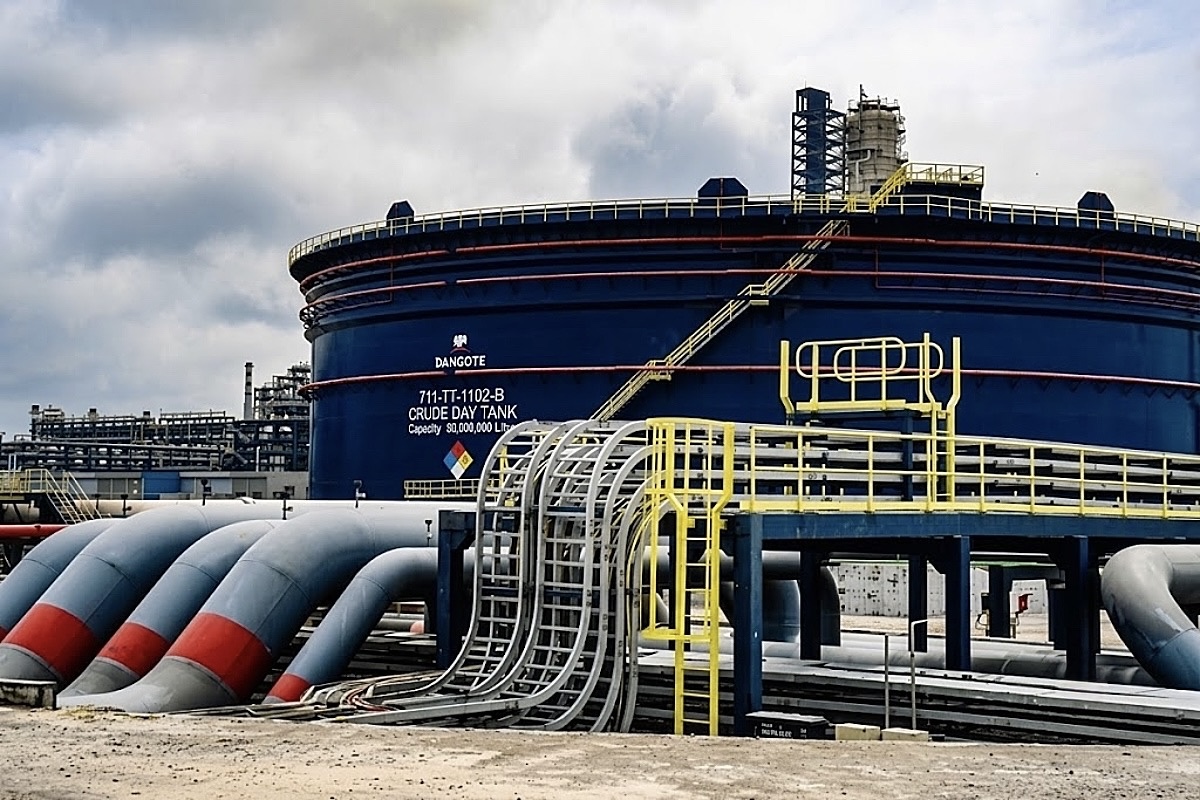
Independent marketers and energy experts have pushed back against Dangote Petroleum Refinery’s move to price locally consumed fuel in United States dollars, warning that the policy could deepen foreign exchange pressures, raise pump prices and destabilise Nigeria’s deregulated downstream market.
Stakeholders in the petroleum downstream sector said while the refinery is a private business entitled to commercial decisions, dollar‑denominated pricing for domestic fuel sales carries wider macroeconomic risks. Industry groups argue that tying ex‑depot prices to the dollar for petrol (Premium Motor Spirit), diesel (Automotive Gas Oil) and aviation fuel could accelerate “dollarisation” of the economy and undermine efforts to stabilise the naira.
The row followed Dangote Refinery’s notice to marketers that all naira‑based coastal and gantry PFIs and deal recaps had been invalidated as it transitions fully to dollar billing. In response, private depot operators in Lagos, Port Harcourt and Warri began adjusting loading prices to reflect anticipated replacement costs under the new pricing template. Market data from Petroleum price. ng showed petrol rising by as much as about N113 per litre in some depots and diesel increasing by up to roughly N150 per litre in certain locations, compounding pressure on an already strained consumer base.
Independent marketers say the timing of the move is particularly sensitive, coming when Nigeria is grappling with foreign exchange shortages and high inflation. They fear that more downstream transactions tied to the dollar will increase demand for scarce FX, drive up exchange rates and filter into higher pump prices nationwide.
Calls for government intervention and regulatory scrutiny
The Petroleum Products Retail Outlets Owners Association of Nigeria (PETROAN) criticised the decision, arguing it could gradually push the economy towards deeper dollar use in everyday transactions. PETROAN’s National President, Billy Gillis‑Harry, cautioned that allowing a single major refiner to shift domestic sales into dollars risks destabilising the downstream market and weakening regulatory efforts to maintain price and value stability.
Gillis‑Harry acknowledged the refinery’s role in improving energy security but insisted that decisions by a dominant supplier must align with Nigeria’s economic objectives. He warned that marketers forced to buy fuel in dollars would naturally seek to pass the cost to consumers, even though retail sales legally remain in naira. PETROAN, he said, would continue to source products from various suppliers and urged the Nigerian National Petroleum Company Limited to revive state‑owned refineries to deepen competition and reduce the system’s dependence on one large private player.
The Independent Petroleum Marketers Association of Nigeria (IPMAN) also raised the alarm, appealing to President Bola Tinubu and the Presidential Committee on Petroleum to step in quickly. IPMAN’s National Publicity Secretary, Chinedu Ukadike, stressed that pump prices are tightly linked to crude oil prices and exchange rates, and that layering more dollar exposure on domestic transactions could be “bad news” for Nigerians whose livelihoods are heavily tied to fuel costs.
Ukadike urged the Federal Government to preserve the naira‑for‑crude arrangement designed to support domestic refining, especially amid global tensions such as the crisis around the Strait of Hormuz. He warned that marketers might now be forced to chase FX from banks and parallel markets just to buy products, a pattern that could further strain the currency and raise prices.
Depot‑level adjustments already reflect these concerns. In Port Harcourt, for example, petrol loading prices reportedly climbed from around N1,137 to N1,250 per litre, while diesel rose from roughly N1,500 to N1,650. In Warri and Lagos, several depots also raised petrol prices, in some cases by between about N24 and N110 per litre, as operators factored in dollar‑linked replacement costs even without a formal new Dangote ex‑depot price.
Against this backdrop, marketers and consumer advocates are asking regulators and the presidency to clarify whether domestic fuel pricing can be denominated in foreign currency and how such a system would be supervised to protect consumers.
Divergent expert views on FX risk and Deregulation
Energy economists and legal experts are divided over the policy. Some see Dangote Refinery’s move as a rational response to currency mismatch risk, given that crude oil feedstock and many refinery inputs are priced in dollars, while product sales have been in naira. Others argue that domestic transactions should remain anchored on the naira as Nigeria’s legal tender and question whether dollar pricing is appropriate for a refinery that received substantial support from the local financial system.
Professor Emeritus Wumi Iledare, a petroleum economist, said the decision should be understood within the framework of petroleum economics and market deregulation. He noted that in a deregulated environment, a producer is free to publish its selling price, and the market will decide whether that price becomes the reference based on competition, buyer response and alternative supply options. He emphasised that announcing an ex‑depot price is not the same as collusive price‑fixing, which involves anti‑competitive coordination among multiple suppliers.
Iledare explained that dollar billing may be an attempt to align revenues with dollar‑denominated costs to manage foreign exchange exposure. If input costs, including crude, catalysts, equipment and finance, are heavily linked to international markets, selling purely in naira can leave refiners vulnerable to exchange‑rate shocks. Domestic refining, he added, improves supply security but does not insulate Nigeria from global price and currency dynamics, meaning local prices will still reflect international market forces.
However, he stressed that regulators must ensure competition is strong enough to discipline any single player’s pricing decisions. In his view, the Nigerian Midstream and Downstream Petroleum Regulatory Authority (NMDPRA) should focus on transparency, adequate supply, consumer protection and fair competition rather than approving or setting prices, and should monitor whether market power is being used to distort outcomes against consumers or rivals.
From a legal and regulatory perspective, Professor Dayo Ayoade of the University of Lagos expressed concern that domestic petroleum transactions are being denominated in dollars despite the naira’s status as Nigeria’s legal tender. He said that although global oil markets largely trade in dollars, domestic product sales would ordinarily be expected to use naira, with foreign currency reserved for exports and international deals.
Ayoade acknowledged that Dangote may be seeking to avoid FX losses and secure stable pricing as it buys crude in dollars, but he questioned whether the move is fair given previous naira‑denominated crude cargoes and foreign exchange support provided during the refinery’s construction. He called on NMDPRA, the Federal Competition and Consumer Protection Commission (FCCPC) and the Central Bank of Nigeria to examine the legal, economic and financial basis of the policy, warning that it may not be illegal on its face but could still be improper in the current environment.
Jeremiah Olatide, Chief Executive Officer of Petroleumprice.ng, similarly urged the Federal Government to intervene, arguing that gantry‑level dollarisation of petroleum products would add to the burden on Nigerians already dealing with oil price spikes and cost‑of‑living pressures. He noted that while there is no law stopping Dangote from trading in dollars, domestic petroleum must be handled in a way that protects consumers and sustains market stability.
The latest dispute comes months after Dangote Refinery began reshaping Nigeria’s fuel supply chain by reducing dependence on imports and becoming the dominant domestic supplier.
Africa Energy Pulse reported on Tuesday, 14 July, that Dangote Petroleum Refinery had switched its petrol sales to US dollars, bringing an end to its naira-based pricing system.
The dollar‑pricing decision has now opened a fresh debate over how Nigeria balances private investment, deregulation, foreign exchange realities and consumer protection and whether one large refinery should be allowed to set a precedent that could shift the entire downstream sector closer to a dollar‑denominated economy.
Related Stories



Sign up for our newsletter.
Get the latest news, expert analysis, and industry insights delivered straight to your inbox. Join thousands of professionals shaping the future of energy.
By submitting my information, I agree to the Privacy Policy and Terms of Service.