Oil & Gas
Nigeria Targets End of Regulated Gas Pricing by 2028
Nigeria's 2028 deadline to end regulated gas pricing confronts a paradox: a country with Africa's largest gas reserves still exports nearly half its gas while millions go without reliable power.
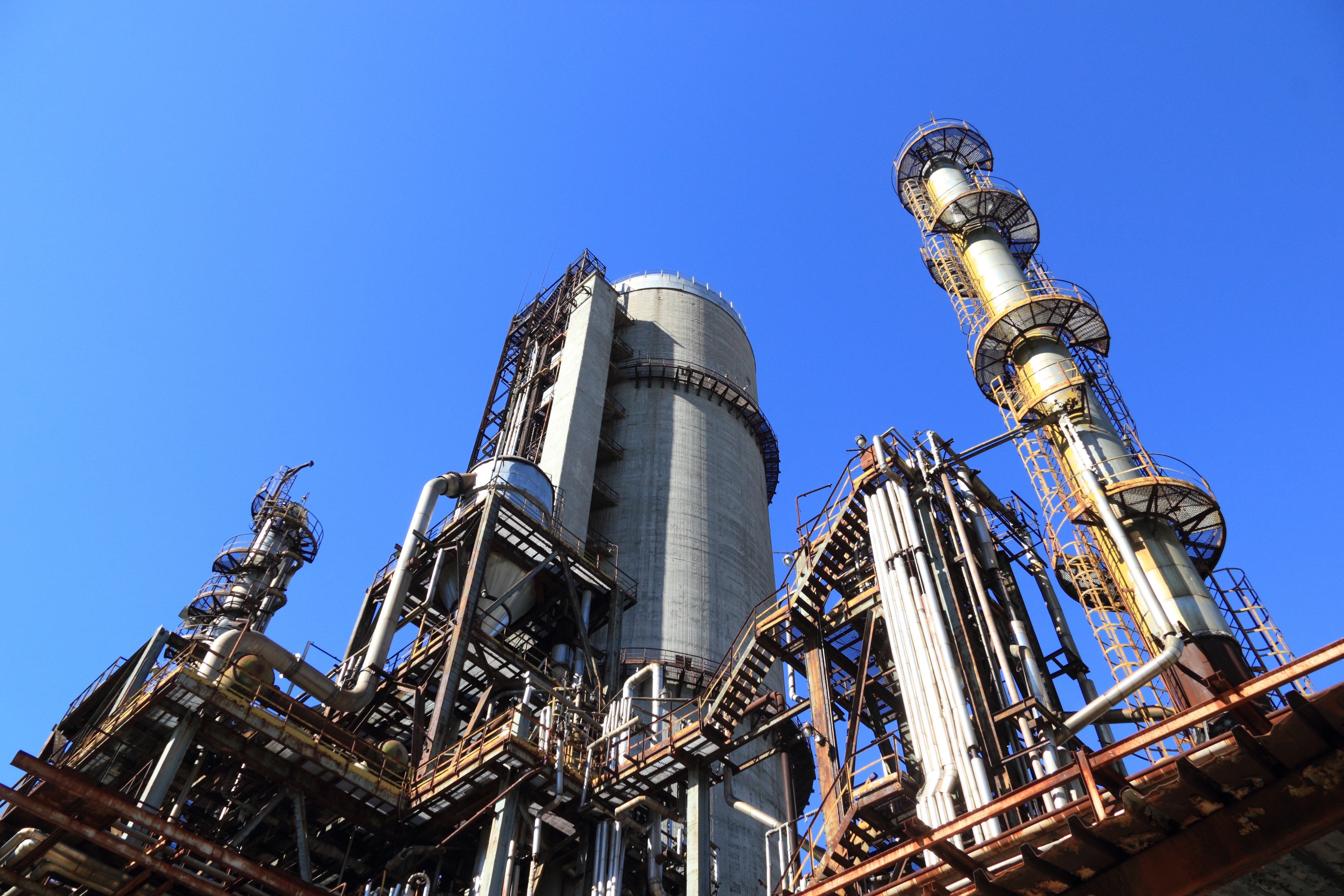
Nigeria plans to end regulated pricing in its domestic gas market by September 24, 2028, moving toward a fully commercial willing-buyer, willing-seller framework, Nigerian Midstream and Downstream Petroleum Regulatory Authority (NMDPRA) Chief Executive Rabiu Umar said on Thursday at a Gas Market Maturity Workshop organised under the Decade of Gas initiative at the Petroleum Technology Development Fund in Abuja.
Umar explained that the transition would be based on measurable conditions demonstrating the maturity of different segments of the gas market, in line with the Petroleum Industry Act (PIA). "Gas must be affordable for Nigerians while supporting President Ahmed Tinubu's investment reforms.
This transition is in line with the Nigeria decade of gas goal to become a gas-powered economy by 2030," he said, adding that the authority is targeting a 24-month period to establish the conditions needed to declare the market fully commercial.
"Invariably, this is the first time that we have been bold enough to set a clear target for our gas market transition," he said.
Regulated prices have long discouraged domestic supply
The push to liberalise pricing responds to a problem that has dogged Nigeria's gas sector for years: regulated domestic prices set well below what producers can earn selling gas abroad.
Under the current framework, the government-set base price for gas supplied to the power sector stands at $2.42 per million British thermal units, compared with international prices that have often run several times higher, giving gas producers little commercial incentive to prioritise the domestic market over exports.
That gap has had direct consequences for electricity supply: an analysis of regulatory data found that Nigeria exported nearly 46% of its utilised gas in January and February 2026 alone, even as domestic supply to thermal power plants weakened and power cuts worsened across the country.
Nigeria's Minister of Power has attributed the pattern to the more lucrative nature of export sales, the low regulated domestic price, and the government's own unpaid debts to gas supply companies.
The consequences reach well beyond the power sector. Nigeria holds Africa's largest proven gas reserves, yet more than 80 million Nigerians still lack access to reliable electricity, even though gas-fired plants generate roughly three-quarters of the power that does reach the grid, according to industry analysts.
Umar acknowledged that domestic supply remains tight despite the country's resource base. "If you look at supply, for example, on the domestic side, it is still tight, no matter how you look at it. We have a lot of work to do in our infrastructure space," he said.
"The focus right now is not just delivering the infrastructure, but ensuring that we have enough molecules to fill the pipeline." He specifically pointed to the Ajaokuta-Kaduna-Kano pipeline as a project that will need sufficient gas supply to become commercially viable.
Regulator to shift toward monitoring competition
Umar explained that the regulator's role will evolve as the market matures, with a greater focus on establishing market rules, ensuring fair access, protecting competition and monitoring market conduct.
He disclosed that the NMDPRA has begun consultations on draft regulations targeting anti-competitive practices, intended to translate the PIA's competition provisions into enforceable rules.
He identified supply availability and diversity, the number and quality of buyers and sellers, access to transportation infrastructure, contract strength, payment reliability, delivery obligations, market information and credible price signals as the key indicators the authority will track to judge market maturity.
Umar noted that the transition would need to be sequenced carefully, since different segments of the gas market are at different stages of development, with regulators needing to determine which segments are ready to liberalise first and what thresholds and safeguards must be met beforehand.
He also disclosed that the authority is nearing completion of its process for issuing gas distribution licences, with qualified companies expected to receive licences in the fourth quarter of 2026.
Officials cite gas-to-power and LPG as key demand drivers
Umar stated that the NMDPRA is also working to deepen domestic use of liquefied petroleum gas (LPG) and liquefied natural gas, alongside broader adoption of compressed natural gas, describing greater domestic gas utilisation as an important indicator of economic growth.
He said expanded domestic use could support power generation, reduce reliance on imports and cut the transmission losses associated with moving electricity over long distances.
He added that gas projects require substantial upfront investment and long-term contracts before investors will commit capital.
"For you to take an FID in a gas investment, you need to have a long-term contract," he said, adding that the authority is willing to work with individual projects to identify regulatory support measures.
Ed Ubong, coordinating director of the Decade of Gas Secretariat, said Nigeria could achieve a willing-buyer, willing-seller gas market before the end of the programme's first horizon in 2030.
He said the programme has identified clear markers for the target, including raising gas supply to 12.6 billion cubic feet per day by 2030, and that 16 key infrastructure projects are expected to support market growth, alongside more than 60 identified projects capable of generating about 15 billion cubic feet per day of gas demand.
He said a mature gas market would also require a successful gas-to-power segment and wider access to cooking gas.
Nigerian Gas Association President Yetunde Taiwo said the transition must be driven by clearly defined milestones rather than broad statements of intent.
"As NGA, what we would like to see really is to see those goalposts, those milestones that have been set, that makes it a realistic journey for us to say we have achieved a willing buyer, willing seller status," she said, adding that Nigeria has made significant progress in its gas industry over the past decade but that substantial work remains.
She called for stronger collaboration between government, regulators and industry, with government providing clear policy direction, regulators setting predictable rules, and industry continuing to invest and execute projects, with the ultimate goal of a gas market able to attract investment and deliver reliable gas to industries, businesses and consumers.
Related Stories
Sign up for our newsletter.
Get the latest news, expert analysis, and industry insights delivered straight to your inbox. Join thousands of professionals shaping the future of energy.
By submitting my information, I agree to the Privacy Policy and Terms of Service.