Renewables |Finance
Spark Secures €2m to Tackle Financing Bottlenecks in Africa’s Off-Grid Solar Market
Spark will use fresh seed funding to ease financing constraints among solar distributors, an issue that can limit equipment availability and slow electricity access for households beyond the reach of national grids.
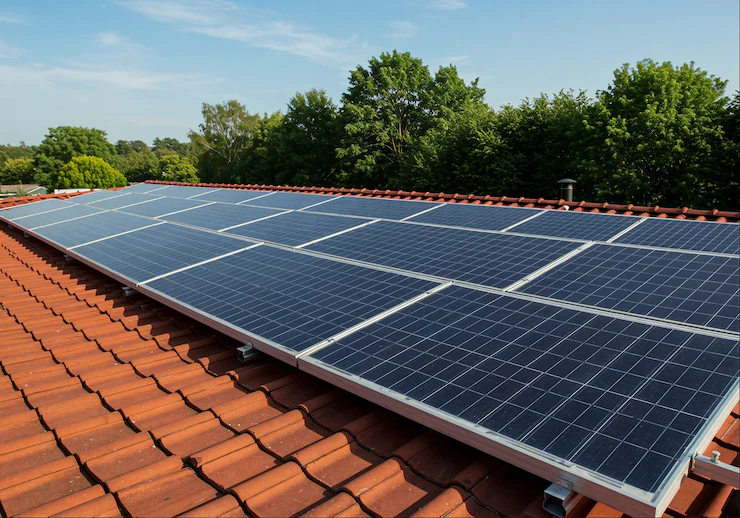
Spark has raised €2 million ($2.3 million) in seed funding as it seeks to address one of the less visible constraints facing off-grid solar expansion in sub-Saharan Africa: the financing challenges of local distributors.
The Netherlands-based company said the funding will support its distributor network across more than 23 countries, where local businesses sell and deploy Spark’s modular solar systems.
The round was led by CEI Africa, a development-finance fund managed by Triple Jump and established by Germany’s KfW, with additional support from the Swiss Development Cooperation.
Spark’s approach allows households to start with basic solar systems for lighting and gradually add appliances as their electricity needs and purchasing power increase. The company combines plug-and-play solar kits with pay-as-you-go technology and a digital management platform for distributors.
The company does not generally sell directly to households. Instead, it works through local distribution companies that handle sales and last-mile delivery. That model makes the financial health of distributors important to Spark’s ability to expand.
Financing distributors becomes central to expansion
Spark plans to use the new capital to launch the initial stages of Spark Catalyse and Spark Connect, while continuing its existing Spark Invest programme.
The initiatives will provide distributors with financing and more flexible payment arrangements, particularly for inventory purchases and working capital.
High borrowing costs and currency swings can make it harder for distributors to finance inventory, limiting the amount of solar equipment they can stock and slowing deliveries to new customers.
Spark was founded in 2013 and says its technology has reached about two million people in countries including Nigeria, the Democratic Republic of Congo and Madagascar.
Its systems are designed for households that either lack grid connections or cannot depend on grid electricity. Customers can begin with a small system and expand it by adding appliances over time, avoiding the cost of purchasing a larger system at the outset.
The new financing comes as electricity access remains a major challenge across Africa. Off-grid solar is expected to remain important in areas where extending conventional grids is costly or technically difficult.
The World Bank’s Mission 300 programme, which aims to connect 300 million people in Africa to electricity by 2030, has also increased demand for solutions that can reach communities outside existing grid networks.
Spark Managing Director Marcel van Heist said the pace of global progress on universal electricity access remains insufficient, increasing the need for financing models that can help energy companies and distributors expand more quickly.
Spark’s immediate priority is to strengthen the distributors responsible for getting its solar systems to customers. Better access to working capital could help these businesses maintain larger inventories, offer more flexible payment options and expand into underserved communities without requiring Spark to build a direct retail network.
The expansion still faces risks. High interest rates, currency movements and weak purchasing power can make off-grid solar businesses difficult to finance in several African markets.
The €2 million investment comes with a focus beyond installing more solar systems. Spark is betting that giving local distributors better access to capital can remove a bottleneck between solar products and the households that need them.
Related Stories


Sign up for our newsletter.
Get the latest news, expert analysis, and industry insights delivered straight to your inbox. Join thousands of professionals shaping the future of energy.
By submitting my information, I agree to the Privacy Policy and Terms of Service.