Power
Lagos Goes After 2,000MW to Break Blackout Cycle
The state wants available electricity raised to 3,500MW, but the first 500MW will serve as a test of whether power can be reliably supplied, metered and paid for.
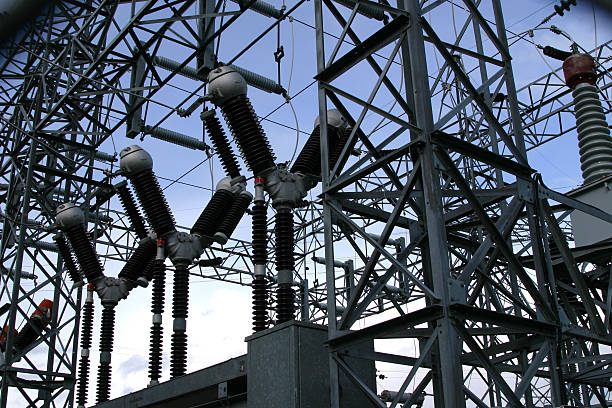
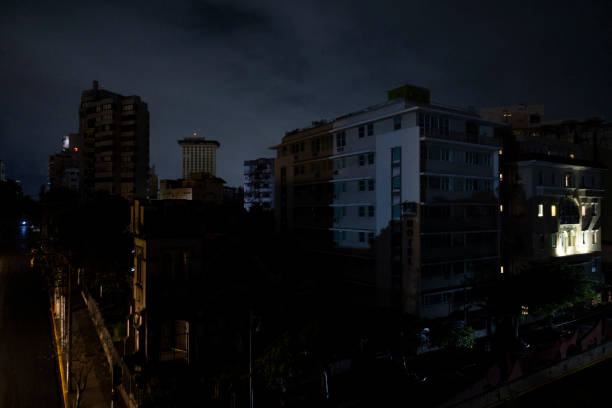
Lagos has put 2,000 megawatts of new electricity supply on its immediate agenda as the state confronts a power shortfall of more than 5,000MW.
The state currently receives less than one gigawatt from the national grid, although its electricity requirement exceeds 6,000MW. Its new plan is to lift available supply to about 3,500MW through a mix of generation sources and improvements in the network that carries power to consumers.
That gap dominated discussions on Thursday at the Lagos State High-Level Strategic Power Town Hall in Lagos House, Marina, where federal and state authorities met power regulators and industry operators.
The size of the deficit also exposes a problem that Lagos cannot solve simply by building more power plants.
Joseph Tegbe, the Minister of Power, represented by the ministry's Director of Distribution Services, Baba Mustapha, said additional generation would achieve little if transmission lines, distribution networks and meters could not handle the electricity.
He listed gas supply, generation, transmission capacity, distribution bottlenecks and metering among the areas requiring action.
Lagos has already secured 400MW from private producers, Mustapha said, with gas-fired plants, embedded generation and renewable sources also available for consideration.
The 500MW test
The proposed Clean Lagos Electricity Market will begin on a smaller scale, with an initial 500MW.
Dr Rilwan Babalola, Special Adviser to the President on Power and chairman of the Presidential Taskforce on Power Sector Reset and Restoration, said Lagos would be used to test a market arrangement designed to address more than physical electricity shortages.
The proposed system covers demand aggregation, bilateral contracts, open access, payment assurance and transparent settlement.
The test is straightforward for the first 500MW: can electricity be produced, delivered to consumers, metered accurately, recorded properly and paid for?
Only after those parts of the chain function reliably would the arrangement be expanded.
The proposal places the commercial side of electricity supply alongside the infrastructure challenge. A generator may produce power, but the system must also ensure that the electricity reaches a buyer and that payment returns through the chain.
Governor Babajide Sanwo-Olu said Lagos needed better coordination among participants, smart meters, improved data management, enforcement and systems that protect revenue.
He said the state must build consumer confidence and create conditions that can attract investment into electricity.
Sanwo-Olu proposed a return meeting within five to six months to examine progress on the commitments made.
Supply is only half the job
Abiodun Ogunleye, the Commissioner for Energy and Mineral Resources, said the state was determined to end what he called a “culture of blackout.”
His immediate figure was 2,000MW.
That is the volume Lagos wants to add to existing supply, taking available electricity towards 3,500MW and allowing more feeders to serve homes and industries.
Yet the state’s problem is not limited to the amount of electricity entering the system.
Ogunleye noted that the Transmission Company of Nigeria has about 3.5GW of wheeling capacity, even though Lagos currently receives less than one gigawatt from the national grid.
The proposed action plan is therefore expected to cover the entire electricity chain, from generation to the point where customers receive and pay for power.
Ogunleye said the state would establish measurable action points before the proposed review meeting.
He also drew a line between tariffs and service delivery, maintaining that consumers should not be billed for electricity they do not receive.
The 3,500MW ambition will not fully meet Lagos' requirement of more than 6,000MW. But it represents an attempt to narrow a supply deficit that has kept blackouts as a routine part of life in the state.
Related Stories
Sign up for our newsletter.
Get the latest news, expert analysis, and industry insights delivered straight to your inbox. Join thousands of professionals shaping the future of energy.
By submitting my information, I agree to the Privacy Policy and Terms of Service.