Power
Mines Absorb Most of Zambia’s New Electricity Supply — Report
Zambia’s electricity consumption jumped 48.2 per cent in 2025, but mining companies took almost all of the extra power as the country expanded generation and began recovering from the 2024 drought.
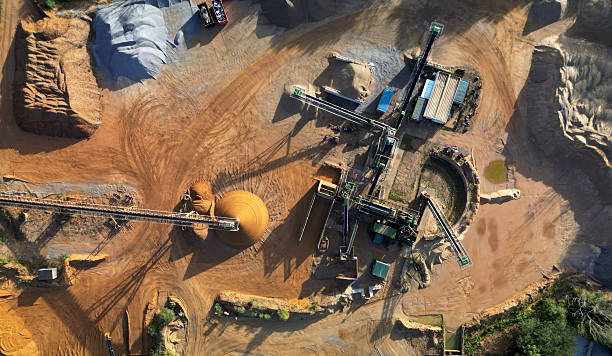
A 2026 report by Energy News Network (ENN) has revealed that Zambia’s electricity consumption rose from about 10,436 gigawatt-hours in 2024 to 15,471GWh in 2025, with the mining sector absorbing the overwhelming share of the additional supply entering the national system.
Mining consumption climbed from roughly 4,650GWh to 9,785GWh over the same period, accounting for nearly all of the 5,035GWh rise in national demand.
The figures came up as Zambia’s installed generation capacity has reached 4,576 megawatts, including 841MW of solar power, after a period in which drought exposed the risks of a system that had relied on hydropower for about 85 per cent of electricity supply.
Solar plant frees power for households
One of the clearest examples of the new supply arrangement is the 100MW Chisamba solar plant in Central Province.
The facility, built by a ZESCO subsidiary and commissioned in June 2025 at a cost of about $100 million, sells electricity to GreenCo Power Services under a 13-year power purchase agreement. Most of the output is supplied to First Quantum Minerals.
Under the arrangement, ZESCO can redirect an equivalent volume of electricity towards household consumers.
The project also illustrates how long-term industrial demand can support the financing of new generation. A creditworthy large-scale buyer can provide the certainty needed for a power plant to secure investment, while electricity entering the system can ease pressure on the national utility.
More than 1,200 people worked on the Chisamba project during construction, with about 98 per cent of the workforce recruited locally.
Kariba storage improves after drought
The recovery has also been helped by improved water conditions in the Zambezi basin.
The Zambezi River Authority raised the 2026 water allocation for electricity generation to 36 billion cubic metres, up from the 30 billion cubic metres set last November. The volume is to be shared equally by ZESCO and the Zimbabwe Power Company after normal to above-normal rainfall across the Zambezi catchment.
Usable storage at Kariba reached 48.09 per cent on June 22, compared with 23.47 per cent on the same date in 2025. At the lowest point of the 2024 drought, usable storage had fallen to 13 per cent.
The return of water has come alongside a rapid expansion in solar generation, giving Zambia more supply sources than it had before the drought.
However, the impact of new commercial arrangements depends on whether they bring additional electricity into the system or simply guarantee priority access to power that already exists.
Long-term contracts that support the construction of new plants increase total available generation. Agreements that give a customer priority over existing capacity, on the other hand, can improve supply security for that customer without creating another megawatt.
This distinction has become important as Zambia expands Open Access, net metering and regional electricity trading.
Open Access has become a major channel for determining how power reaches large consumers, particularly mining companies whose electricity needs rose sharply in 2025.
The country’s National Energy Compact provides for a major change in the composition of electricity supply by 2030, with non-hydro renewables expected to rise from 3 per cent of the generation mix to 33 per cent.
Related Stories
Sign up for our newsletter.
Get the latest news, expert analysis, and industry insights delivered straight to your inbox. Join thousands of professionals shaping the future of energy.
By submitting my information, I agree to the Privacy Policy and Terms of Service.