Climate & Sustainablity |Finance
Namibia Needs $14bn to Fund Its New Climate Plan
Namibia's new climate plan carries a $14bn price tag shaped by a drought that already pushed nearly half the population into food insecurity.

Namibia will need $14.07 billion, about N$230 billion, in financing to implement its third nationally determined contribution (NDC 3.0) under the Paris Agreement, Minister of Environment, Forestry and Tourism Indileni Daniel said at the plan's launch on Friday, with about 88% of that sum dependent on international climate finance.
NDCs are five-year climate action plans that countries which signed the Paris Agreement submit to outline how they will cut greenhouse gas emissions and adapt to a changing climate. "Ambition has a price.
The estimated investment required to implement NDC 3.0 is approximately US$14.07 billion. Approximately 88% [of that] is conditional upon international climate finance, technology transfer and capacity-building support," Daniel said.
The plan commits Namibia to 226 actions intended to help the country remain a net carbon sink, meaning it absorbs more carbon than it emits, while adapting to worsening environmental conditions. It includes measures in energy, agriculture, renewable power, green hydrogen, energy efficiency and low-carbon industrialisation.
A drought that tested the country's resilience
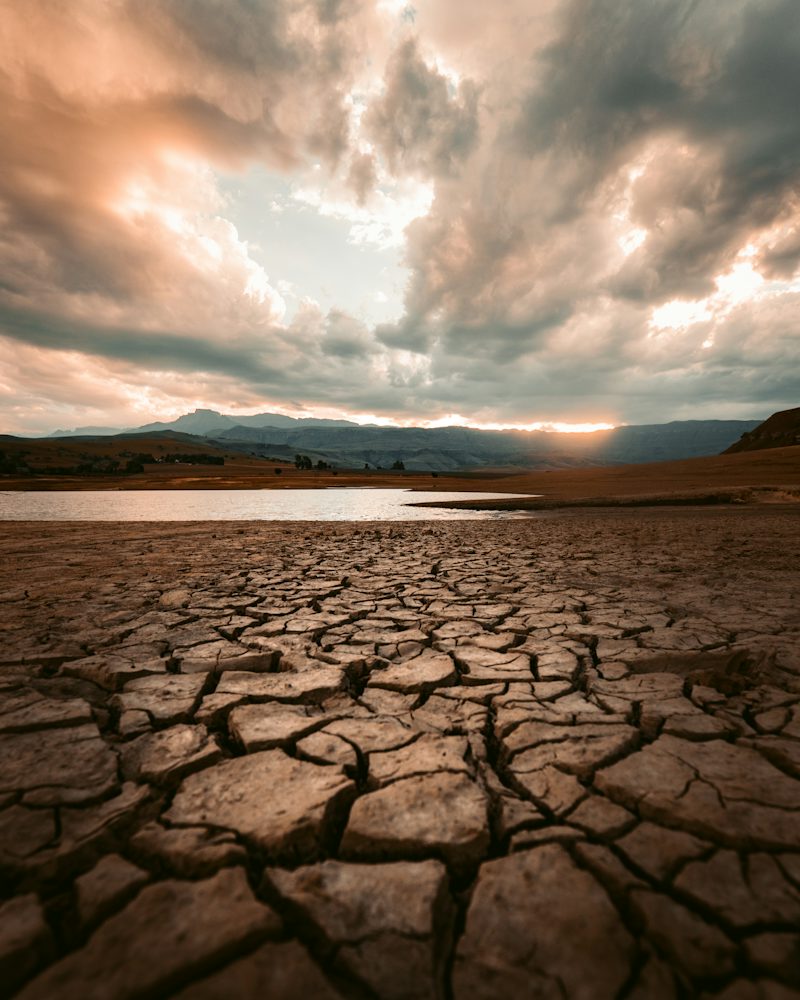
The plan's emphasis on adaptation follows Namibia's worst drought in a century.
In May 2024, then-President Nangolo Mbumba declared a national state of emergency after a severely below-average rainy season left crop production down by more than half and reservoir water levels down by nearly 70%. At the height of the crisis, an estimated 1.4 million people, more than 40% of the population, faced acute food insecurity, according to the UN, with food security assessments projecting the number affected could climb to 1.26 million between October 2024 and March 2025 alone, a 45% increase on the previous year's already elevated levels.
The International Monetary Fund has since noted that Namibia's arid climate, ranked among the 21 most water-stressed countries globally, leaves roughly 11% of households that depend on subsistence or commercial farming highly exposed to future droughts, while the country's heavy reliance on hydropower means dry seasons already push electricity imports to an average of 67% of total demand.
Daniel said Namibia's international backers should not read the conditional financing requirement as optional. "Conditional does not mean optional. It means Namibia has identified what more can be achieved when international support matches our national ambition.
Our task now is, therefore, to move beyond talking about climate finance to mobilising climate finance," she said. She added that the plan is intended to serve development as much as climate goals. "Our people will not judge our climate action by the number of documents we launch. They will judge it by whether there is water when drought comes, food security when rainfall fails, resilient infrastructure when disasters strike, reliable energy, productive land, protected ecosystems, decent jobs and opportunities for our young people," Daniel said.
UN representative ties the plan to Namibia's budget
United Nations Development Programme representative Amanda Serumaga said at the launch that Namibia must treat financing the NDC 3.0 as a serious undertaking rather than a symbolic exercise. "And for the government, the NDC must speak directly to the national budget in the upcoming years. Climate priorities that are not reflected in public expenditure and investment decisions will remain aspirations rather than implementation," she said.
Serumaga said every investment in climate mitigation and adaptation should serve the dual purpose of advancing Namibian development alongside its climate objectives.
The IMF has separately recommended that Namibia invest in agricultural resilience, including water infrastructure, drought-resistant crops and farmer insurance schemes, as ways to cushion the economy against future weather shocks, steps that echo several of the priorities named in NDC 3.0.
Related Stories



Sign up for our newsletter.
Get the latest news, expert analysis, and industry insights delivered straight to your inbox. Join thousands of professionals shaping the future of energy.
By submitting my information, I agree to the Privacy Policy and Terms of Service.