Renewables |Power
Tanzania’s 2,115 MW Nyerere Plant Opens with Surplus Power in Sight
Tanzania's largest power project gives the country a major electricity surplus, creating new scope for industrial expansion, investment and regional power exports.
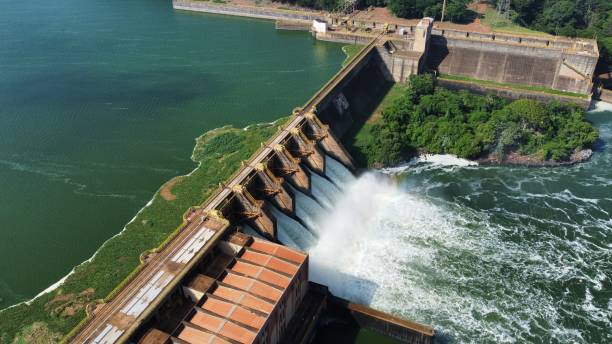
Tanzania has brought its largest power project into full operation, commissioning the 2,115-megawatt Julius Nyerere Hydropower Project as the country looks to use a sharp increase in electricity supply to support industry, investment and potential power exports.
President Samia Suluhu Hassan commissioned the plant on Saturday, August 22, at the project site in Rufiji, Pwani Region. The nine-unit facility has already become a major source of electricity for the national grid, accounting for nearly half of electricity dispatched to the system. ([Xinhua News][1])
The project, built at a reported cost of 7.452 trillion Tanzanian shillings, or about $3.35 billion, was financed entirely by the Tanzanian government. Construction began in June 2019 and was completed in March 2025.
The scale of the new plant significantly changes Tanzania's power position. Installed generation capacity has risen to about 4,646 MW, compared with peak demand of roughly 2,271 MW, leaving a potential surplus of about 2,375 MW. That additional capacity gives the country room to expand electricity use at home while also considering sales to neighbouring markets. ([Tanzania Invest][2])
From power shortages to industrial capacity
The significance of the project for Tanzania, extends beyond adding another large generator to the national grid. The government is counting on the additional electricity to support manufacturing, mining, agriculture, commercial activity and new investment.
TANESCO Managing Director Lazaro Twange said the nine turbines would create greater room for industrial expansion and trade, positioning electricity supply as a foundation for wider economic growth.
President Samia similarly said the new capacity should produce gains in manufacturing, mining, modern agriculture, investment, employment and public services.
The plant's contribution is already substantial. Government officials say it has eased generation constraints that previously contributed to power rationing, while its output now supplies close to half of electricity dispatched to the national grid.
The additional capacity also comes as Tanzania continues to expand its electricity network. The country's 2026/27 energy programme places heavy emphasis on generation, transmission and gas infrastructure, with the government seeking to bring more private capital into the sector.
Export potential grows
The surplus created by the Nyerere project gives Tanzania another option: selling electricity to neighbouring countries.
Authorities are already pursuing regional power-trading opportunities, including arrangements involving Zambia and Kenya. The ability to export surplus electricity could provide an additional source of revenue while strengthening Tanzania's position in the Southern and East African power markets.
That opportunity, however, depends on transmission infrastructure capable of moving the new generation to domestic and cross-border markets. Tanzania has been expanding its high-voltage network alongside the hydropower project, including new 400-kV transmission infrastructure.
The government has also argued that the plant's output will help reduce the risk of future electricity shortages as demand grows.
A long-delayed project reaches full operation
The Nyerere project is the result of a development programme that had been discussed for decades before construction finally began in 2019.
TANESCO awarded the construction contract in December 2018 to Egypt's Arab Contractors and Elsewedy Electric. The consortium built the dam, hydropower station, nine generating units and associated transmission infrastructure.
The project was initially controversial because of its size, cost and environmental implications. President Samia has since defended the investment, arguing that its completion and the construction of supporting transmission infrastructure demonstrate that Tanzania can execute major strategic projects.
The reservoir holds about 33 billion cubic metres of water, giving the project a role beyond electricity generation. Government plans also associate the dam with flood management along the Rufiji River, irrigation, tourism and water supply.
The immediate challenge is to make full use of the capacity the project has created. That means keeping the transmission network ahead of demand, developing industrial loads capable of absorbing additional electricity and securing reliable regional markets for any sustained surplus.
The Nyerere plant for Tanzania, marks a shift from managing electricity shortages toward managing a much larger supply base. Whether that surplus becomes cheaper power for consumers, stronger industrial growth or a new export stream will depend largely on how effectively the country builds the infrastructure and economic activity around it.
Related Stories
Sign up for our newsletter.
Get the latest news, expert analysis, and industry insights delivered straight to your inbox. Join thousands of professionals shaping the future of energy.
By submitting my information, I agree to the Privacy Policy and Terms of Service.